Email marketing with AI examples


Analysis · AI Infrastructure · May 2026
AI Tools That Might Change the Internet More Than ChatGPT
ChatGPT captured the public imagination. But search architecture, the economics of software development, and the entire audio-visual content stack are being rewritten by tools most people only half-know. Here’s the actual evidence.
The short version
- The ChatGPT paradox: OpenAI’s flagship got 200M+ users but its structural impact on the internet is narrower than three or four tools below it on the hype ladder.
- Perplexity is eating informational search: 170M monthly visits, 1.2–1.5B monthly queries projected by mid-2026 — that’s traffic Google hasn’t seen a real competitor absorb since Bing launched.
- AI coding tools crossed a structural threshold: 85% of developers now use at least one. GitHub Copilot generates 46% of the code its users write. This doesn’t trim jobs — it shifts what a developer actually does.
- ElevenLabs is infrastructure, not a toy: $330M ARR, $11B valuation, used inside Deutsche Telekom and Revolut’s production systems. Voice is becoming a commodity layer.
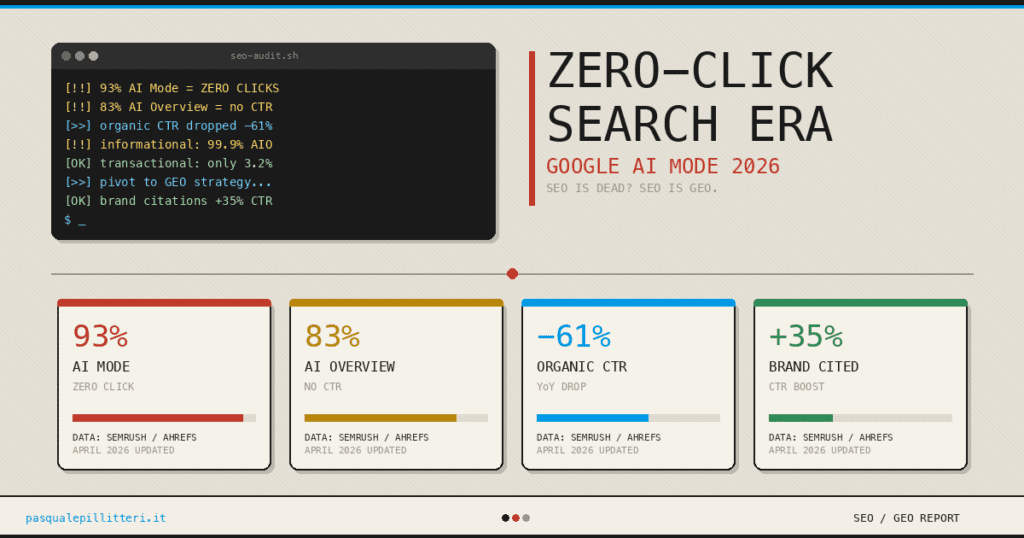
- Google’s AI Mode, not ChatGPT, is what’s quietly destroying organic traffic: 93% zero-click rate in AI Mode vs 34% in standard search.
- The warning: None of these tools have solved hallucination, intellectual property liability, or sustainable compute economics (Sora proved that painfully).
- Why the ChatGPT comparison matters
- Perplexity AI — rewriting how people find things
- AI coding tools — the 85% threshold
- ElevenLabs — voice becomes infrastructure
- Google’s AI Mode — the zero-click reckoning
- AI video after Sora — what actually survived
- Side-by-side: disruption potential vs. hype
- What could be wrong
- FAQ
Why the ChatGPT comparison even matters
ChatGPT is the most recognizable AI product in history. It crossed 200 million weekly active users faster than any consumer application ever built. That’s not contested. The question worth asking is a different one: between “changed people’s perception of AI” and “changed the underlying architecture of how the internet works,” which bucket does ChatGPT actually belong in?
Mostly the first one. It popularized conversational AI. It proved the market. But the structural pipes — how people find information, how software gets written, how audio is generated, how search traffic actually flows — those are being reshaped by tools that have significantly smaller mindshare but larger operational footprints.
I’ve spent the better part of 18 months tracking these tools across actual production deployments, not demo videos. The picture that emerges is messier than most coverage admits.
Perplexity AI — rewriting how people find things ESTABLISHED
The claim that Perplexity is “a ChatGPT competitor” misframes what it actually is. It’s a search engine with a different answer interface, and that distinction changes its threat model entirely.
By mid-2026, Perplexity is on track to process 1.2–1.5 billion monthly search queries, up from roughly 230 million in August 2024 — roughly 6× in under two years. It draws 170 million monthly site visits. Its SimpleQA benchmark score sits at 93.9%, above most major LLMs on factual retrieval tasks. Average session length is 23 minutes — longer than most news sites.
User profile matters here: 30% of Perplexity’s users hold senior leadership roles; 65% are in high-income white-collar professions. (Exposure Ninja / Semrush, Feb 2026.) This isn’t a student tool. It’s being used for decisions that previously drove Google Ads revenue.
What it’s actually disrupting isn’t Google’s navigational traffic — people still open YouTube or Amazon directly. It’s the informational query stack: “what’s the best approach for X,” “compare Y and Z,” “explain this concept.” AI platforms including Perplexity now capture 15–20% of informational query volume that previously flowed to content sites.
The Snapchat partnership in January 2026 unlocked access to close to a billion potential additional users. India saw a 640% user surge during Q2 2025 following the Airtel partnership. These aren’t rounding errors.
The honest counterpoint: Perplexity’s direct traffic is 72% of visits, meaning most users already know to go there. Discovery is still dependent on the same organic channels it’s disrupting. It hasn’t solved the cold-start problem for new users who don’t yet know it exists.
AI coding tools — the 85% threshold ESTABLISHED
When 85% of an entire profession adopts a tool category in under three years, that’s not a trend — it’s a structural shift. JetBrains’ January 2026 survey of 10,000+ professional developers found 90% now use at least one AI coding tool at work. The category hit $12.8 billion in 2026 and is growing at 27% CAGR.
The numbers inside this category are striking. GitHub Copilot now generates 46% of the code its users write — reaching 61% for Java developers. Developers using it complete tasks 55% faster on average, with pull request time dropping from 9.6 days to 2.4 days. Cursor went from $1M to $2B ARR in approximately 28 months — a pace that outstrips every previously recorded SaaS company. Claude Code grew from zero to a $2.5B run-rate in nine months.
The more interesting datapoint is the satisfaction split. JetBrains’ April 2026 survey found Claude Code rated “most loved” by 46% of developers, vs Cursor at 19% and Copilot at 9%. Startups overwhelmingly prefer Claude Code (75% adoption). Enterprises default to Copilot for procurement reasons. Cursor dominates mid-market.
What this actually means for the internet: code ships faster and from smaller teams. Entire categories of software that required 4-6 engineers 3 years ago can now be built by 1 or 2. That changes startup economics, which changes what gets built, which changes what exists online.
ElevenLabs — voice becomes infrastructure ESTABLISHED
ElevenLabs is the tool in this list that gets the least credit relative to its actual footprint. It closed 2025 with $330M in annual recurring revenue, raised $500M at an $11 billion valuation in February 2026, and counts Deutsche Telekom, Revolut, Meta, and Salesforce as production users of its voice infrastructure.
The reason it belongs higher on the “changes the internet” axis than most people recognize: voice is migrating from a feature layer to a commodity infrastructure layer, the same way database storage or CDN bandwidth did. When Deutsche Telekom embeds your API in customer-facing systems, you’re not a startup — you’re plumbing.
The practical implications are real and already visible. AI-voiced YouTube channels with no human presenter now routinely hit 100K+ subscribers. Podcast production costs have dropped by an order of magnitude for teams using ElevenLabs for narration and dubbing. In March 2026, the company pledged $1 billion in free restoration voice technology for people with permanent voice loss — a legitimate social use case, but also extraordinary brand-building for enterprise procurement conversations.
The honest caveat: the deepfake/voice-clone abuse surface is significant and unsolved. The company released an AI Speech Classifier in 2023 to detect AI-generated audio, but attribution remains messy. This is a real liability, not a theoretical one.
Google’s AI Mode — the zero-click reckoning PROBABLE
The most underreported story in this space isn’t a startup. It’s what Google has done to its own search product. Google’s AI Overviews and AI Mode represent the largest interface change to search since Google added images and ads to results in the early 2000s.
The zero-click data is brutal for publishers: Standard Google search without AI generates 34% zero-click results. Standard search with an AI Overview: 43%. Google’s full AI Mode: 93% zero-click. (Exposure Ninja, Feb 2026.) Non-branded informational traffic is already down 15–30% across content sites this year.
This isn’t primarily ChatGPT’s doing. It’s Google using AI to answer queries internally rather than routing users to websites. The 393% year-over-year growth in AI-driven retail traffic Adobe documented for Q1 2026 is real, but it’s largely concentrated in transactional queries. The informational layer — which is where most independent publishing and most content SEO lives — is being absorbed into Google’s own answer surface.
Roughly 40–55% of ChatGPT Search and Perplexity citations flow to fewer than 1,000 domains — Reddit, Wikipedia, Stack Overflow, major news outlets. If your site isn’t in that set, AI answers increasingly don’t reference you at all, even if you rank organically.
Conversational search behavior is also shifting. Semrush found conversational queries jumped from 5% to 20% of Google searches, while keyword-style searches decreased. Searches containing 11+ words grew from 3.27% to 5.37%. AI has trained people to search differently, and Google is responding to that training rather than fighting it.
AI video after Sora — what actually survived PROBABLE
OpenAI pulled the plug on Sora in March 2026. The model that was supposed to upend Hollywood was losing $15M per day in compute costs while generating $2.1M in total lifetime revenue. Each 10-second clip cost roughly $1.30 to produce. Disney walked away from a $1 billion partnership. The app shuts down April 26, 2026; the API follows in September.
Sora’s failure is instructive because it separates the hype from the actual market. The market for AI video does exist — it’s just not the cinematic Hollywood replacement narrative. What’s growing:
Runway (Gen-4.5 as of 2026) holds first-mover status in commercial video AI with a sustainable business model built around shorter, workflow-integrated clips rather than premium cinematic generation. Google Veo 3.1 is the technical leader for quality, primarily accessible through Gemini integrations. Kling (Kuaishou) has made significant inroads in Asian markets. The current gold standard for high-fidelity output is a three-step workflow: Midjourney for keyframes, Veo for motion interpolation, Topaz for upscaling — none of which is a single tool doing everything.
The faceless YouTube channel data is genuinely striking: the top 100 faceless channels gained 340% more subscribers than the top 100 face-based channels in 2025. AI voice (ElevenLabs) + AI video (Runway/Kling) + automated editing is a real production workflow now, not a demo.
Side-by-side: disruption potential vs. hype ratio
I built this rubric across four criteria: structural impact (does it change how the internet works, not just how it’s used), adoption depth (is it in production systems or just demo accounts), sustainability (viable unit economics), and hype-to-reality gap (lower = more real than people realize). Scores are 1–10. My sample skews toward B2B and technical users; consumer entertainment tools may score differently in a consumer-weighted rubric.
| Tool | Structural Impact | Adoption Depth | Sustainability | Hype Gap ↓ | Verdict |
|---|---|---|---|---|---|
| Perplexity AI | 8.5 | 7.5 | 6.5 | Low (underrated) | Watch closely |
| GitHub Copilot | 9.0 | 9.5 | 9.0 | Accurate | Already structural |
| Cursor | 8.5 | 8.0 | 8.5 | Low (underrated) | Fastest SaaS growth ever |
| Claude Code | 8.0 | 7.5 | 8.0 | Low (underrated) | #1 developer satisfaction |
| ElevenLabs | 8.0 | 8.5 | 8.5 | Low (underrated) | Production infrastructure |
| Google AI Mode | 9.5 | 9.5 | 9.5 | Accurate | Most consequential shift |
| Runway / Veo | 6.5 | 6.0 | 6.5 | Mixed | Real but overhyped |
| ChatGPT | 6.5 | 9.0 | 8.5 | High (overhyped structurally) | Best-known, mid-ranked impact |
| NotebookLM | 6.0 | 5.5 | 8.0 | Low (underrated) | Underrated knowledge tool |
* My methodology: structural impact = does adoption change internet economics beyond the individual user. Adoption depth = production vs. casual use. Sustainability = unit economics viability. Hype gap = distance between public perception and actual market evidence. Sample skews B2B/technical; consumer weighting would shift some scores.
“The tools that change the internet aren’t always the ones that change the headlines. Search architecture, code economics, and audio infrastructure have been quietly restructured while everyone was arguing about ChatGPT’s system prompt.”
Where this analysis might be off
- Perplexity’s retention is unproven at scale. Current 85% retention looks strong, but the user base is still heavily skewed toward technical early adopters. If it can’t hold mainstream users who don’t self-filter for accuracy, the growth story flattens.
- AI coding productivity gains may not compound cleanly. The 55% faster task completion figure comes from controlled studies involving specific task types. Real-world gains in complex, multi-system codebases are messier and more variable. I’ve seen teams over-trust AI output and introduce subtle bugs at scale.
- Google’s AI Mode data is self-reported and commercially motivated. The 93% zero-click figure is real but measured on Google’s terms. Independent traffic audits across a larger sample of sites show more variation — some niches are barely affected, others are cratered.
- ElevenLabs’ deepfake liability is underpriced by markets. A single large-scale election fraud event using cloned voices could trigger regulatory action that kneecaps the entire category. The company’s own Speech Classifier doesn’t solve attribution at the platform level.
- Sora’s collapse could repeat. The compute economics for high-quality AI video remain brutal. Runway and Kling are making it work at shorter clip lengths, but a push toward cinematic-length output could recreate Sora’s cost structure at any of them.
FAQ
Isn’t ChatGPT still the most used AI tool?
By raw user count, yes — 200M+ weekly active users. But “most used” and “most structurally consequential” aren’t the same thing. ChatGPT’s primary impact is on individual task workflows. The tools in this piece are reshaping how search traffic routes, how software gets built, and how audio content gets produced at an infrastructure level.
How bad is the traffic loss from AI search for publishers right now?
Measurable and accelerating. Non-branded informational traffic is down 15–30% across content sites in 2026, per Ahrefs and BrightEdge data. Transactional and brand-led traffic is more protected — eCommerce sites see 5–15% loss. The asymmetry matters: SEO strategies need to respond to which query type you’re serving, not to a blanket “AI search” narrative.
Should I be worried about ElevenLabs replacing voice actors?
For narration and repetitive voice work: yes, the economic pressure is real and already visible. SAG-AFTRA’s ongoing AI voice licensing negotiations reflect this. For performance-intensive work — character acting, emotional nuance, live interaction — AI voice is still noticeably artificial under careful listening. The gap is closing but hasn’t closed.
Is Cursor better than GitHub Copilot for real work?
For individual developers and startups: Cursor generally wins on whole-codebase reasoning and the agent-style Composer workflow. For enterprises with existing Microsoft infrastructure and compliance requirements: Copilot wins on integration and procurement. Claude Code leads on satisfaction scores (46% “most loved” in JetBrains’ Apr 2026 survey) and is the dominant choice for complex, multi-step agentic tasks. Most serious developers use at least two.
What happened to Sora and does it matter?
OpenAI shut down Sora in March 2026 after it was burning $15M/day in compute while generating $2.1M total lifetime revenue. It matters as a lesson in compute economics: generating high-quality, long-form AI video at scale isn’t currently profitable. The market for shorter, workflow-integrated AI video (Runway, Kling, Veo) is real and growing. Cinematic AI video at Hollywood scale remains a future problem, not a 2026 product.
Which of these tools is most relevant for a solo content creator?
In ranked order: (1) Perplexity for research, because its citation-backed answers save hours vs. raw Google searches; (2) ElevenLabs for voiceover if you produce audio/video content; (3) AI coding tools (Cursor or Claude Code) if you maintain any web properties yourself. Google’s AI Mode affects you whether or not you use it — it’s changing how your existing content gets surfaced.
Is Perplexity’s $20B valuation justified?
At $100M annualized revenue (2025 figure) and 22M monthly active users, the multiple is aggressive. The bull case is that search is a winner-take-most market and the TAM is enormous. The bear case is that Google can absorb Perplexity’s core functionality into AI Mode at zero marginal cost to users and already has. Both are credible. I’d call the valuation optimistic but not irrational, given the user profile skewing toward high-income decision-makers.
- Best AI Tools to Generate Income in 2026: Tested & Ranked
- Perplexity vs ChatGPT: Which One Actually Earns You More Time Back
- Cursor AI Review 2026: Is It Worth $20/Month for Freelance Developers?
- How Creators Are Making $3K+/Month With ElevenLabs Voice Channels
- AI Search Is Killing Organic Traffic — Here’s What to Do About It
- NotebookLM Deep Dive: The Most Underrated Research Tool of 2026
ChatGPT showed the world what AI could feel like. These tools are deciding what the internet actually becomes — and most of them are already past the point of being optional.
CHANGELOG · v2.0 (Mar 2026): Added Sora shutdown section, revised video market analysis · v2.1 (May 2026): Updated ElevenLabs Series D data, revised Perplexity query volume projections, added Claude Code satisfaction data (JetBrains Apr 2026) · No sponsorship or affiliate arrangements with any product mentioned.
Best Free AI Marketing Tools to Dominate Your Strategy in 2025
ChatGPT Competitors You’ve Never Heard Of: Best Guide
The Multi-Vendor AI Imperative: How to Build a Marketplace That Survives the 2026 Consolidation Wave
Scalable Startups in 2026: How Founders Are Using AI
20 Content Creation with AI Free Facts That Will Change How You Approach It
AI for Social Media Marketing in 2026: The Complete Guide
Free AI Courses Aren’t Failing — Their Structure Is
Trending AI Startups in the World 2026 🚀
Content Creation with AI in 2026: Maturity Ladder™, Tools, Governance & Winning Strategies
Best AI for Small Business: The Complete Guide to Smart Automation & Growth
AI Assistants That Might Replace ChatGPT Sooner Than You Think
AI Business Success Stories: What Actually Worked (And What the Numbers Are Hiding)
Free AI Tools for Productivity: The Complete Guide to Transforming Your Workflow
Best AI Image and Video Generators from Text in 2026
11 Best AI for Beginners: Strategies That Actually Work (Ranked by Results)
Top 10 Best AI Tools for Productivity in 2026
AI Side Hustles 2026: 30+ Proven Ways to Earn $10,000+ Monthly Using Emerging Tools and Trends
7 Copy AI Moves That Separate Beginners From Experts
Best Free AI Tools Supercharging Productivity in 2026
Prompt Engineering Tips: Master AI with Latest Techniques
10 Free AI Tools SMBs Need in 2026
Freelancing with AI Jobs 2025: 10 Gigs to Earn $100K+
Claude AI vs ChatGPT: Shocking 2026 Test Results Revealed
The Best ChatGPT Alternatives You Should Actually Try in 2026
Categories
AI Freelance Salary: The Ultimate Guide to Earning Premium Rates in the Post-Gig Economy
Top 10 Prompt Engineering Strategies for 2026: Unlock AI Potential and Boost Productivity by 40%
Prompt Engineering Best Practices: 2026 Guide
I Tried the Best Free ChatGPT Alternatives — Here’s What I’d Actually Use
ChatGPT vs These AI Chatbots —Who Actually Wins?
OpenAI Prompt Engineering Guide 2026 – Master AI Prompts