
Email Marketing with AI Reddit: Best Guide

7 Copy AI Moves That Separate Beginners From Experts
The tool is almost beside the point. What separates a $40/hour writer from a $400/hour one has never been about software access — it’s about how the mind behind the keyboard works.
Here’s something worth sitting with: most people who complain that AI writes bland, generic copy are producing bland, generic prompts. That’s not an insult — it’s just where the fault actually lies. The output is almost always a mirror of the input, and the input is almost always thin.
Copy AI, ChatGPT, Claude, Jasper — pick your tool. The interface isn’t the bottleneck. The thinking that goes into the session is. And after spending considerable time watching how different writers actually use these tools — beginners versus people charging real rates for real results — the gap is startlingly consistent. It’s not about knowing some secret feature or paying for the right plan. It comes down to a handful of very specific moves that experts make almost automatically, and that beginners rarely even know to attempt.
This piece lays out seven of them, in the order they tend to matter most. There’s data behind each one where reliable data exists, and honest commentary where it’s more nuanced. No invented stats, no invented case studies. What you’ll read here is grounded in published research, documented real-world campaigns, and patterns that show up repeatedly across the industry.
- Feed the AI your customer’s exact words, not your own
- Treat every output as a first draft, not a finished product
- Build a brand voice document — and actually use it
- Assign a specific persona, not just a role
- Run variants, not iterations
- Use the AI to stress-test your own arguments
- Know when the AI should stay silent
Feed the AI Your Customer’s Exact Words, Not Your Own
Beginners write prompts from their own heads. Experts start with a research step that most beginners skip entirely: gathering voice-of-customer data and dumping it directly into the context window.
The principle here is simple but it gets violated constantly. When you describe your customer’s problem in your own language, the model reflects your language back at you. Your customers read that copy and feel nothing, because it doesn’t actually sound like their inner monologue. The copy lands flat, not because AI wrote it, but because it was informed by the wrong source.
Conversion copywriting expert Audrey Chia, writing for Social Media Examiner, describes this process clearly: before writing a single word of copy with AI assistance, she feeds client interview transcripts, survey responses, and support tickets into the model — asking it to extract patterns in emotional language, frustrations, and unmet desires. Not paraphrases of those things. The raw text itself.
The difference in output quality when you do this versus when you describe your audience in general terms is not subtle. It’s significant. And it’s entirely predictable — the AI hasn’t suddenly gotten smarter, it’s just working from better raw material.
What beginners do instead
They write prompts like: “Write a landing page headline for a productivity app targeting busy professionals.” That’s not research. That’s a persona stereotype. The model has no choice but to produce something generic because the input was generic.
Treat Every Output as a First Draft, Not a Finished Product
This one seems obvious until you look at how beginners actually behave. Many of them copy-paste the first response they get and call it done. Experts treat the AI more like a junior writer who needs direction, feedback, and several revision passes before anything leaves the building.
The distinction matters more than it might seem. When you treat AI output as finished, you’re essentially outsourcing your judgment to a system trained on average text from the internet. The best writing on the internet and the worst writing on the internet all go in together. What comes out tends to regress toward a confident, readable middle. That middle is fine. It’s not memorable.
What does treating output as a first draft actually look like in practice? It means reading the AI’s response with the same skeptical eye you’d apply to a freelancer’s first submission. You’re looking for:
- Sentences that are technically correct but feel lifeless — the AI’s default register
- Claims that sound plausible but you can’t verify — this is where hallucinations hide
- Transitions that exist because writing has transitions, not because the logic demands them
- The opening and closing paragraphs, which AI consistently writes worst
- Any place where the copy talks about features rather than the reader’s world
Then you rewrite those sections yourself, or you give the AI specific, targeted instructions to revise them. “Make this less fluffy” doesn’t work. “The third paragraph uses the word ‘solution’ twice and sounds like a corporate press release — rewrite it in a direct, second-person tone that speaks to a founder who’s just had a frustrating Monday” works considerably better.
Beginner vs. Expert: How the Sessions Actually Differ
The same tool, the same task, very different approaches — and predictably different results.
| Step | Beginner Approach | Expert Approach |
|---|---|---|
| Research | Skips it. Jumps straight to prompting. | Collects real customer language first — reviews, transcripts, support tickets. |
| Prompt structure | “Write a landing page for my SaaS product.” | Assigns persona, provides context, specifies format, tone, audience, and constraint. |
| Brand voice | Hopes the AI guesses correctly or accepts generic output. | Maintains a brand voice document; pastes relevant excerpts into every session. |
| Revision cycle | Accepts first output or asks for a vague “improvement.” | Gives specific, targeted revision instructions. Often 3–5 passes minimum. |
| Fact-checking | Assumes AI is accurate. Publishes without verification. | Treats every factual claim as unverified until checked against a primary source. |
| Testing | Produces one version and hopes it works. | Runs 3–5 headline or CTA variants; lets data choose the winner. |
| Limitations | Doesn’t know them — or ignores them. | Knows exactly which tasks to hand to AI and which require human judgment. |
Build a Brand Voice Document — and Actually Use It
Every Copy AI session starts with a blank slate unless you tell it otherwise. That’s fine for someone experimenting, but for anyone producing copy at volume, it’s an invisibility problem dressed up as a workflow.
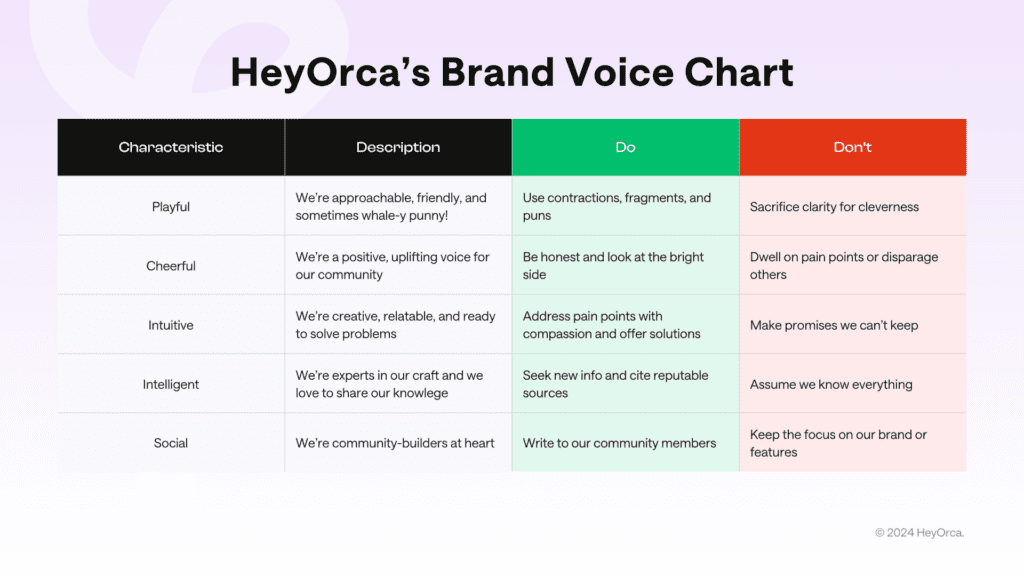
Experts maintain what’s usually called a brand voice document — a short but specific reference file that describes how the brand sounds, what it avoids, what tone it takes in different contexts, and usually a few short examples of writing that nails it and writing that misses. They paste a condensed version of this into every session, every time.
The reason this matters: inconsistent tone erodes trust faster than most marketers realize. In the SolidGigs survey of 357 copywriting professionals conducted across 2024–25, 61% of marketers said inconsistent tone directly weakens audience trust. That same survey found that copy perceived as “sounding human” was rated three times more trustworthy than copy that felt scripted. A brand voice document, when properly built and consistently used, is the most reliable way to push AI output toward the first category.
What a useful brand voice document actually contains
Not aspirational adjectives like “authentic, bold, and human-centered.” Those are useless to an AI (and frankly, to a human writer too). Something that actually works looks more like this:
Assign a Specific Persona, Not Just a Role
Telling an AI to “write like a marketing expert” is a bit like telling a chef to “make food.” It’s technically a direction, but it provides almost no useful constraint. The model has encountered thousands of “marketing experts” in its training data, and what that phrase averages out to is… exactly the kind of flat, confident, vaguely competent writing you’re probably trying to avoid.
The move here is specificity. Experts don’t assign a job title — they assign a person. And they describe that person with enough concrete detail that the model has something real to work from.
The second prompt works because it gives the model a value system, a knowledge domain, a reader relationship, and a credibility constraint. The output shifts accordingly — it tends to be tighter, more specific, and considerably less likely to drift into generic marketing prose.
How Audrey Chia uses persona layering in client work
Audrey Chia, an AI strategist and conversion copywriter whose methodology was featured on Social Media Examiner, describes a layered approach: she first extracts emotional insights from client interviews (Move 01), then constructs personas for both the writer and the ideal reader simultaneously. The writer persona is grounded in the specific industry expertise of the brand. The reader persona is built from actual customer language, not demographic generalizations.
The result is copy that doesn’t just “sound like the brand” — it speaks directly to a specific reader’s emotional state at a specific moment in the buying journey. That kind of precision is hard to replicate by accident.
Run Variants, Not Iterations
This distinction is subtle but it changes what you do next. An iteration is asking the AI to improve what it already wrote. A variant is asking it to write the same thing from a completely different angle — different frame, different emotional lever, different structural approach. These are not the same request.
Most beginners iterate. They get a headline, they don’t love it, they ask for “something better,” and they get a slightly tweaked version of the same idea. The model is optimizing within a narrow band. The underlying approach hasn’t changed.
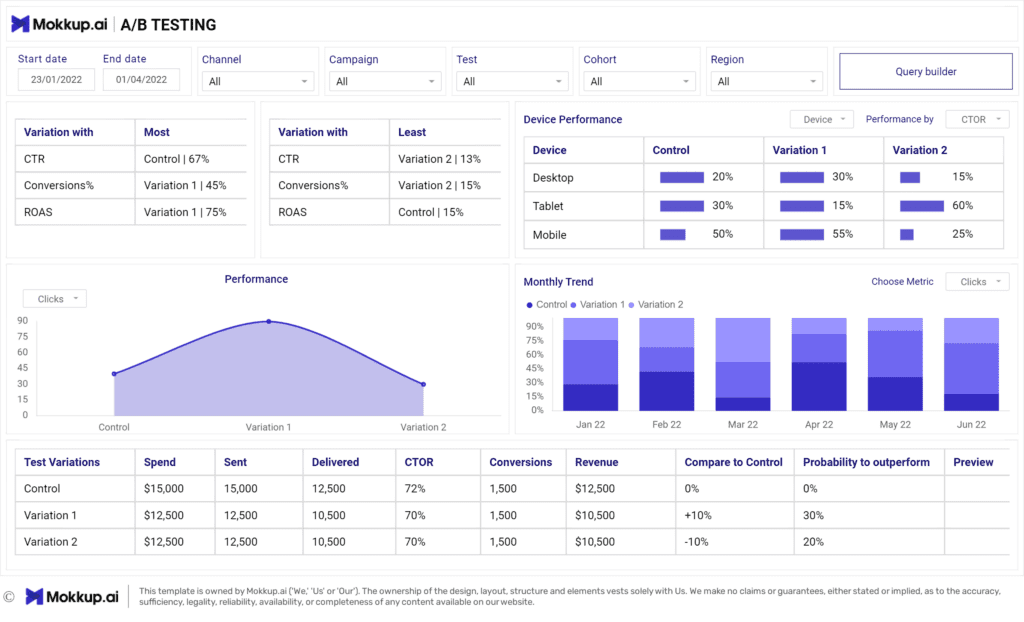
Experts use the AI’s speed to generate genuine conceptual alternatives. Three to five completely different headline strategies for the same offer, each rooted in a different psychological lever — curiosity, specificity, social proof, loss aversion, identity. Then they test those against each other with real traffic. The tool does the generation work; the data does the selection work.
Here’s a practical prompt structure for generating real variants rather than tweaks:
Use the AI to Stress-Test Your Own Arguments
This is the move that most people never think to make, which is exactly why it gives experts such a reliable edge. Once a piece of copy is drafted — whether by AI or by hand — an expert will often feed it back to the model with a very different kind of prompt: find the weaknesses.
Most copywriters, when they’re close to their own work, develop blind spots. They unconsciously protect the assumptions that underlie the copy. The AI doesn’t have that emotional attachment. You can use it as an adversarial reader — ask it to argue against your claims, identify the objections a skeptical prospect would raise, or point out where the logic requires a leap of faith the reader hasn’t been prepared to make.
The responses this kind of prompt produces are genuinely useful. They surface objections you hadn’t consciously considered. They flag the places where you’ve been writing to convince yourself rather than your reader. And critically, they give you a specific list of things to fix before the copy goes anywhere near a real audience.
Taking it further: the red-team pass
Some experts run what’s essentially a red-team pass on their copy before publication. They ask the AI to find every place where a fact could be wrong or misleading, every benefit claim that isn’t backed by specifics, and every call to action that might feel premature given what the reader has been told so far. It’s not foolproof — the AI can miss things, and it can’t replace a real human who knows your audience. But as a first filter, it’s remarkably effective.
Know When the AI Should Stay Silent
The most underrated expert move isn’t a prompting technique. It’s the judgment to know which tasks the AI genuinely helps with, and which tasks it actively makes worse when you involve it.
This isn’t technophobia. It’s craft. And it’s something the most accomplished copywriters articulate consistently: AI is excellent at generation, variation, structural scaffolding, and processing large amounts of raw text into patterns. It is not good — yet, and possibly never — at the things that require genuine firsthand experience, original strategic insight, or the kind of emotional intelligence that comes from actually living inside a specific industry.
Practically, this means experts draw a clear line. They use AI heavily for:
- First drafts of standard formats (emails, product descriptions, ad copy variations)
- Headline and CTA generation at volume, for testing purposes
- Processing and synthesizing large amounts of customer research data
- Structural outlines and logical organization of complex arguments
- Tone and language checks against a brand voice standard
They rely on their own judgment for:
- The strategic positioning of an offer in a competitive market
- Any claim that requires real-world verification before publishing
- The opening and closing of any piece where first and last impressions matter most
- Messaging that needs to navigate genuine cultural or emotional nuance
- The final editorial pass — tone, rhythm, authenticity — that makes something actually worth reading
That last pass is worth lingering on. The final editorial pass is not optional. It’s not a nice-to-have for perfectionist copywriters. It’s the stage where something transitions from “technically adequate” to “worth a reader’s time.” The AI cannot make that judgment. You have to.
Bloomreach: 113% content output increase, 40% traffic lift
Bloomreach, the e-commerce personalization platform, documented what happened when a small content team adopted Jasper AI to meet increased content demand without expanding headcount. The numbers are frequently cited: 113% increase in blog output, 40% jump in website traffic.
What the headline stat doesn’t fully capture: Bloomreach used AI for generation and volume, but maintained human editors making all final decisions on voice, positioning, and accuracy. The output increase was real. So was the editorial oversight that made it publishable.
What This Actually Means for Your Work
None of these seven moves require a premium subscription or a specialized feature. They require a different relationship with the tool — one where you bring more to the session, not less. That’s almost the opposite of how AI copywriting is usually marketed, which tends to emphasize how little you need to do. Put in minimal input, get usable output, repeat.
That model works for some things. Product descriptions for a catalog of 800 SKUs. Subject line variations for a mass email campaign. First drafts of routine formats you’ve produced hundreds of times. For those tasks, low-effort prompting is fine, because the bar is fine.
But the gap between fine and genuinely effective copy is where revenue actually lives. And that gap is closed almost entirely by the quality of the thinking you bring before, during, and after the AI does its part.
The writers commanding the best rates in 2025 and 2026 aren’t the ones who’ve abandoned AI tools — and they’re not the ones who’ve surrendered to them either. They’re the ones who’ve built a working theory of what the tool is good for, and where their judgment is irreplaceable. That theory takes time to develop. These seven moves are a reasonable place to start building it.
Quick Reference: The 7 Moves at a Glance
| # | The Move | Why It Works | Key Metric |
|---|---|---|---|
| 1 | Feed it your customer’s exact words | Output mirrors input — better inputs produce better outputs | Voice-of-customer rewrites: 2–5× conversion lift |
| 2 | Treat every output as a first draft | AI defaults to an adequate average; you need to push past it | Only 34% trust AI content without heavy editing |
| 3 | Build and use a brand voice document | Without it, every session starts from scratch | 61% of marketers: inconsistent tone weakens trust |
| 4 | Assign a specific persona | Specific constraints produce specific, useful outputs | Reduces generic language; improves credibility signaling |
| 5 | Run variants, not iterations | Speed creates testing opportunities that weren’t economical before | A/B testing improves performance by 10–40% |
| 6 | Stress-test your arguments | AI plays skeptical reader without emotional attachment | Finds objections before real readers do |
| 7 | Know when to work without AI | Tool selection is strategy; misapplied tools produce worse results | Human-finished content rated 3× more trustworthy |
Free AI tools for social media in 2026
AI Marketing Tools Examples 2025: 50+ Strategies for Success
Ultimate AI Productivity Hacks from Reddit: Boost Your Efficiency
AI Content Creation Tools