AI Voice Cloning as a Side Hustle
Passive royalties from an AI Voice Library sound like the dream — upload your voice once, get paid forever. The math says otherwise. Here’s what’s real, what’s exaggerated, and the version of this hustle that actually works.
Search “AI voice cloning side hustle” and you’ll find the same promise dressed up a dozen ways: upload a voice sample, sit back, watch royalties roll in. Some of it is true. Most of the eye-catching numbers are self-reported, unverifiable, or describe a completely different business model than the one being sold to you.
We spent time inside the actual rate cards, payout documentation, and legal filings that govern this space — ElevenLabs’ own Voice Library terms, TechCrunch’s reporting on its Reader audiobook payouts, and the current state of U.S. voice-likeness law — and ran the numbers ourselves. This is what we found.
In this article
- The three ways this actually makes money
- The math nobody shows you: what $3,000/month really requires
- What creators have actually reported earning
- The tools, compared honestly
- The legal ground is shifting under this hustle right now
- A realistic starting workflow
- Where people lose money or their channel
- FAQ
What changed since this hustle went viral: The U.S. Senate Judiciary Committee unanimously advanced the federal NO FAKES Act on June 18, 2026 — it has cleared committee but has not passed the full Senate as of this writing. Separately, the EU AI Act’s transparency rules requiring machine-readable watermarking of AI-generated audio took effect in August 2026. And YouTube’s “inauthentic content” enforcement, which specifically targets templated AI-voiceover-plus-stock-footage videos, cost a wave of channels their monetization in early 2026. All three affect how you should structure this hustle going forward — details in the legal section below.
1. The three ways this actually makes money
“AI voice cloning side hustle” gets used as an umbrella term for three genuinely different businesses. Conflating them is where most of the inflated income claims come from.
Model A: Passive licensing (the “upload once” pitch)
You clone your voice, list it in a marketplace such as ElevenLabs’ Voice Library, and earn a per-character royalty whenever someone else generates audio with it. This is the model behind almost every “$150/day while I sleep” post. It is real — ElevenLabs has publicly stated total creator payouts through the Library have crossed $1 million — but the per-unit economics are much thinner than the anecdotes imply, which we’ll show in the next section.
Model B: Voice-clone-accelerated freelance work
You use your own cloned voice (or a licensed one) to produce narration, e-learning modules, ad reads, or dubbing for paying clients on Fiverr, Upwork, or direct contracts — at 3–5x your normal recording speed, because you’re editing and regenerating text instead of re-recording takes. This is a service business with an AI production multiplier, not a passive royalty stream, and it’s the model that most plausibly supports $2,000–$5,000+ a month, because it’s priced like freelance work, not like a marketplace commodity.
Model C: Audiobook and content royalties
Platforms including ElevenLabs’ Reader app pay authors based on listener engagement rather than per-character generation — TechCrunch reported the company pays roughly $1.10 per listener who engages with a title for 11 minutes or more, with average engagement around 19 minutes during its testing phase. This rewards having an actual audience for your audiobook content, which is a content-marketing problem as much as a voice-tech one.
2. The math nobody shows you: what $3,000/month really requires
Here’s where the “passive income” framing falls apart under its own numbers. ElevenLabs’ published default Voice Library rate is $0.03 per 1,000 characters generated by other paid users with your voice — roughly 90 seconds of spoken audio. Voices with rare or in-demand qualities can request custom rates up to roughly $0.20 per 1,000 characters.
To put that in perspective: a 10-minute YouTube script runs about 9,000 characters, which ElevenLabs itself uses as an example — and by their own math, that earns roughly $0.27 at the base rate. Reaching $3,000/month from base-rate licensing alone would mean over eleven thousand ten-minute scripts generated with your specific voice every single month, in a catalog that competes with hundreds of thousands of other voices. That’s not a rounding error away from realistic — it’s a different order of magnitude.
Typical reported monthly ranges by income model — not guarantees. Model A figures are drawn from creator self-reports (see sources); Model B is derived from published per-minute freelance rates; Model C is derived from ElevenLabs’ disclosed per-engagement payout.
Now the model that actually pencils out. Freelancers using voice cloning for narration, e-learning, and ad-read work reportedly charge $50–$200 per finished audio minute, with the clone letting them turn around 3–5x the volume of manual studio recording. At $50/minute, $3,000/month means 60 finished minutes of delivered audio — about two minutes a day. At $200/minute, it’s 15 finished minutes. Neither is a stretch production-wise once the workflow is dialed in. The actual bottleneck isn’t recording speed — it’s finding and keeping clients, which is true of every freelance business and has nothing to do with AI.
The honest takeaway: if someone is pitching AI voice cloning as passive income from a marketplace royalty, the unit economics don’t support “$3K/month” for the vast majority of voices. If they’re describing freelance narration work sped up by cloning, $3K/month is a normal, achievable freelance income — but it’s freelancing, with client acquisition as the real job, not “upload and forget.”
3. What creators have actually reported earning
We looked for verifiable, dated figures rather than screenshots. Here’s what’s out there, labeled by how solid the claim actually is.
| Claim | Source | Reliability |
|---|---|---|
| ElevenLabs’ own stated Voice Library base rate: $0.03 per 1,000 characters, up to ~$0.20 for high-demand voices | ElevenLabs official blog & payouts documentation | Verified — company-disclosed |
| Reader app pays authors ~$1.10 per listener engaging 11+ minutes; average test-phase engagement was 19 minutes | TechCrunch reporting on ElevenLabs’ Reader launch | Verified — independent reporting |
| One Reddit user reported ~$200 in a month from a single uploaded voice | Cited secondhand via ElevenLabs’ own blog post | Reported — unverified individual claim |
| A blogger reported roughly $1,000 earned over 5 months from two library voices (~$200/month average) | Aggregated blog post citing a Reddit-sourced account | Reported — unverified individual claim |
| “$2,847 in 19 days” from voice licensing, “$150+/day” | Self-published Medium post promoting a course/affiliate funnel | Treat as marketing, not data |
| Freelance AI-assisted narration rates of $50–$200 per finished audio minute | Industry how-to guide (VoGen) | Reported — consistent with broader freelance voiceover market rates |
Notice the pattern: every verified, company-disclosed number describes small per-unit payouts that require real scale or an existing audience to add up. Every headline-grabbing lump sum comes from a single self-reported post, often one that’s also selling a course or affiliate link about the same opportunity. That doesn’t make it false — but it’s not evidence, either, and it shouldn’t be the number you build a financial plan around.
4. The tools, compared honestly
You don’t need five subscriptions to start. Most creators doing this well settle on one generation tool and one editing tool.
| Tool | What it’s actually for | Where it fits |
|---|---|---|
| ElevenLabs | Voice cloning, text-to-speech generation, the Voice Library royalty marketplace, and the Reader audiobook app. Professional Voice Cloning requires the Creator plan or above and roughly 2 hours of clean source audio for verification. | Core generation engine for Models A, B, and C above. |
| Descript | Text-based audio/video editing — patch a single word or phrase in an existing recording using your voice model instead of re-recording the whole take. | Editing layer for freelance and content work; commonly paired with ElevenLabs. |
| Murf | A studio-style TTS platform with 200+ stock and cloned voices, plus a contributor program where individuals are paid for recordings used to train future voices. | Alternative generation tool, and a separate one-time-payment path (recording contribution rather than ongoing licensing). |
| Resemble AI / Play.ht / similar API-first providers | Developer-facing voice APIs for building products — apps, IVR systems, accessibility tools — rather than one-off content generation. | Relevant if your actual goal is Model-C-adjacent: building a small SaaS or API-based product around a voice, not freelancing or licensing directly. |
Pricing on all of these changes often enough that we’re not going to print numbers here that will be stale in a quarter — check each provider’s current pricing page before committing to a plan.
5. The legal ground is shifting under this hustle right now
This is the section most “make money with AI voice cloning” content skips entirely, and it’s the one most likely to end your side hustle if you skip it too.
Using your own voice: settled and fine
Cloning your own voice for your own narration, dubbing, or accessibility use is legal. The complications start the moment you’re using, selling access to, or monetizing someone else’s voice.
Using anyone else’s voice: increasingly regulated
Tennessee’s ELVIS Act, in force since 2024, was the first state law to explicitly name voice as a protected right against unauthorized AI cloning, with civil remedies for violations. California, Illinois, and New York have their own right-of-publicity and biometric statutes that courts and regulators are now applying to synthetic voice. At the federal level, the NO FAKES Act (S.4591) — which would create the first federal property right in a person’s own voice and likeness, with statutory damages of $5,000–$25,000 per violation and steeper platform penalties for willful non-removal — passed the Senate Judiciary Committee unanimously on June 18, 2026. As of this writing it has not passed the full Senate. Track its status before assuming it’s settled law.
Disclosure is no longer optional in practice
From August 2026, the EU AI Act requires providers to mark AI-generated audio with machine-readable watermarks and requires deployers to disclose synthetic content to users. YouTube separately tightened enforcement of its “inauthentic content” policy in early 2026, specifically targeting mass-produced videos pairing AI voiceover with generic stock footage and no original commentary — a pattern that cost a documented wave of low-effort AI channels their monetization. Its Partner Program still requires 1,000 subscribers plus either 4,000 watch hours in the trailing 12 months or 10 million Shorts views in the trailing 90 days, and platforms increasingly require labeling of realistic synthetic content on sensitive topics regardless of monetization status.
Practical rule for 2026: disclose synthetic voice use even when it’s your own voice, get written consent before cloning anyone else’s, and don’t touch political, election, or impersonation-adjacent content with a cloned voice — platforms and multiple state laws now treat that as an automatic enforcement category, “satire” defenses included.
6. A realistic starting workflow
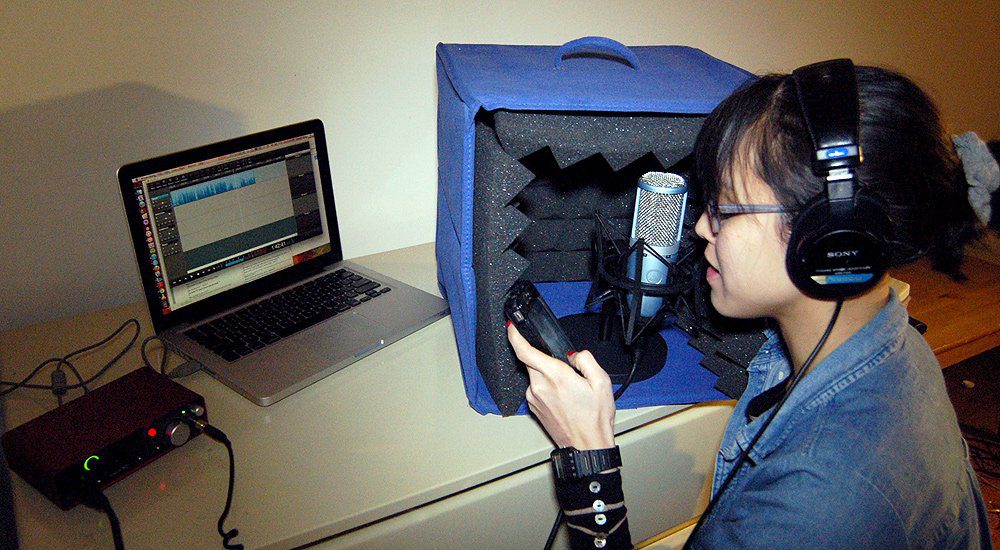
- Record clean source audio, not a quick phone clip. ElevenLabs recommends around 2 hours of consistent-tone audio with no background noise or music for Professional Voice Cloning — the single biggest driver of clone quality is the source recording, not the tool.
- Decide which of the three models you’re actually building. If your goal is $2,000+/month, that’s a freelance service business (Model B) with cloning as your production multiplier — plan your time around client outreach, not passive uploads.
- List on Fiverr and Upwork’s voiceover categories in parallel with any marketplace licensing. Podcasters, course creators, and small agencies are the most common buyers, and freelance rates dwarf per-character royalties.
- Only opt into a Voice Library-style royalty program as a supplementary, near-zero-effort add-on — not your primary plan, per the math above.
- Build a disclosure line into every deliverable (“narration produced with AI voice technology, used with consent”) before a client, platform, or regulator asks you to.
7. Where people lose money or their channel
| Mistake | What actually happens |
|---|---|
| Cloning a voice without documented consent (a client, a public figure, a family member) | Exposure to right-of-publicity claims under state law now, and a federal cause of action if NO FAKES passes — regardless of your intent. |
| Publishing template AI-voiceover-over-stock-footage videos at volume with no original commentary | Flagged under YouTube’s inauthentic content policy; documented monetization losses in early 2026. |
| Treating Voice Library royalties as your primary income plan | The per-character math above means most voices earn tens to low hundreds of dollars a month, not thousands — see Section 2. |
| Skipping disclosure because “it’s just my own voice” | Audience trust cost of being caught non-disclosed is consistently reported as worse than the cost of disclosing upfront — and several jurisdictions are moving toward requiring it regardless. |
| Ignoring licensing terms on commercial usage rights for generated audio | Clients or platforms can reject or demonetize content that doesn’t carry clear commercial-use rights for the voice used. |
FAQ
Can I really make $3,000 a month from AI voice cloning?
Realistically, yes — but almost certainly through freelance narration/production work priced by the finished minute, not through passive Voice Library royalties. The per-character math in Section 2 shows why passive licensing alone rarely gets there for a typical voice.
How much does ElevenLabs actually pay per use of my voice?
The default published rate is $0.03 per 1,000 characters generated by paid users, with a possible custom rate up to roughly $0.20 per 1,000 characters for high-demand voices. Free-tier usage of your voice does not generate rewards.
Do I need permission to clone someone else’s voice?
Yes. Written, informed consent is strongly advised and increasingly required — Tennessee’s ELVIS Act already makes unauthorized voice cloning a civil (and in some cases criminal) matter, and other states apply existing right-of-publicity law the same way.
Is the NO FAKES Act law yet?
No. As of September 2026 it has passed the Senate Judiciary Committee unanimously (June 18, 2026) but has not passed the full Senate or been signed into law. Check its current status before relying on its provisions.
Do I have to disclose that a voice is AI-generated?
Increasingly, yes. Since August 2026 the EU AI Act requires machine-readable watermarking of AI-generated audio and disclosure to users. Several platforms, including YouTube, require labeling of realistic synthetic content, especially on sensitive topics.
What’s the fastest legitimate way to start earning?
List AI-assisted narration services on Fiverr or Upwork’s voiceover categories. Freelance rates ($50–$200 per finished minute) pay far more per unit of effort than marketplace royalties, and you control client acquisition directly.
Will AI voiceover videos get my YouTube channel demonetized?
Not automatically — but templated AI-voiceover-plus-stock-footage videos with no original commentary are the exact pattern YouTube’s inauthentic content policy targets, and a documented wave of channels lost monetization under it in early 2026.
Can I clone my voice for audiobooks and get paid?
Yes — ElevenLabs’ Reader app pays authors roughly $1.10 per listener who engages with a title for 11+ minutes, currently for U.S. authors and English-language titles at launch. This rewards having an actual audience more than voice quality alone.
How much source audio do I need to make a good clone?
ElevenLabs recommends around 2 hours of clean, consistent-tone recordings with no background noise for Professional Voice Cloning. Source audio quality, not the tool itself, is the biggest single factor in clone quality.
Editorial note on methodology: Figures in this article are drawn from platform-published documentation (ElevenLabs’ own blog, help center, and payout addendum), independent reporting (TechCrunch), and legal trackers with disclosed update dates (RecordingLaw.com, Congress.gov). Anecdotal creator earnings are labeled as such and are not presented as typical outcomes. This is informational content, not financial or legal advice — verify current pricing, rates, and legislative status directly before making decisions.
Primary sources referenced
- ElevenLabs — “Monetize your voice with the Voice Library” (official blog); Voice Library Addendum; “What are Voice Actor Payouts?” (help center); API and subscription pricing pages
- TechCrunch — reporting on ElevenLabs’ Reader app author payout structure
- Congress.gov — S.4591, NO FAKES Act of 2026 (119th Congress), bill text and status
- RecordingLaw.com — Deepfake & AI Voice Cloning Laws by State (2026) tracker
- S&P Global Market Intelligence & Holland & Knight — reporting on Senate Judiciary Committee’s June 18, 2026 advancement of the NO FAKES Act