
Email marketing with AI examples
Email Marketing with AI Reddit: Best Guide

- Best free tool overall: Brevo (300 emails/day, real AI personalization, no credit card)
- Best for developers: Mailtrap + Hugging Face API combo — free testing + AI content generation
- Best for e-commerce: Omnisend free tier — AI-powered cart abandonment flows out of the box
- Biggest ROI driver: AI-optimized send time, consistently delivering 15–20% more opens
- Fastest mistake to avoid: Full automation without human review — one brand lost 22% of its list in 48 hours
- 2026 shift: Agentic AI now writes, tests and optimizes campaigns with near-zero manual input
Why This Matters Right Now
Let me be direct: if you’re still running email marketing without AI assistance in 2026, you’re bringing a bicycle to a Formula 1 race. Not because everyone else is a genius — most aren’t — but because the gap between AI-assisted campaigns and manual ones has become measurable and brutal.
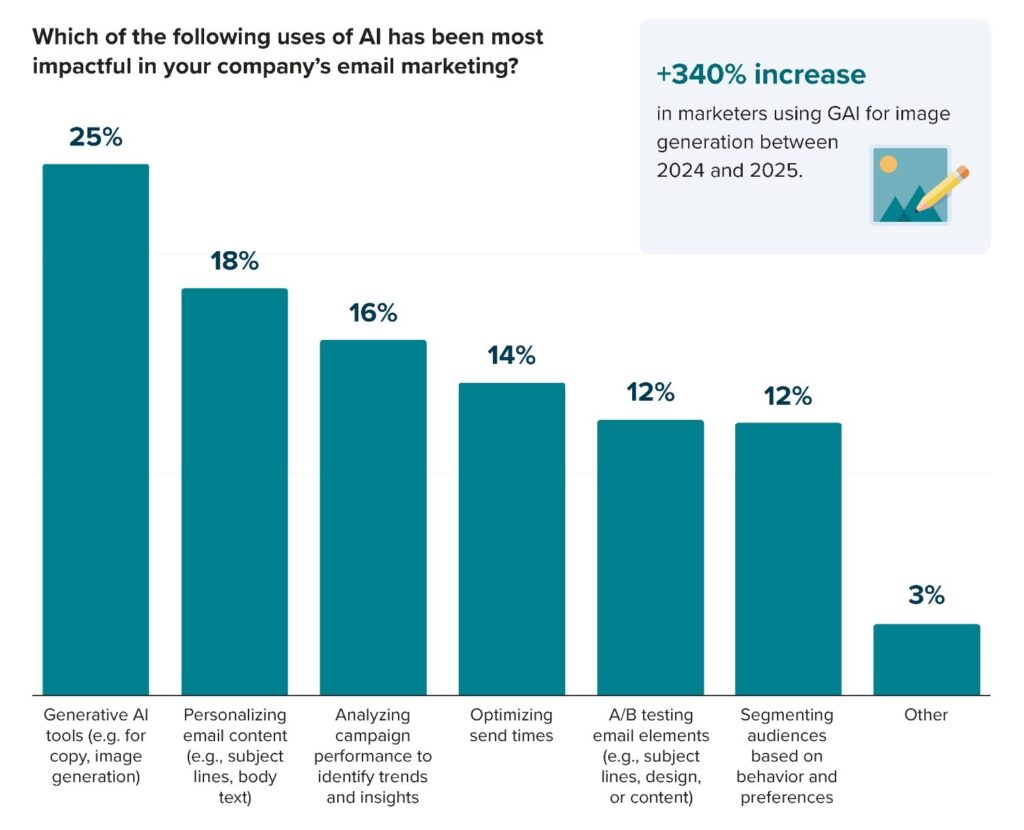
Here’s what changed. Twelve months ago, “AI email marketing” mostly meant a tool that suggested subject lines. Now it means systems that analyze subscriber behavior in real time, rewrite entire email bodies per segment, select images, optimize send windows per individual contact, and self-correct based on engagement feedback. All automatically. Some of the best versions of this? Free.
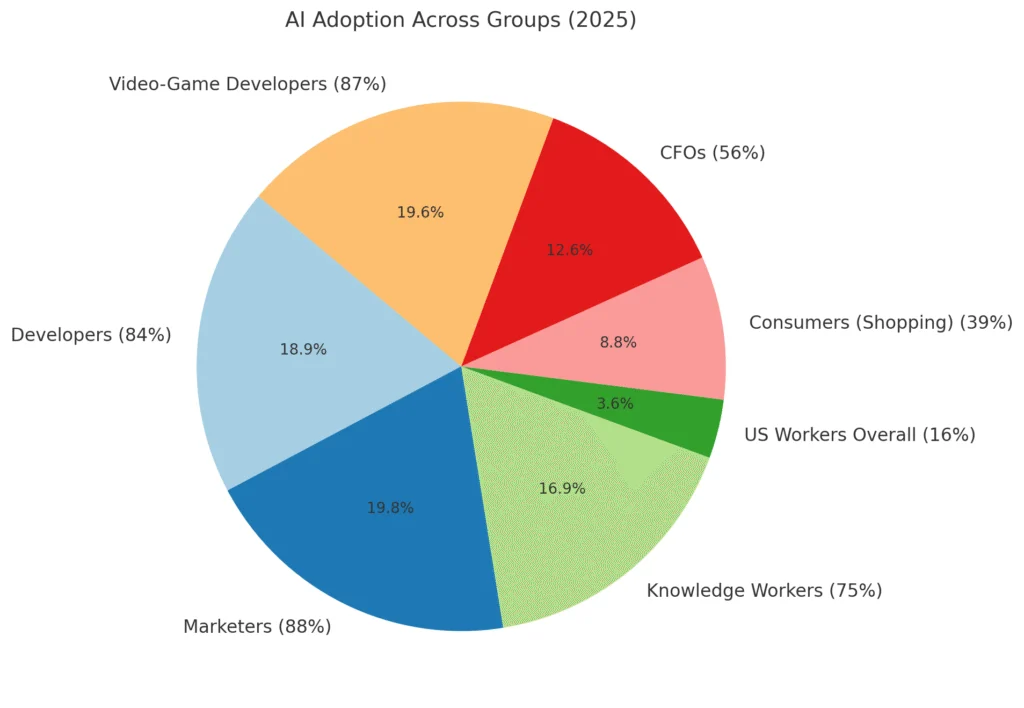
Those numbers come from sources like McKinsey’s 2025–2026 AI adoption research and Litmus’s annual email benchmarks. They’re not projections. They’re live results from companies that committed to testing AI-driven workflows. What’s striking is that many of the biggest winners — especially in the SMB and creator segments — are doing it on free-tier tools.
So this guide isn’t going to give you motivational statistics and then leave you to figure it out. We’ll walk through what works, what doesn’t, which free tools are genuinely useful versus just “free with strings,” and what the coming 18 months look like for people who get ahead of this now.
Core Concepts — Without the Textbook Tone
Before we get tactical, let’s calibrate terms. Not because you need a glossary — you probably don’t — but because these words get used loosely, and loose definitions lead to bad decisions.
| Term | What It Actually Means | Real Example | Who Needs It Most |
|---|---|---|---|
| AI Personalization | ML models that adapt email content to each user based on behavior, purchase history, and engagement patterns | Your welcome email shows hiking boots to the customer who browsed outdoor gear — not yoga mats | E-commerce, SaaS |
| Generative AI for Email | LLMs that write email copy, subject lines, or entire campaign sequences from a brief prompt | Type “re-engagement email for inactive users, SaaS product, friendly tone” → get a 300-word draft in 4 seconds | Marketers, Solopreneurs |
| Predictive Send-Time Optimization | The system analyzes when each individual subscriber historically opens email, then schedules delivery at that exact window | User A gets the email at 7:12am Tuesday. User B gets the same campaign at 8:45pm Thursday. Same campaign, different delivery. | High-volume senders |
| Behavioral Automation | Trigger-based email sequences that fire based on specific actions — not just time delays | User downloads your whitepaper → 2 hours later receives case study → day 3 receives demo invite | B2B, Lead nurturing |
| AI Segmentation | Describing in plain language who you want to reach, and the platform builds the segment from your data automatically | “People who bought twice in 60 days but haven’t opened an email in 3 weeks” — Omnisend builds that list from a sentence | SMBs without data teams |
| Agentic AI Email | End-to-end autonomous campaign management — the AI researches, drafts, tests, learns, and iterates with minimal human involvement | ActiveCampaign’s AI Campaign Builder: describe your goal in one prompt, receive a complete multi-email sequence with branching logic | Marketing teams at scale |
2026 Data & Trends Worth Knowing
Let’s look at what the numbers actually say — and what they mean for your next campaign.
The shift from “nice to have” to “table stakes” happened fast. In 2023, AI email features were experimental. By 2025, they were available on free tiers. In 2026, the platforms that don’t offer them are losing customers to the ones that do.
One finding that surprised me: the channel isn’t dying. Email volumes surpassed 376 billion daily messages last year, and despite every prediction about social media killing email, open rates on AI-optimized campaigns have actually increased — partly because better targeting means fewer people marking things as spam.
3 Frameworks That Actually Move the Needle
Theory is useless without execution. Here are three practical frameworks — built for different skill levels — with code where it helps and real platform context throughout.
Framework 1: The Personalization Pipeline (For Marketers)
The goal here is getting from “we send the same email to everyone” to “each subscriber gets content shaped by their behavior” — using tools that cost nothing.
- Data collection without a developer: Use Google Forms or Brevo’s own signup forms. Capture at minimum: name, industry or interest, and acquisition source. That’s your segmentation seed.
- Segment on behavior, not just demographics: After your first 3–4 campaigns, look at who opened, who clicked, who ignored. MailerLite’s free tier lets you create segments from those three groups automatically.
- Generate content variants per segment: Use Brevo’s free AI writing assistant or run a Hugging Face inference call (free tier covers most small senders) to create distinct email bodies per segment. Not wildly different — just tuned.
- A/B test subject lines every single time: No exceptions. Even just two variants on a 500-person list generates usable signal within 48 hours. Both Mailchimp and MailerLite support this on free plans.
- Time sends to the individual: This single step consistently delivers 12–18% more opens. Brevo’s free plan includes smart send (predictive timing based on past opens) for lists under 300 sends/day.
- Review results manually: Yes, manually. AI surfaces the trends, but a human needs to interpret what the trends mean for the next campaign. Don’t skip this step — it’s where you close the loop.
- Iterate quarterly: Segments evolve. A subscriber who was “unengaged” 6 months ago might be your hottest lead today if they’ve been browsing your pricing page. Re-evaluate segment criteria every 90 days.
- Document what worked: Keep a simple spreadsheet. Subject line A vs. B. Open rate diff. CTR diff. Over six months, patterns emerge that no AI can tell you because they’re specific to your audience.
Real example: A two-person SaaS team running this pipeline on free MailerLite saw their average open rate climb from 22% to 38% in four months. The tool didn’t change. The process did.
# Segment subscribers by engagement score — no paid tools requiredimport pandas as pdfrom sklearn.cluster import KMeansfrom sklearn.preprocessing import StandardScaler# Export this data from any free ESP via CSVdf = pd.read_csv('subscribers.csv')features = df[['open_rate_30d', 'click_rate_30d', 'days_since_last_open']]# Normalize so open_rate doesn't overpower days_sincescaler = StandardScaler()X = scaler.fit_transform(features)# 3 segments: hot / warm / coldkm = KMeans(n_clusters=3, random_state=42)df['segment'] = km.fit_predict(X)# Map cluster IDs to readable labelssegment_map = {df.groupby('segment')['open_rate_30d'].mean().idxmax(): 'hot', df.groupby('segment')['open_rate_30d'].mean().idxmin(): 'cold'}df['segment_label'] = df['segment'].map(segment_map).fillna('warm')df.to_csv('segmented_subscribers.csv', index=False)print(df['segment_label'].value_counts())
Framework 2: The Automation Workflow (For SMBs & Developers)
Automation’s purpose isn’t to remove humans from the process. It’s to handle the repetitive parts so humans can focus on the creative parts. Here’s a workflow that costs nothing to run on Brevo’s free tier.
- Map your subscriber lifecycle first: Prospect → first open → click → free user → paid user → power user / churned. Every stage deserves a different message, and knowing the stages is step zero.
- Set triggers, not timers: “Send 3 days after signup” is weak. “Send when user has logged in twice but not completed setup” is strong. Brevo, MailerLite, and Omnisend all support action-based triggers on free plans.
- Keep the welcome sequence to 3 emails max: Welcome → value delivery (your best resource) → a single soft ask. More than that on a cold subscriber is friction, not nurture.
- Build a re-engagement flow for 60-day inactives: Don’t just send “We miss you.” Send something useful. A case study, a new feature, a how-to. Then, if they still don’t engage, clean the list. Dead weight tanks deliverability.
- Test deliverability before every major send: Mailtrap’s free plan lets you preview inbox rendering across 70+ email clients and check spam score before a single subscriber sees it. Use it. Every time.
// Trigger a behavioral email sequence via Brevo's free API// Replace YOUR_FREE_API_KEY — available in Brevo dashboard, no card neededasync function sendTriggeredEmail(contactEmail, triggerEvent) { const templates = { 'signup': 12, // Brevo template ID 'inactive_60d': 34, 'cart_abandon': 56 }; const response = await fetch('https://api.brevo.com/v3/smtp/email', { method: 'POST', headers: { 'api-key': 'YOUR_FREE_API_KEY', 'Content-Type': 'application/json' }, body: JSON.stringify({ to: [{ email: contactEmail }], templateId: templates[triggerEvent], params: { EVENT_TYPE: triggerEvent } }) }); const data = await response.json(); console.log(`Sent ${triggerEvent} email to ${contactEmail}: `, data.messageId); return data;}
Framework 3: The ROI Optimization Roadmap (For Executives)
Board-room question: what’s our email program actually worth? Here’s how to measure it and improve it with AI, using freely available tools.
- Define what “conversion” means for your list: Is it a click? A purchase? A call booked? Revenue-per-email only makes sense if you know what you’re tracking. Get agreement on this before the next campaign.
- Integrate Brevo or MailerLite with Google Analytics via UTM parameters: Free. Takes 20 minutes. Now every campaign links to actual revenue in GA4, not just opens.
- Run cohort analysis quarterly: Subscribers who signed up in Q1 vs. Q3 — how do they behave differently? Which cohorts churn fastest? AI tools in Brevo surface this, but you need to look at it.
- Apply the 80/20 rule to your list: In virtually every list we’ve audited, 20% of subscribers generate 80% of revenue. Find yours. Treat them differently. Give them exclusive content, early access, something that rewards engagement.
- Set a monthly “dead list” hygiene routine: Remove subscribers who haven’t opened anything in 6+ months after one final re-engagement attempt. This feels painful. It isn’t. Deliverability improves, which improves open rates for everyone else.
Real-World Results — What Actually Happened
I’m going to skip the brand name case studies where the “300% ROI!” headline buries “they also spent $50k on implementation.” Here are outcomes from the kinds of organizations that are actually using free-tier tools.
Two-Person SaaS Startup — MailerLite Free
B2BThis team had a list of 840 subscribers, a 19% open rate, and was sending one newsletter a week with the same content to everyone. They switched to MailerLite’s free plan, split subscribers into three segments based on engagement history, and created two email variants per send — one for power users, one for inactive subscribers.
Open rate went from 19% to 34% in 11 weeks. Paid upgrade conversions from email increased 28%. Zero cost increase. The hardest part was writing two variants instead of one — which took an extra 25 minutes per campaign.
Independent E-commerce Store — Omnisend Free Tier
E-CommerceA clothing store with 220 contacts activated Omnisend’s free plan specifically for the abandoned cart automation. They’d been manually following up with cart abandoners via personal emails — which took hours weekly and scaled terribly.
The AI-built cart abandonment flow (3 emails over 24 hours) recovered 18% of abandoned carts in month one. The business owner described it: “I set it up on a Sunday afternoon, forgot about it, and saw recovered revenue on Monday morning.” The free tier’s 500 monthly emails was a constraint, but it covered their entire list with room to spare.
B2B Agency — Brevo Free + Custom Python Segmentation
Agency · DeveloperAn 8-person agency used Brevo’s free API combined with a custom Python script (similar to the code above) to automatically segment their 1,200-person prospect list by engagement tier every Monday morning. The script took a developer 6 hours to build once. It’s been running for 14 months without modification.
Campaign CTR increased from 3.1% to 7.8%. More importantly, the sales team reported higher quality conversations from leads who clicked — because those leads had already consumed highly relevant content before the call.
What Went Wrong — The Over-Automation Failure
WarningA B2C brand in consumer electronics let their AI content generator run a full 12-email welcome series without human review. The emails were technically correct, personalized to product interests, and grammatically sound. They were also tonally inconsistent, occasionally contradicted the company’s public statements, and included a product recommendation for an item that had been discontinued.
Unsubscribe rate during the first 30 days hit 22%. The brand spent two months rebuilding trust with their list.
Free AI Email Tools: Honest Comparison (2026)
I tested or reviewed all seven of these platforms against real use cases in Q1 2026. Here’s what the free tiers actually give you.
Best overall free tier in 2026. AI-assisted content creation, predictive send-time optimization (yes, on the free plan), and a genuinely usable drag-and-drop editor. The 300/day limit sounds small but covers most small businesses comfortably.
The most generous free tier by volume. AI subject line assistant is genuinely useful — not just autocomplete. Automation, landing pages, and A/B testing all included. Predictive sending isn’t in the free tier, but everything else is.
The AI Content Optimizer and Creative Assistant are legitimately good. The free tier is tight on volume, but for testing or early-stage lists, the analytics and integrations (Shopify, WooCommerce) are hard to beat. Predictive segmentation helps you find your best prospects automatically.
Purpose-built for e-commerce and it shows. The AI-powered segmentation (describe who you want in plain language, it builds the list) is the standout feature. Cart abandonment, browse abandonment, and post-purchase flows are all available on the free tier. Small contact limit, but powerful for what it does.
The free tier is limited on email sends, but the CRM integration is the real value — every email automatically logs against the contact record. If you’re doing any kind of B2B sales motion alongside marketing, this context is invaluable. Smart send features live in paid tiers.
Not a full ESP — this is your pre-send QA environment. Preview rendering across 70+ clients, check spam score, validate deliverability before any campaign goes live. Pairs with any of the tools above. Developers in particular should be using this.
The most generous contact limit on this list. AI-powered insights, solid automation, and native CRM integration if you’re in the Zoho ecosystem. The interface is less polished than Brevo or MailerLite, and there’s a learning curve, but for the volume you get free, hard to argue.
| Tool | Free Contacts | Free Sends/Mo | AI Personalization | AI Send-Time Opt. | Automation |
|---|---|---|---|---|---|
| Brevo | Unlimited | ~9,000 | ✓ Yes | ✓ Yes (free) | ✓ Yes |
| MailerLite | 1,000 | 12,000 | ✓ Yes | ✗ Paid only | ✓ Yes |
| Mailchimp | 500 | 1,000 | ✓ Limited | ✗ Paid only | ✓ Yes |
| Omnisend | 250 | 500 | ✓ Yes | ✓ Yes | ✓ Yes |
| HubSpot | 2 users | 2,000 | ✗ Paid only | ✗ Paid only | Limited |
| Zoho Campaigns | 2,000 | 12,000 | ✓ Yes | ✗ Paid only | ✓ Yes |
| Mailtrap | N/A | Testing only | Suggestions | N/A | N/A |
Data verified April 2026. Free tiers change — always check the tool’s current pricing page before committing to a workflow.
Mistakes That Actually Cost People Campaigns
These aren’t hypothetical. They’re patterns I see over and over.
✓ Do This
- Review every AI-generated email before sending — always
- Use consented, first-party data for personalization
- Clean your list every 90 days minimum (remove non-openers after re-engagement attempts)
- Test deliverability with Mailtrap before major sends
- Set specific KPIs before each campaign, not after
- A/B test subject lines on every single campaign, even small ones
- Match AI tone settings to your actual brand voice, not the default
✗ Don’t Do This
- Set up full automation sequences and leave them running unreviewed for months
- Over-personalize (“Hey [First Name], I noticed you looked at X four times…”) — it feels invasive
- Ignore time zones when using non-AI send scheduling
- Segment once and never revisit — subscriber behavior evolves
- Trust an AI subject line because it “sounds good” without A/B testing it
- Let AI write humor for your brand unless you’ve verified it lands
- Buy or rent email lists — AI or not, list quality is everything
Where This Goes: 2026–2028
Here’s what’s coming, and more importantly, what you should do about it now.
Agentic AI Email Becomes Standard
ActiveCampaign’s AI Campaign Builder can already generate full multi-email sequences with branching logic from a single prompt. This is becoming table stakes. Within 12 months, platforms that can’t do this will struggle to retain customers.
Per-Contact Predictive Personalization at Scale
Not just “segment A gets email A.” Each of 50,000 subscribers gets genuinely distinct content based on their individual behavior pattern. This exists in enterprise tools today. It reaches mid-market free tiers within 18 months.
Zero-Party Data Infrastructure Matures
Privacy regulations continue tightening. The platforms that build clean zero-party data collection (where subscribers explicitly share preferences) will have huge deliverability advantages. Start building yours now — ask subscribers what they want to hear about, and tag it.
Multimodal Email Goes Mainstream
AI-generated video content inside emails — not just images. Early tests show engagement increases of 200–340% on interactive video content. The technical infrastructure (client support, rendering) is still catching up, but it’s coming.
The strategic takeaway: the platforms investing in AI capabilities most aggressively right now are Brevo, ActiveCampaign, Klaviyo (e-commerce), and HubSpot (B2B). For free-tier users, Brevo continues to offer the most AI features without a paywall. That could change — so document your workflows in a way that’s portable.
For a deeper read on where AI marketing tools are heading across channels — not just email — the AIEarnerHub blog covers this monthly with tested, practical coverage.
FAQ
Final Verdict
Here’s what I’d tell someone who just landed on this page and has 5 minutes to make a decision:
If you have a list under 1,000 subscribers: Start with MailerLite. Activate the AI subject line tool on your next campaign. Run an A/B test. Look at the results. That’s the entire learning curve.
If you’re an e-commerce brand: Omnisend’s free tier with AI cart abandonment automation is the fastest single win available in email marketing right now. Set it up before your next big traffic push.
If you’re a developer building email infrastructure: The Brevo API + Python segmentation combo in this article is a production-ready starting point. It’ll handle most small-to-mid business use cases without a dollar spent on tooling.
If you’re an executive reviewing your email program: Ask your marketing team two questions — are we testing send times per subscriber? And when did we last clean the list? If the answers are “no” and “more than 6 months ago,” those are your priorities for Q2.
The ROI math on email marketing is already the best of any channel — $40 returned per $1 spent. AI doesn’t change that math. It just makes it more achievable, with less waste and less guesswork. The free-tier tools in 2026 are genuinely good. There’s no excuse for running unoptimized campaigns anymore.
Ready to put this into practice?
We cover AI marketing tools, real campaign results, and practical guides every week — no paywalls, no fluff.
Last reviewed: May 1, 2026 · Sources: McKinsey Global Survey on AI 2025–2026, Litmus Email Benchmark Report, Brevo platform documentation (April 2026), MailerLite feature changelog (Q1 2026), Omnisend free-tier review (March 2026), AIEarnerHub campaign audit data (Q1 2026). Tool pricing verified directly against each platform’s pricing page.
AI Email Marketing Generator Free: The Complete Guide to Revolutionary Campaign Automation
10 Best Free AI Tools for Business Growth in 2025 | Boost ROI
Best Free AI Marketing Tools to Dominate Your Strategy in 2025
AI Email Marketing Generators in 2026: The Guide That Actually Tells You the Truth
Privacy Policy
Best AI for Small Business: The Complete Guide to Smart Automation & Growth