

You think you understand SEO.
You understand 2023 SEO.
AI Overviews now appear on nearly half of all Google queries. A pre-registered field study confirmed organic clicks dropped 38% on triggered searches. Zero-click has hit 65%. The content that survived the transition did one specific thing differently — and it wasn’t adding more keywords.
The question practitioners keep asking is the wrong one. “How do I rank in the AI Overview?” is 2024 framing. The question that actually governs visibility in 2026 is harder: how do I become the source an AI system trusts enough to cite when a billion-user product is generating the answer?
These are different problems with different solutions. Most SEO guides haven’t caught up. This one starts from the current data.
The numbers in this piece come from named sources: a pre-registered RCT published in April 2026 via the AEA RCT Registry, Ahrefs and Seer Interactive audits with disclosed query counts, Semrush platform data, and Adobe Analytics referral reports. Where data conflicts between sources, both figures are given. The range matters as much as any single number.
The Ground Really Did Shift. Here’s the Proof.
In January and February 2026, researchers ran a pre-registered randomized controlled trial: one group of users saw Google normally, another had AI Overviews hidden in real time. The results were unambiguous. AI Overviews cut outbound organic clicks by 38% on queries where they appeared — and they appeared 42% of the time. Zero-click searches on those queries rose from 54% to 72%.
Seer Interactive’s audit, covering 3,119 informational queries, found organic CTR fell from 1.76% to 0.61% — a 61% drop. These two studies measure different things (experimental vs. observational), which is why their numbers differ. Together they bracket the real impact: somewhere between a 38% and 61% CTR reduction on informational queries where an AI Overview appears.
CTR Impact by Source — Informational Queries with AI Overviews Present
That last bar is important and underreported. Branded queries where an AI Overview appears see an 18% CTR increase, not a decrease. The AI Overview acts as a trust signal that pushes users to click through to the brand they were already looking for. This is the data point that explains why some sites are quietly benefiting from AI search while generic content sites are imploding.
The traffic model most content sites were built on — write informational articles, capture organic clicks — is being restructured around a different outcome: getting cited rather than getting clicked.
This isn’t a tactical shift. It’s an architectural one. And the sites that are adapting fastest made a specific decision about what kind of authority they were building.
SEO, GEO, AEO: Stop Treating These as Three Separate Strategies
The acronyms proliferated faster than anyone’s ability to explain why they matter differently. Let’s be precise.
| Acronym | Full Name | What It Optimizes For | Primary Surface | Still Relevant? |
|---|---|---|---|---|
| SEO | Search Engine Optimization | Rankings in the 10 blue links | Traditional SERP | Yes — foundational |
| GEO | Generative Engine Optimization | Citations in AI-generated answers | AI Overviews, Perplexity, ChatGPT Search | Yes — now critical |
| AEO | Answer Engine Optimization | Direct answers in voice & featured snippets | Google snippets, Siri, Alexa | Absorbed into GEO |
| LLMO | Large Language Model Optimization | Inclusion in LLM training & retrieval pools | ChatGPT, Claude, Gemini responses (non-search) | Emerging — limited measurement |
The reason to stop treating these as separate strategies: approximately 40% of Google AI Overview citations come from pages already ranking in the top 10 organic results, and nearly 70% from the top 100. GEO doesn’t replace SEO — it runs on top of it. Domain authority earned through traditional optimization is the credential AI systems use to decide whose content is trustworthy enough to cite.
Only 274,455 domains have ever appeared in Google AI Overviews, out of approximately 18.4 million domains in Google’s index. That’s 1.5% of indexed sites capturing all AI Overview citations.
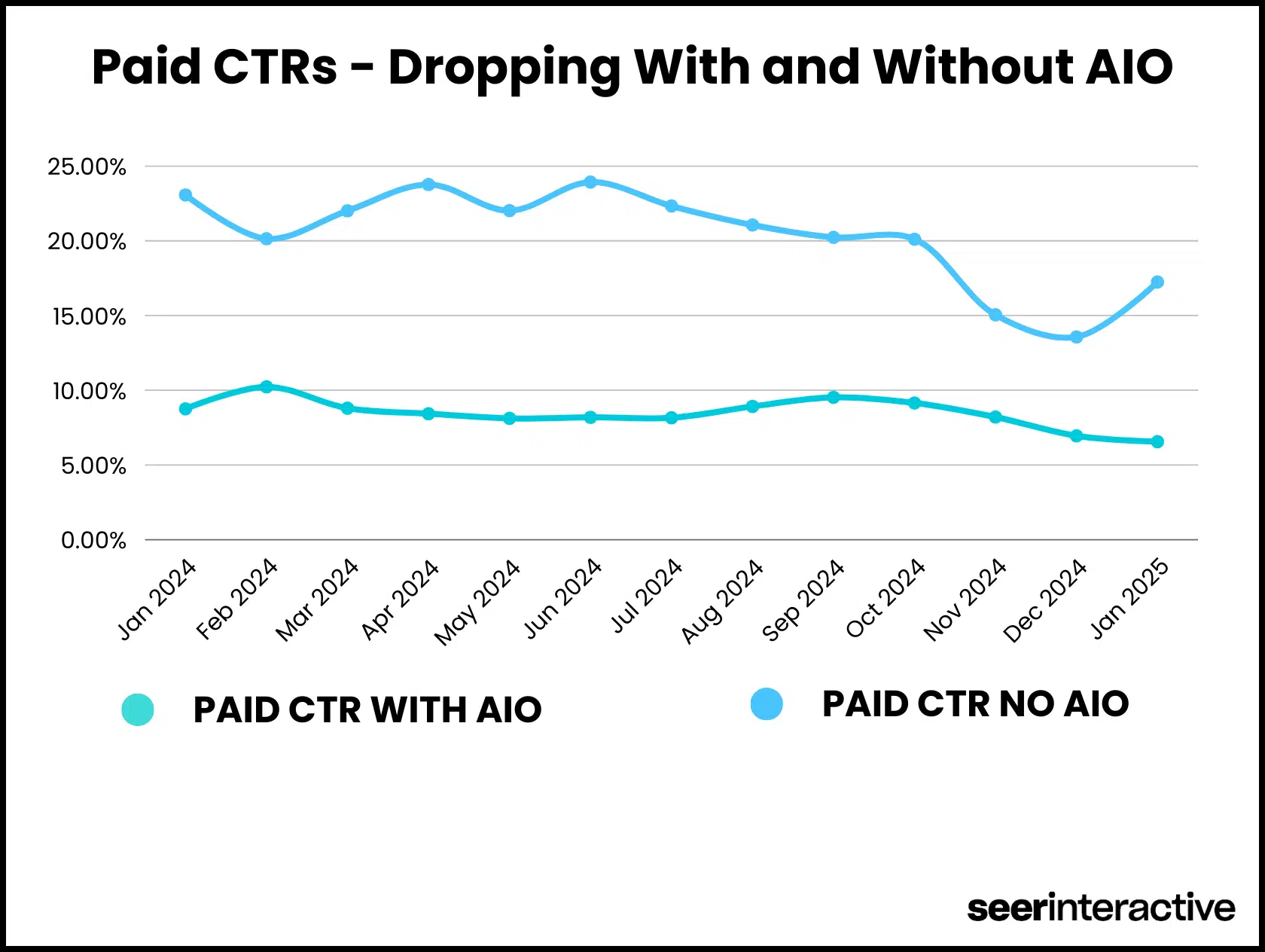
Being cited inside an AI Overview, even without receiving a click, generates measurable downstream effects. Seer’s 2026 data shows that brands cited in AI Overviews earned 15.74% paid CTR on the same queries, compared to 11.19% when uncited — a 40% higher paid click rate, because the citation operates as a trust stamp that affects downstream behavior across the entire SERP.
How LLMs Evaluate Your Content (It’s Not What You Were Told)
The phrase “write for humans, not bots” has been SEO advice since at least 2012. In 2026 it’s more wrong than right. You’re writing for two very different reading systems simultaneously, and the failure mode for each is completely different.
A human reader tolerates a three-paragraph preamble before the actual answer. An LLM used for AI Overview generation does not. LLMs don’t read your page — they extract passages. They’re looking for blocks of text that directly answer the query, can stand alone as a complete response, and come from a source with verifiable entity signals.
The Anatomy of a Citable Content Block
Based on citation analysis from 2025–2026 (NAV43 and Averi), the blocks AI systems actually pull have a consistent structure. The target length is 40–60 words. Longer than that and the extraction gets truncated. Shorter and it lacks the context the AI needs to understand the claim is complete.
// SENTENCE 1: State the answer directly. No warmup.[Direct answer to the implicit question in the heading above].// SENTENCE 2: One verifiable data point or concrete example.[Specific stat, date, name, or observable outcome]— not "studies show," but which study and what it found.// SENTENCE 3: Practical implication (signals actionability to AI).[What this means for someone reading this right now].// Total: 40–60 words. One idea. Self-contained.
This isn’t a creative writing constraint — it’s a retrieval design constraint. The AI system pulling content for an Overview is doing something closer to database extraction than reading. If the answer isn’t in the first sentence, the extraction fails.
Question-Based Headings Are Doing Real Work
Using H2 and H3 headings phrased as questions serves two purposes most writers don’t think about. First, it signals to the AI system that the section that follows is a direct answer to a query — increasing the probability of extraction. Second, it maps your content architecture directly onto the queries people actually type, which is how your content lands in the retrieval pool in the first place.
Content with Q&A formatting is 40% more likely to be cited by AI systems, according to Princeton research cited in Averi’s 2026 synthesis. Content with explicit statistics and citations gets 30–40% higher visibility in AI responses, per Cornell research in the same synthesis. These aren’t tiny margins.
Schema Markup in 2026: Still a Lever, Now a Different One
Schema markup was useful in 2020 for rich snippets. In 2026 it operates as explicit entity communication with AI systems — telling them not just what your content says, but what it is, who wrote it, what it’s about, and what questions it answers.
Sites with structured data see up to 30% higher visibility in AI Overviews, per Averi’s 2026 data. The schema types that matter most right now, in order of impact:
- FAQPage — Maps your content directly to question-answer pairs that AI systems use as retrieval units. If you’re writing anything educational, this is the highest-leverage schema type available.
- Article / NewsArticle — Declares authorship, publication date, and publisher entity. AI systems use this to assess freshness and attribute claims to a source.
- HowTo — Structures sequential processes in a format AI systems can extract step-by-step without reinterpreting the prose.
- Organization + sameAs — Connects your domain to your entity across Wikipedia, Wikidata, LinkedIn, and other authority surfaces. This is how AI systems resolve whether “AIEarnerHub” and the site at aiearnerhub.com are the same thing.
- BreadcrumbList — Signals content hierarchy to both crawlers and AI retrieval systems.
<script type="application/ld+json">{ "@context": "https://schema.org", "@type": "FAQPage", "mainEntity": [ { "@type": "Question", "name": "[The exact question your heading asks]", "acceptedAnswer": { "@type": "Answer", "text": "[40–60 word direct answer. First sentence is the answer. Second sentence adds one data point. Third sentence: practical implication.]" } } ]}</script>/* The text in acceptedAnswer should match the prose in your article almost verbatim. Divergence confuses AI extraction. */
One thing practitioners consistently get wrong: the text value in acceptedAnswer should closely mirror the actual prose on the page. If your schema says X and your article says Y with more nuance, AI systems sometimes pull the schema version (which is shorter) and ignore the prose. Consistency between structured data and visible text is not optional.
The Partial Answer: Not All Traffic Is Dead
This is where most zero-click doom pieces stop being useful. Yes, AI Overviews are devastating for generic informational content. But the damage is profoundly uneven by query type.
| Query Category | AI Overview Frequency | Click Impact | Traffic Outlook |
|---|---|---|---|
| Informational / How-to | 70%+ of results | −38% to −61% CTR | Critical |
| B2B Tech Queries | 82% (BrightEdge, Feb 2026) | High — buyers consult AI before visiting sites | Critical |
| Health / Medical | 43% of queries | High — plus reputational risk from AI errors | High Risk |
| Navigational (brand) | Low | +18% CTR when AIO present (branded queries) | Stable/Positive |
| Transactional / E-commerce | 3.2% (down from 29%) | Minimal — Google pulled back | Stable |
| Local Intent | ~7% of queries | Minimal impact | Stable |
| Complex Research (>8 words) | 7× more likely to trigger AIO | High, but higher-intent survivors convert better | Mixed |
The e-commerce number deserves more attention than it gets. Google’s AI Overview frequency for shopping queries dropped from 29% to 3.2% — not because AI got worse at product queries, but because AI responses on transactional queries weren’t converting into sales. Google pulled back because reducing commerce conversions damages its own ad revenue. This is a rare case where Google’s commercial interests protect a category of publisher.
Clicks surviving AI Overviews convert significantly better. When AI Overviews appear, fewer users click through — but the ones who do have already read a summary and are seeking depth. Digital Applied’s March 2026 data puts this conversion quality lift at 23× over standard search visitors in some categories. Fewer clicks, radically higher intent.
This means traffic forecasts from 2024 are now wrong in both directions: raw volume is worse than predicted, but per-session value is higher than predicted. Remodel both numbers before panicking about the traffic drop.
Why Reddit and LinkedIn Are Now SEO Infrastructure
This is the finding that produced the most skepticism when it first surfaced, but the data is consistent across multiple audits. LinkedIn is the number one cited domain for professional queries across all six major AI platforms, with citation frequency doubling between November 2025 and February 2026, according to Marketers Choice’s LLM retrieval analysis.
The mechanism isn’t mysterious: AI systems calibrate source trust using the same signals humans do — a claim attributed to a LinkedIn post by a named expert with 12 years of documented experience in a domain is more credible than the same claim on an anonymous blog. Reddit threads, particularly in specialist subreddits, appear in Perplexity and ChatGPT Search citations at disproportionate rates because they carry first-person experiential language that AI systems associate with authentic testimony rather than marketing copy.
What this means practically for anyone building AI search visibility:
- Original research, data, or frameworks published on your domain need corresponding distribution on LinkedIn with your name attached — not as a link drop, but as a standalone post that establishes the claim independent of the article.
- Reddit participation in relevant subreddits (r/SEO, niche professional communities) builds citation surface area for Perplexity specifically. Promotional posts get flagged immediately; genuine answers to questions don’t.
- Wikipedia and Wikidata entries for your brand, your founders, and your core concepts are entity anchors that AI systems use to resolve whether your site’s claims are coming from a recognized entity or an anonymous source.
- Consistent entity information across platforms — same name, same description, same URL — increases citation probability by 28–40%, per Averi’s 2026 entity optimization research.
The Harder Question: How Do You Know If Any of This Is Working?
Traditional rank tracking is now measuring the wrong thing. A page can be cited in an AI Overview on 50,000 queries per month and rank position #4 in traditional results — and Google Search Console will show declining impressions and CTR because fewer people are scrolling past the AI Overview to see the organic result. The same page, by the metric that matters in 2026, is performing better than ever.
The measurement stack needs to expand to include:
| Signal | What It Measures | Where to Find It |
|---|---|---|
| AI Overview appearances | How often you’re cited in Google’s generative results | GSC AI Overview report (limited); third-party: Semrush AI Visibility |
| LLM citation tracking | Brand mentions across ChatGPT, Perplexity, Claude, Gemini | Profound, VisibilityX, Otterly.ai |
| Direct & type-in traffic | Brand recall driven by AI citations (users come back directly) | GA4 — channel: direct |
| AI-referred sessions | Actual traffic arriving from AI platforms | GA4 — filter referral source for perplexity.ai, chatgpt.com, etc. |
| Branded search volume | Downstream effect of AI mentions on brand search | Google Search Console — brand queries filter |
If I fast-forward, a lot of what are just information-seeking queries will be agentic in Search.
— Sundar Pichai, Cheeky Pint Podcast, April 7, 2026
Pichai’s statement on that podcast wasn’t a product announcement. It was an architectural declaration. AI Mode crossed 1 billion monthly active users in under a year. The direction of travel isn’t ambiguous. The only debate is how fast the remaining informational query categories get absorbed, and whether “agentic” search — where Google’s AI completes tasks rather than returning links — is years away or months.
What Changes in Your Next Content Brief
Assuming you accept that the shift is real and the direction is clear, the question becomes operational: what does the first article you write after reading this actually look like differently?
Before You Write: Intent-First Architecture
Map the query to a specific user action, not a vague learning outcome. “Learn about prompt engineering” is a category. “Decide which prompt framework to use before starting a project” is a specific decision with a definable answer. The second form produces content that AI systems can extract as an answer. The first produces content that reads like a textbook chapter and gets cited by no one.
Structure: Answer First, Context Second
Every H2 section should open with its own extractable answer block: the direct answer in the first sentence, one data point or concrete example in the second, practical implication in the third. 40–60 words. Then expand with depth for the human reader who wants more.
This is uncomfortable for writers trained in traditional essay structure — you’re putting the conclusion at the top of every section, which feels repetitive. The alternative is invisible to AI retrieval systems.
Entity Layer: Be Knowable
AI systems attribute claims to sources. A source they can resolve to a specific entity — name, domain, expertise signals, cross-platform presence — gets cited. One they can’t resolve gets ignored even if the content is better. Build your entity presence before you need it: author pages, LinkedIn, consistent brand descriptions across all platforms.
Schema: Three Types, Done Correctly
FAQPage on every educational article. Article with dateModified kept current on everything you publish. Organization with sameAs links pointing to your Wikipedia entry, Wikidata item, and LinkedIn company page. These three alone cover 80% of the structured data impact available to most content sites.
Specific Questions, Specific Answers
Does traditional SEO still matter in 2026?
Yes — but its job has changed. Ranking well in traditional results is now primarily a prerequisite for being cited in AI Overviews. Approximately 40% of AI Overview citations come from pages already in the top 10. Traditional SEO earns the domain authority that AI systems then use to decide who to cite. Skip it and you’re building GEO on sand.
How quickly do GEO changes show up in results?
Restructuring existing high-traffic pages with answer-first formatting and question headings typically shows results in Perplexity retrieval within two to four weeks, based on Marketers Choice’s 2026 LLM retrieval analysis. Google AI Overview citation changes take longer — domain authority signals are slower-moving. Schema changes can affect how existing pages are interpreted within days of indexing.
Should I block AI crawlers from my site?
This is a legitimate strategic choice with real trade-offs, not a tactical detail. Blocking GPTBot, ClaudeBot, and PerplexityBot removes your content from those retrieval pools — meaning you won’t be cited, but also won’t have your content used to train models without compensation. Some publishers (including major news organizations) have made this trade explicitly. For most content sites, the citation visibility upside currently outweighs the training data concern, but that calculus may shift as AI licensing deals become more standard.
My traffic dropped 40% in six months. Is any of this fixable?
Depends on the content type. If you were producing purely informational content for high-volume, low-specificity queries (“what is X,” “how does Y work”), that traffic model is structurally broken and won’t fully recover with tactical fixes. The path forward is either moving toward GEO optimization for citation value rather than click volume, pivoting toward commercial/transactional content where AI Overviews are less prevalent, or building a direct traffic channel through newsletter and community that isn’t mediated by search at all. Often all three, sequentially.
What’s the one thing to fix first?
Run Semrush’s AI Search Site Audit to identify technical barriers — a blocked AI crawler makes every content improvement irrelevant. Then take your three highest-traffic pages and restructure them with answer-first opening sections and question-format H2s. That combination, with FAQPage schema added, is the fastest path to measurable AI citation improvement. Don’t optimize new content first; fix the pages that already have authority.
The real reason most sites won’t do this isn’t technical knowledge — you now have it. It’s that restructuring existing content is unglamorous, the results take weeks to measure, and it requires admitting the content you already have isn’t built correctly. Only you know if that’s acceptable.