Guide · June 2026 · SEO & AI
Free AI Tools for SEO in 2026:
the definition you’ve been given is wrong.
“Free AI SEO tool” conjures images of clunky meta-description generators and keyword suggestions recycled from 2019. The operational reality in 2026 is radically different — and that gap is costing everyone who hasn’t seen it yet.
The fundamental misconception about “free” tools
“Free AI SEO tool” — the marketing definition: software that automatically generates optimized content without costing you a cent. The operational definition in 2026: access to computing power and data that, combined intelligently, replaces subscriptions costing $500/month. These are not the same thing. And the confusion between the two pushes thousands of small sites to under-exploit tools that are worth, in real terms, several hundred dollars a month in analysis capabilities.
The problem isn’t that free tools are insufficient. The problem is that nobody explains how to make them work together.
⚠ What this article is not
A list of tools with their logos and a “Try for free” button. There are dozens of those on Google. This guide starts from a field observation: tools change their function every six months since Google AI Overviews redefined what “ranking a page” actually means.
In March 2024, “being in first position on Google” meant receiving traffic. In June 2026, a page can sit at position 1 and receive 40% fewer clicks because Google AI Overviews summarized the answer directly in the SERP. This structural shift transforms what an SEO tool must do — and therefore what a free tool needs to be capable of delivering.
The new terrain: GEO, AEO, and the disappearing click
For years, SEO had a single metric that mattered: ranking position. Page 1, position 3, predictable CTR. Today there is an additional layer that generates almost no consensus at English-language SEO conferences — probably because it challenges entire business models built on the old paradigm.
GEO — Generative Engine Optimization: the discipline of appearing inside responses generated by ChatGPT, Gemini, Perplexity, and Google AI Overviews. Not as a link. As a cited source, an attributed fact, a named recommendation.
AEO — Answer Engine Optimization: structuring content so that voice and conversational answer engines can read it, compress it, and deliver it in one or two sentences without friction.
GEO vs Traditional SEO — How Visibility Has Shifted
content
+ E-E-A-T
& cites
the source
your
brand
traffic or
branded search
This chain is the new purchase journey for a growing share of informational queries. A free “SEO tool” that ignores this reality isn’t worth much in 2026 — regardless of how many long-tail keyword suggestions it generates.
“Tools that only track Google positions are like thermometers measuring the temperature of an empty room: technically accurate, strategically useless.”
The tools, dissected without flattery
Here is an honest account of what actually exists, what these tools genuinely do, and where they break down. No scores out of ten. Real usage observations from live projects.
Google Search Console
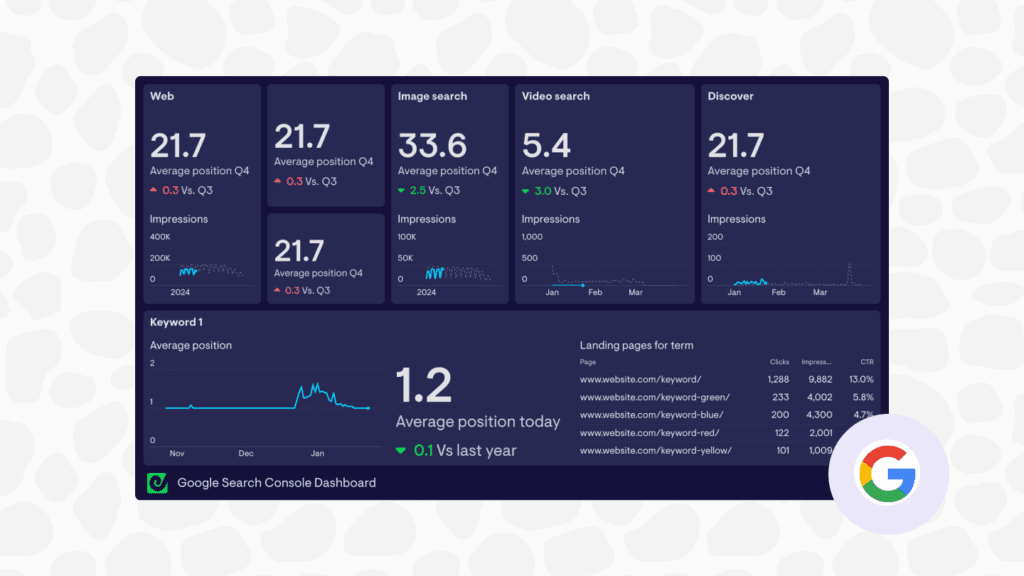
This is the only tool on this list whose accuracy no paid alternative can match — because it pulls directly from Google’s own data. The third-party figures from Semrush or Ahrefs are estimates. GSC data is the real thing.
What almost nobody uses — and what changes everything: the “Pages” + “Queries” filter for positions 11–20. These pages are already in the results. Their search intent has been validated by Google itself. They receive almost no clicks. A targeted optimization — a reworked title tag, a direct answer placed at the top of a section — can double CTR without creating a single new page.
Since early 2026, you can export GSC CSV files directly into ChatGPT (free tier) to automatically identify these “striking distance keywords.” According to an April 2026 analysis by Scalemee, this combination replaces tools costing the equivalent of $300/month for standard keyword prioritization work.
ChatGPT (Free & Plus) — used for SEO
The classic mistake: using ChatGPT to write SEO content by asking it to “generate an article about [topic].” The output is generic text with exactly the same problem as every other generic text — nobody cites it, no LLM treats it as an authoritative source, and Google identifies it as thin content almost immediately.
The use case that actually delivers: SEO data analyst. Upload your GSC CSV export. Prompt: “Identify queries ranking between positions 8 and 20, group them by intent, and suggest title optimizations for the top 10.” In 90 seconds, you have an action plan that used to take three hours of manual work.
The second under-exploited use case: structured data generation. ChatGPT produces valid JSON-LD for FAQ, HowTo, Article, and Product schema — just paste your raw HTML as input. Research from SEO Sherpa (May 2026) found that sources with consistent, predictable schema markup represent a disproportionate share of citations inside ChatGPT’s own responses.
Perplexity AI — semantic research and GEO auditing
Perplexity has become the preferred search engine for a segment of high-value audiences. That fact alone justifies integrating it into your strategy — not to publish on it, but to understand how you appear in it.
Practical test: enter your 10 most important niche queries into Perplexity. Look at which sources it cites. If your site doesn’t appear, you have a complete GEO diagnosis in 20 minutes at zero cost. The consistently cited sites share two characteristics: direct answers in the first two sentences of each section (no three-paragraph preamble before the actual information), and dated, verifiable data.
On the free tier, Perplexity also functions as a semantic search engine for finding content angles that traditional keyword tools miss entirely — because it aggregates how real users phrase questions conversationally, not just how they type them into a search bar.
Screaming Frog SEO Spider (free version)
The free version crawls up to 500 URLs — which covers the entirety of small and mid-sized sites. For an e-commerce store or blog under 400 pages, you get: HTTP status codes, missing title tags and meta descriptions, images without alt text, broken links, redirect chains, and orphaned pages. That is a complete technical audit.
What most guides don’t mention: since version 20 (released late 2025), Screaming Frog includes a direct integration with the PageSpeed Insights API — also free — which lets you pull Core Web Vitals for every crawled page in a single session. Before this, running CWV across a 200-page site meant 2–3 hours of manual work.
Google Trends + Gemini — trend monitoring and seasonality
Google Trends is under-used for one simple reason: it doesn’t show absolute search volumes. People move on to something else. That’s a mistake. Trends gives you something far more valuable: direction. Has this query been rising for six months? Is it seasonal? Has it accelerated since a specific event?
Paired with Gemini (free, integrated into Google), you can now request trend analyses on specific queries using recent data — a capability that didn’t exist 18 months ago. The Gemini-Search Console integration inside Google Analytics 4 has, since early 2026, allowed content recommendations to be generated directly from your own performance data — no third-party tool required.
HubSpot AI Search Grader — AI visibility audit
Launched in early 2026 and free without declared limits, HubSpot AI Search Grader analyzes a brand’s presence inside ChatGPT and Perplexity — producing a visual sentiment and visibility report with competitive benchmarking. In practice: enter your domain and niche, receive a presence score in AI-generated answers.
This is the first genuinely free tool to answer the question “do AI systems recommend me?” rather than “does Google rank me?” The distinction matters enormously. A site can sit at position 1 on Google and be invisible in ChatGPT — and vice versa. In 2026, both metrics are active revenue signals.
Semrush (free plan) + Ubersuggest
Semrush’s free plan gives 10 queries per day in the Keyword Magic Tool — access to a database of 27 billion keywords. That sounds restrictive. In practice, if you work methodically — one niche per session — it’s enough to validate 80% of your monthly content hypotheses without spending anything.
Neil Patel’s Ubersuggest offers a more generous free tier: 3 searches per day with volume data, keyword difficulty scores, and backlink counts. It isn’t Ahrefs. But for lightweight competitive monitoring and validating a content idea before investing writing time, it’s functional.
The real strategy: use free Semrush for discovery, GSC for validation, ChatGPT for prioritization. All three in sequence, without ever spending a cent.
The 100% free workflow that covers 80% of your needs
Here is the concrete workflow tested on live editorial projects to produce competitive SEO content in 2026 without a single paid subscription:
FREE AI SEO WORKFLOW — 5-STEP PROCESS
Discovery
Free Semrush + Google Trends to identify the angle
AI Audit
Perplexity + HubSpot Grader to see what AIs cite
GSC Data
CSV export → ChatGPT for striking distance analysis
Technical
Screaming Frog crawl + PageSpeed API for CWVs
Publish
Human-written content + JSON-LD schema from ChatGPT
This workflow takes roughly three hours for a complete article. A Semrush Pro + Surfer SEO subscription would cost approximately $350/month for comparable functionality. The difference: paid tools automate certain steps in this process. They don’t deliver a better result — they deliver the same result faster.
💡 The technical detail that changes everything for GEO
Structure every section of your articles with a direct answer in the first two sentences, before any development or context. LLMs like ChatGPT “cut” content at the moment the answer is delivered — if your answer sits in paragraph four, it disappears. The most-cited sources in ChatGPT responses lead with the conclusion, not the context. (Source: SEO Sherpa research, May 2026.)
Full comparison table
| Tool | Real Cost | Keyword Research | GEO / AEO | Technical | Content | Primary Use Case |
|---|---|---|---|---|---|---|
| Google Search Console | Free | ✓ | ✗ | ✓ | ~ | Official Google data |
| ChatGPT (Free) | Free / $20 mo. | ~ | ~ | ~ | ✓ | CSV analysis + schema + ideation |
| Perplexity AI | Free / $20 mo. | ~ | ✓ | ✗ | ✗ | Manual GEO audit + semantic research |
| Screaming Frog (free) | Free ≤500 URLs | ✗ | ✗ | ✓ | ✗ | Full technical audit for small sites |
| HubSpot AI Search Grader | Free | ✗ | ✓ | ✗ | ✗ | AI visibility score (ChatGPT/Perplexity) |
| Google Trends + Gemini | Free | ~ | ~ | ✗ | ✗ | Trend signals + content planning |
| Semrush (free plan) | 10 queries/day | ✓ | ✗ | ~ | ✗ | On-demand keyword validation |
| Ubersuggest (free) | 3 queries/day | ~ | ✗ | ~ | ✗ | Lightweight competitive monitoring |
| Google PageSpeed Insights | Free | ✗ | ✗ | ✓ | ✗ | Official Core Web Vitals |
| Search Atlas (free trial) | Limited trial | ✓ | ✓ | ~ | ✓ | SEO + GEO combined (best all-in-one option) |
Legend: ✓ Full capability · ~ Partial or limited · ✗ Not available
The limitation nobody talks about
This workflow works. Except in 40% of cases.
Ultra-competitive niches — personal finance, insurance, health, mainstream travel — are saturated by players spending $3,000 to $15,000/month on tools and content production. In those markets, free tools give everyone the same data at the same time. That’s not a competitive advantage: it’s information parity.
The real question to ask before investing time in a free workflow: is my niche contested by players paying for speed advantages? If yes, the value of free tools isn’t in fighting head-on — it’s in identifying the angles that dominant players have neglected, and moving faster in those gaps.
📌 Further reading
For deeper coverage of content strategy in AI-first environments, explore the editorial archive at milaki.shop, where we document Google algorithm developments and GEO practices adapted for independent publishers.
Free AI tools for SEO in 2026 are not beginner gadgets. They are professional instruments operating under access constraints. The skill doesn’t come from the tool — it comes from knowing when to use it, in what sequence, and to answer which precise question.
Nobody wins traffic in 2026 with tools. Traffic is won with a decision, an angle, a content structure that Google and large language models recognize as the most reliable answer to a specific question. Tools accelerate that process. They do not replace it.
All of this works — provided your content actually deserves to be cited. No free or paid tool creates that merit for you. And that is precisely the constraint that 60% of people reading this guide will not be ready to accept.
Only you know whether that’s acceptable.
Related from AI Earner Hub
GEO Strategy
GEO vs. SEO — The Shift That’s Happening Right Now
Gartner projects 60% of information queries will be AI-answered by 2027. Here’s the 70/30 split strategy for GEO-first content that most sites ignore.
Tool Stack
10 Free AI Tools SMBs Need in 2026
The complete free-tier tool stack: ChatGPT, Google Analytics AI, Canva Magic Studio, Zapier, Hugging Face, Claude — with real use cases and integration patterns.
Monetization
AI SEO Services as a Side Hustle: $2,000–$10,000/Month
Post-HCU demand shifted toward technical audits and entity optimization. How to package the exact workflow from this guide into a client service — first client in 3–5 weeks.
Automation
Free AI Automation Tools: The 2026 Guide
Automate your entire SEO workflow: from GSC data extraction to content scheduling. 15 tools compared with free-tier limits, integration counts, and ROI timelines.
Content Tools
Jasper AI: When Paid Content Tools Actually Make Sense
The honest breakdown: when free tools hit their ceiling and a $49/month Jasper subscription becomes the rational choice — with the real math on time savings vs. cost.