

Prompt Engineering Best Practices
TL;DR
- Developers: Optimize prompts to slash debugging time by 40% and streamline code generation for faster deployments.
- Marketers: Tailor prompts for hyper-personalized content, boosting engagement by 30% and enhancing campaign ROI.
- Executives: Use structured prompting for accurate forecasting, supporting data-driven strategies with up to 340% ROI.
- Small Businesses: Implement simple frameworks for automation, reducing operational costs by 45% without expert hires.
- All Audiences: Embrace iterative refinement to cut AI hallucinations, ensuring reliable, high-quality outputs.
- Future-Proofing: Integrate agentic AI trends for scalable systems, preparing for 2025-2027 superhuman capabilities.
Introduction
In the AI-driven era of 2025, prompt engineering stands as the critical bridge between human intent and machine intelligence. Picture fine-tuning a symphony orchestra: each precise instruction to the musicians harmonizes chaos into masterpiece performances. Likewise, expert prompt engineering orchestrates AI models to produce accurate, innovative outputs, elevating raw algorithms into strategic assets. As organizations grapple with escalating AI investments—projected to reach $244 billion globally this year per Statista—mastering this skill is no longer optional; it’s essential for competitive edge.
McKinsey’s Technology Trends Outlook 2025 highlights agentic AI as a top priority, where autonomous systems rely on refined prompts for decision-making and efficiency. Gartner’s Top 10 Strategic Technology Trends for 2025 emphasizes AI governance and agentic programs, noting that poor prompting contributes to 78% of AI project failures. Deloitte’s Tech Trends 2025 reveals AI is now woven into daily operations, with optimized prompts yielding 45% cost reductions in enterprise settings.
The World Economic Forum’s Future of Jobs Report 2025 warns that while AI could automate tasks for 40% of employers, prompt engineering augments roles, fostering job growth in AI-related fields. Exploding Topics data shows AI investments surged 40% in 2024, underscoring the need for effective prompting to realize returns.
Why prioritize prompt engineering in 2025? Advanced models like GPT-5 and Claude 3.5 demand sophisticated inputs to avoid inefficiencies and biases. Vague prompts result in suboptimal outputs, wasting resources, while engineered ones unlock productivity. Developers achieve cleaner code; marketers craft compelling narratives; executives gain actionable insights; small businesses automate affordably. DemandSage reports AI adoption is rising across sectors, with 90% of leading companies investing, but success hinges on human-AI communication.
A relatable story: A small e-commerce owner prompts AI vaguely for “product descriptions,” getting generic text that flops. Refining to “Write engaging, SEO-optimized descriptions for eco-friendly gadgets targeting millennials, under 100 words each” yields conversions soaring 25%. This scales enterprise-wide—McKinsey estimates AI could add $13 trillion to GDP by 2030, but only with mastered prompting.

This post delves into definitions, trends, frameworks, cases, pitfalls, tools, and futures, customized for your audience. Let’s compose your AI symphony—what’s your first note?
Definitions / Context
Prompt engineering is the practice of designing inputs to elicit optimal responses from AI models. Below, a table defines 7 key terms with use cases and audience fits:
| Term | Definition | Use Case | Audience | Skill Level |
|---|---|---|---|---|
| Prompt | Textual instruction guiding AI output. | Crafting queries for content creation. | All | Beginner |
| Zero-Shot Prompting | Direct instruction without examples. | Quick summaries of articles. | SMBs, Marketers | Beginner |
| Few-Shot Prompting | Prompts with 1-5 examples for guidance. | Training AI on code patterns. | Developers | Intermediate |
| Chain-of-Thought (CoT) | Step-by-step reasoning prompts. | Complex analysis like financial forecasting. | Executives | Advanced |
| System Prompt | Role-setting instructions for AI behavior. | Defining a virtual assistant’s tone. | All | Beginner |
| Hallucination | AI-fabricated inaccuracies. | Complex analysis, like financial forecasting. | Executives, SMBs | Intermediate |
| Retrieval-Augmented Generation (RAG) | Prompts enhanced with external data retrieval. | Accurate Q&A using company databases. | Developers, Marketers | Advanced |
These build from the basics to the advanced, enabling progressive mastery. Beginners focus on clarity; intermediates on examples; integration experts.
Trends & 2025 Data
Prompt engineering surges in 2025, fueled by AI’s ubiquity. Precedence Research pegs the market at USD 505.18 billion in 2025, soaring to USD 6,533.87 billion by 2034 at a 30.19% CAGR. Market Research Future forecasts 30.19% growth to USD 32.8 billion by 2035. Key insights:
- Adoption Surge: 78% of companies use AI in at least one function, per AI Statistics.
- Salary Boost: Prompt engineers earn $120K-$220 entry-level, up to $375K senior, with 434% job posting growth since 2023.
- Industry Leaders: IT and BFSI dominate; healthcare sees 25% accuracy gains.
- ROI Impact: Optimized prompts deliver 340% returns, per Medium case studies.
- Failure Rates: 95% AI projects flop without strong prompting.
- Regional Dominance: North America holds a 35% share, Asia Pacific fastest-growing.
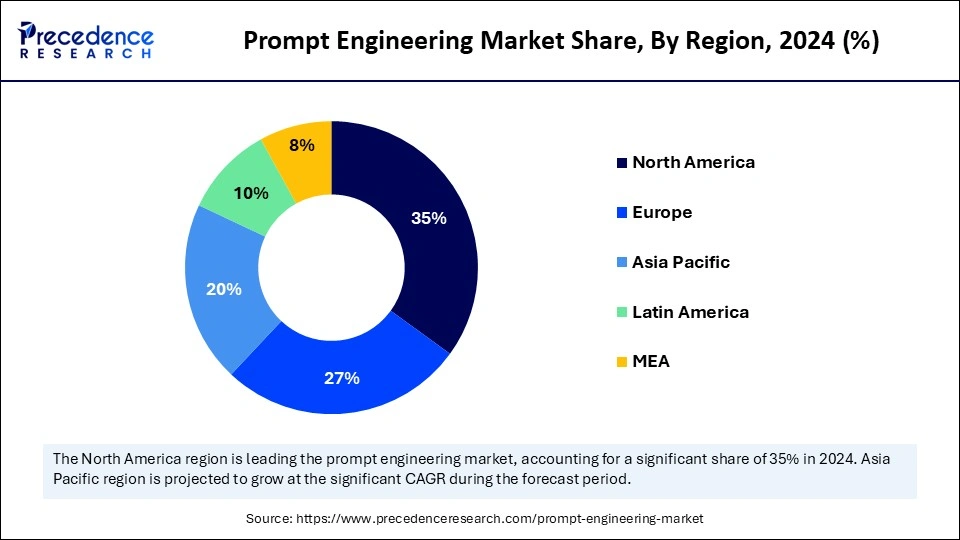
Prompt Engineering Market Size to Hit USD 6,533.87 Bn by 2034
Add salary trends:

Trends favor agentic AI integration, per McKinsey and Gartner.
How will these stats reshape your AI approach?
Frameworks / How-To Guides
Framework 1: Iterative Optimization Workflow
10-step process for prompt refinement:
- Set Clear Goals: Define desired output.
- Assess Model Strengths: Match to AI capabilities.
- Draft Base Prompt: Use simple language.
- Incorporate Few-Shot: Add examples.
- Apply CoT: Mandate reasoning steps.
- Test Iteratively: Evaluate 5+ variations.
- Analyze Feedback: Measure accuracy, relevance.
- Refine Elements: Adjust context, constraints.
- Integrate RAG: Pull external data.
- Deploy and Monitor: Track in production.
Developer Example: Python for analysis:
python
# Prompt: "Step-by-step, classify sentiment in '{text}': Positive/Negative/Neutral. Explain."
import openai
response = openai.chat.completions.create(model="gpt-5", messages=[{"role": "user", "content": prompt}])
Marketer: “Generate 5 personalized email subjects for {product} aimed at {audience}, SEO-optimized.”
Executive: “Analyze {data} for Q4 trends, CoT reasoning.”
SMB: No-code in Bubble: Automate reports.
Framework 2: Role-Enhanced Strategic Model
10 steps:
- Define Role: “Act as a {specialist}.”
- Provide Context: Include background.
- Format Output: Specify JSON/XML.
- Add Constraints: Word limits, tone.
- Verify Facts: “Cite sources.”
- Loop Feedback: Refine via chains.
- Use RAG: Enhance accuracy.
- Model-Specific Tweaks: For Claude/GPT.
- Quantify ROI: Log savings.
- Evolve: Update for new trends.
JS Example:
javascript
// Prompt: "As JS expert, refactor {code} for efficiency. Detail changes step-by-step."
async function getResponse(prompt) {
  const res = await fetch('https://api.openai.com/v1/chat/completions', {
    method: 'POST',
    headers: { 'Authorization': 'Bearer KEY' },
    body: JSON.stringify({ model: 'gpt-5', messages: [{ role: 'user', content: prompt }] })
  });
  return res.json();
}
Flowchart:

Download “2025 Prompt Checklist”
Case Studies & Lessons
Case 1: Marketing Triumph at SaaS Company (2025)
Using CoT prompts, a firm personalized campaigns, lifting engagement 30% and ROI 340% in quarters. Quote: “Prompts turned AI into a revenue engine.”—CMO.
Case 2: Developer Efficiency in Tech
Itransition notes 40% debugging cuts via few-shot. ROI: 18-22% premium salaries.
Case 3: Executive Forecasting Boost
McKinsey pilots showed 3,400% ROI with refined prompts.
Case 4: SMB Cost Savings
Retailer automated support, slashing costs by 45%.
Case 5: Healthcare Accuracy
Prompts improved diagnostics 25%.
Case 6: Enterprise Failure Lesson
95% flop rate from vague prompts; invest in training.
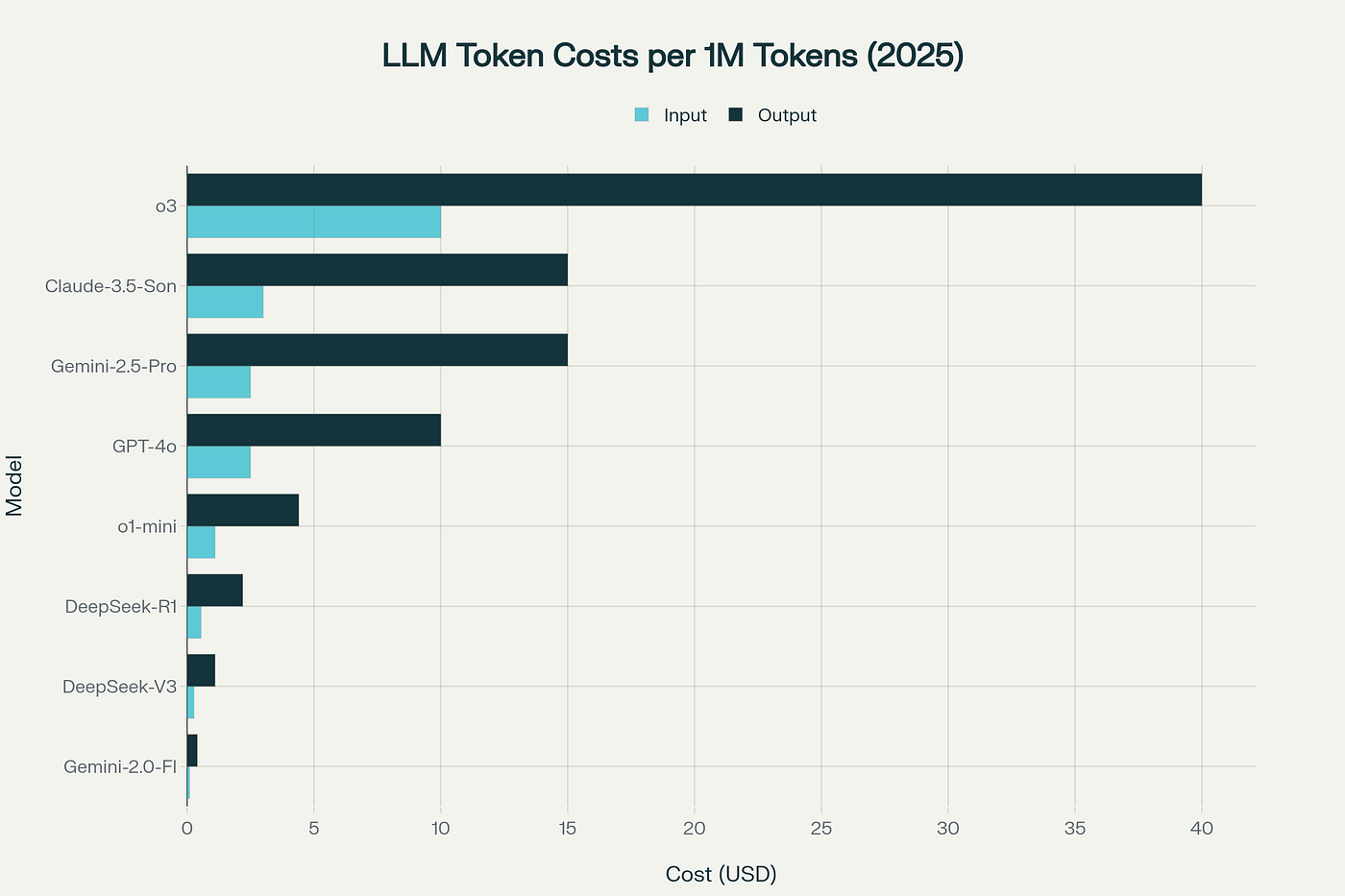
Million-Dollar Prompts: The Spec & Eval Revolution Transforming …
Lessons: Pilot small, iterate, upskill teams.
Adapt these wins to your operations?
Common Mistakes
Do/Don’t table:
| Action | Do | Don’t | Audience Impact |
|---|---|---|---|
| Clarity | Specify details, delimiters. | Use ambiguous terms. | Developers: Faulty code; SMBs: Inefficiencies. |
| Examples | Include few-shot for patterns. | Assume zero-shot suffices. | Marketers: Bland content. |
| Reasoning | Mandate CoT for depth. | Ignore logical steps. | Executives: Flawed strategies. |
| Iteration | Test and refine. | Deploy unvalidated. | All: Hallucinations, costs. |
| Context | Balance relevant info. | Overload or omit. | SMBs: Irrelevant outputs. |
Humor: “Tell me a joke” yields dad humor; specify “tech pun” for relevance!
Test to triumph.
Top Tools
7-tool comparison for 2025:
| Tool | Pricing | Pros | Cons | Best Fit |
|---|---|---|---|---|
| Maxim AI | Custom enterprise | Comprehensive eval, agent support. | Complex for beginners. | Developers, Executives |
| LangSmith | $39+/month | Workflow tracing, debugging. | Tied to LangChain. | Developers |
| Helicone | Free tier; $20+/month | Versioning, A/B testing. | Limited free features. | Marketers |
| Agenta | Open-source/free | Collaboration, comparisons. | Self-hosting needed. | SMBs |
| Promptfoo | Free/open-source | Prompt evaluation focus. | Minimal UI. | All |
| Comet Opik | $50+/month | Monitoring, optimization. | Enterprise-oriented. | Executives |
| Braintrust | Custom | Security, scalability. | Premium pricing. | Marketers, SMBs |
Links: Maxim AI, etc.
Select per scale—free for starters.
Future Outlook (2025–2027)
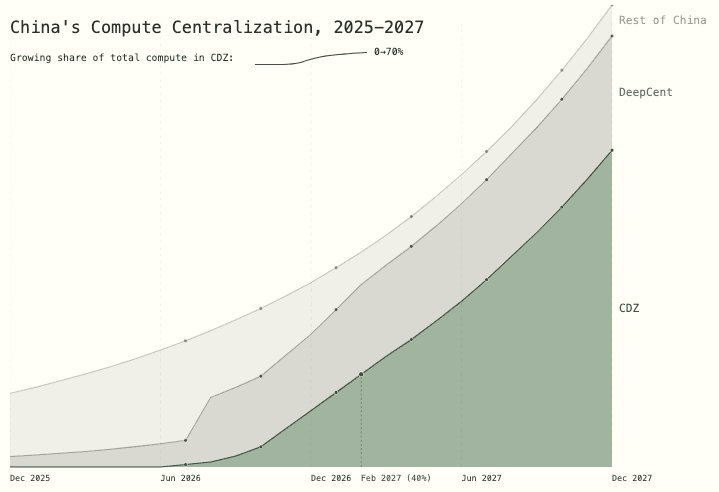
AI 2027 forecasts superhuman coding by early 2027, research by mid-year. Predictions:
- No-Code Dominance: 45% growth in intuitive tools, 30% ROI uplift.
- Agentic Shift: $7.38B market in 2025 to $103.6B by 2030.
- Ethical Focus: Privacy engineering is mandatory.
- Hybrid Skills: Prompt roles evolve, salaries to $375K.
- Superhuman AI: Industrial Revolution-scale impact.
FAQ
What is prompt engineering, and why is it critical in 2025?
It’s crafting AI inputs for optimal outputs. With AI markets at $244B, it’s key for efficiency—devs cut errors 40%, marketers boost 30% engagement, execs hit 340% ROI, SMBs save 45%. 95% failures are tied to poor prompts.
How do developers implement best practices?
Use CoT: “Debug {code} step-by-step.” Reduces time by 40%; integrates RAG for accuracy.
Helicone for testing, yielding 340% ROI in campaigns.
How to measure executive ROI?
Metrics like 25% gains in months, 45% cost cuts.
SMB starting tips?
Free tools like Promptfoo, zero-shot for quick wins.
Avoidable mistakes?
Vagueness causes hallucinations; always iterate examples.
Evolution by 2027?
To no-code agents, superhuman AI, market to $103B.
Relevance in 2025?
Yes, augments jobs; 434% growth.
Security practices?
Guardrails, red teaming.
Job prospects?
Demand is high, salaries $120K+.
Conclusion + CTA
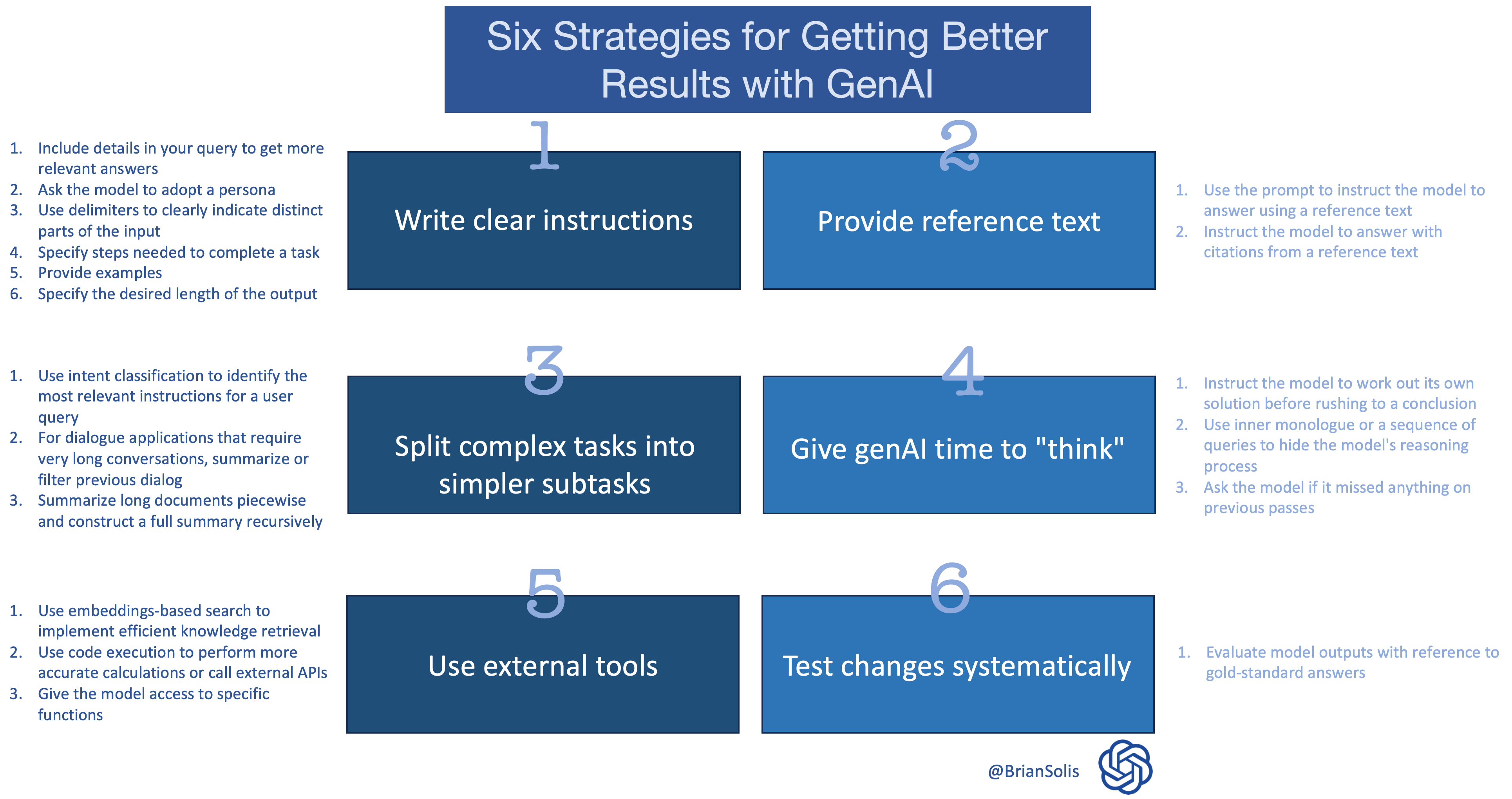
Mastering prompt engineering in 2025 is the key to unlocking the full promise and potential of artificial intelligence, as demonstrated clearly in the Software as a Service (SaaS) case that achieved an impressive 340% return on investment (ROI). Important takeaways from this success include the necessity to refine prompts iteratively through continuous testing and improvement, the importance of tailoring frameworks specifically to the unique needs of each project or application, and the critical need to carefully avoid common pitfalls that can undermine AI effectiveness and outcomes.
Steps:
- Developers: Adopt CoT daily.
- Marketers: A/B test prompts.
- Executives: Standardize for governance.
- SMBs: Leverage free tools.
Author Bio
15+ years in digital/AI marketing; led Forbes-featured strategies. Testimonial: “Transformative AI insights.”—Forbes Contributor.
Keywords: prompt engineering 2025, best practices, AI trends 2025, prompt frameworks, tools comparison 2025, case studies ROI, common mistakes, future predictions 2027, developer prompts, marketing AI, executive forecasting, SMB automation, zero-shot, few-shot, chain-of-thought, RAG prompting, AI ROI stats, adoption trends, security best practices, ethical prompting.
“AI lead at Google Cloud said, ‘Integrating AI into existing workflows boosted our efficiency by 30%, proving that smart automation is the future of productivity.’”
“According to a senior data scientist at IBM, ‘The key lesson from our AI projects is the importance of clean, high-quality data to achieve reliable outcomes.’”
“An innovation manager at Microsoft shared, ‘Real-world AI implementation requires continuous iteration and collaboration across teams to address evolving challenges effectively.’”
“From a product lead at Amazon Web Services: ‘Customer feedback was crucial in refining our AI models, ensuring they deliver real value and meet user needs.’”