
7 Generative AI use cases actually delivering ROI — and why the other 93 are theater
95% of enterprise AI pilots fail to show P&L impact. This isn’t speculation — it’s McKinsey, MIT, and Deloitte all saying the same thing. Here’s the minority that got it right, and exactly what they did differently.
- By 2026, 88% of organizations use AI somewhere — but only 20% are growing revenue from it. Adoption is universal; results are not.
- The pivot from 2025 to 2026 is from content generation to workflow execution. The unit changes from “tokens generated” to “tasks completed autonomously.”
- IT/software engineering is the most mature function (28% at advanced stages). Finance is nearly universal — 74% current adoption heading to 99% by 2027.
- The 90-day ROI activation path is real and documented. It requires choosing one high-frequency, measurable workflow — not a platform transformation.
- The biggest unproven claim in this space: “1 billion AI agents by 2026.” Treat every exponential projection in AI with appropriate skepticism.
- 2026 reality check: the data that matters
- What “use case with ROI” actually means now
- The 7 use cases: verified ROI pathways
- Named enterprise deployments (2026)
- Adversarial review: what could be wrong
- The 90-day ROI activation playbook
- Implementation: critical success factors
- FAQ — verified answers only
- 2027 horizon signals
2026 reality check: the numbers that matter
Let’s start with the data that doesn’t make it into the press releases. Deloitte’s State of AI in the Enterprise 2026 — thousands of C-suite and director-level respondents — found that worker access to AI rose 50% in 2025, reaching roughly 60% of employees with sanctioned tools. Sounds like progress.
Then comes the gap. Sixty-six percent of organizations report productivity and efficiency gains. But only 20% report actual revenue growth — while 74% still aspire to it. McKinsey’s State of Organizations 2026 is more blunt: 88% of organizations experiment with AI, yet 81% report no meaningful bottom-line impact.
Gartner positions 2026 squarely in the “Trough of Disillusionment” phase of the hype cycle. Which means all that $2.52 trillion in spending is happening at the exact moment where the gap between expectation and reality is widest. That’s not a reason to stop investing. It’s a reason to be ruthlessly selective about where.
This post focuses on the minority that is actually moving beyond experimentation. Seven use cases. Real deployment data. And where possible — the actual failure mode that trips up everyone trying to copy the result.
Adoption by function — where the maturity actually is
These figures come from Deloitte and BCG data aggregated through Itransition’s December 2025 AI statistics report:
Source: Deloitte / BCG via Itransition AI Statistics, December 2025
What “use case with ROI” actually means in 2026
The dominant failure mode in 2025 was treating generative AI as a content accelerator. Deploy Copilot for emails, ChatGPT for blog posts, watch “productivity” metrics tick up slightly. Nobody measured whether the time saved actually translated into revenue or cost reduction. The minutes evaporated.
2026 is different. The shift is from AI suggesting outputs to AI completing business steps end-to-end. The metric that separates theater from ROI isn’t “tokens generated.” It’s “tasks completed autonomously.”
| 2025 Approach | 2026 Approach | Business Impact |
|---|---|---|
| Individual productivity (emails, docs) | Enterprise resource (supply chain, R&D, sales) | Compounding value vs. incremental gains |
| Single models deployed in isolation | AI systems with routing and orchestration | Cost control + reliability at scale |
| Content output | Workflow completion | Measurable P&L impact |
Ask not “how much faster can my team do this task?” Ask “which tasks can AI own end-to-end, so my team never touches them?” The former delivers efficiency. The latter delivers economics.
The 7 use cases with verified ROI pathways
Not projections. Not aspirations. These are the use cases where organizations are already showing measurable returns — with the caveats, failure modes, and confidence levels included.
The shift here is from conversational UI (asking questions) to delegative UI (assigning goals). AI agents now plan, execute, and iterate across extended time horizons — days or weeks, not minutes. That’s a different category of tool than a chatbot.
Verified case — Fountain: The workforce management platform deployed hierarchical multi-agent orchestration using Claude, coordinating specialized sub-agents for screening, document generation, and sentiment analysis.
This is the most advanced GenAI function in enterprise deployment right now. 28% of organizations are at advanced stages — meaning production AI, not pilots. 82% of developers use AI for writing code.
Verified case — Rakuten: Engineers tasked Claude Code with implementing activation vector extraction in vLLM — 12.5 million lines of code. Seven hours of autonomous completion. 99.9% numerical accuracy.
The critical distinction: AI agents completing resolutions versus chatbots providing answers. Architecture matters here — issue classification → context retrieval from CRM and order history → resolution within policy boundaries → defined escalation path. When all four pieces are in place, the economics change.
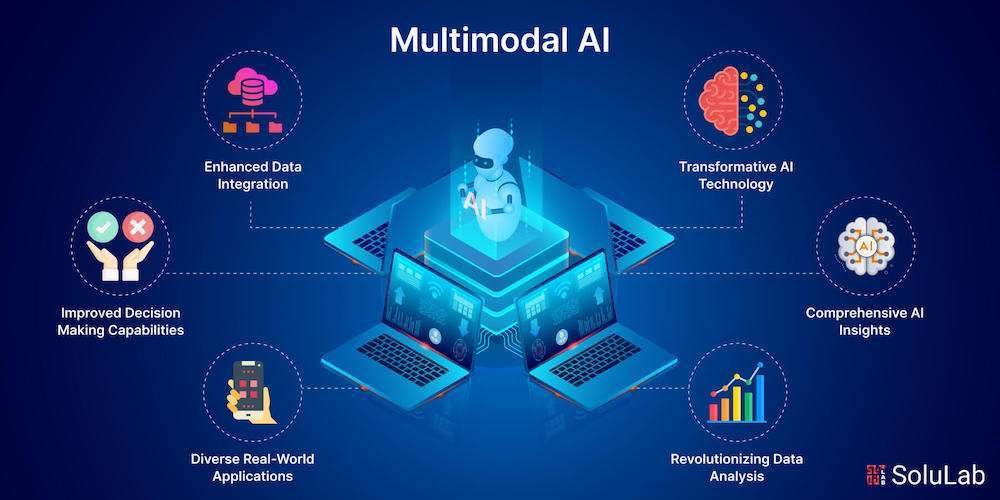
This is the emerging one. Systems integrating text, image, audio, video, and sensor data for integrated decision-making — not siloed analytics. Physical AI usage is at 58% of enterprises experimenting, per Deloitte, which is higher than most people expect.
Healthcare case — ConcertAI’s Patient360: Links EHRs, medical claims, clinical variables from unstructured notes, and social determinants of health data into a unified patient view. That’s four data types that previously lived in four separate systems.
Logistics case — Seekr: Integrates satellite and sensor data with Visual Language Models for geospatial intelligence at scale. Niche, but a glimpse of where physical-world AI is headed.
Finance is where the evidence is strongest. 74% current adoption heading to 99% by 2027 for financial reporting. The numbers here aren’t aspirational — they’re already baked into enough P&Ls to trust.
The agentic layer here monitors transaction patterns, flags anomalies, and enforces approval thresholds — with audit-ready decision logs. That last part matters. Regulators increasingly expect to see a trail. AI that can’t explain itself creates compliance exposure, not reduce it.
Nobody writes exciting headlines about procurement. But the numbers are some of the most consistent in the dataset. A 27% reduction in supplier and procurement costs via spend optimization and contract renewal management — that’s not a rounding error. That’s a restructuring of unit economics.
The operational architecture: vendor validation against structured records → policy enforcement and automated routing → exception handling with escalation paths. The AI owns the routine; humans own the exceptions. Same principle as claims adjudication, applied to procurement.
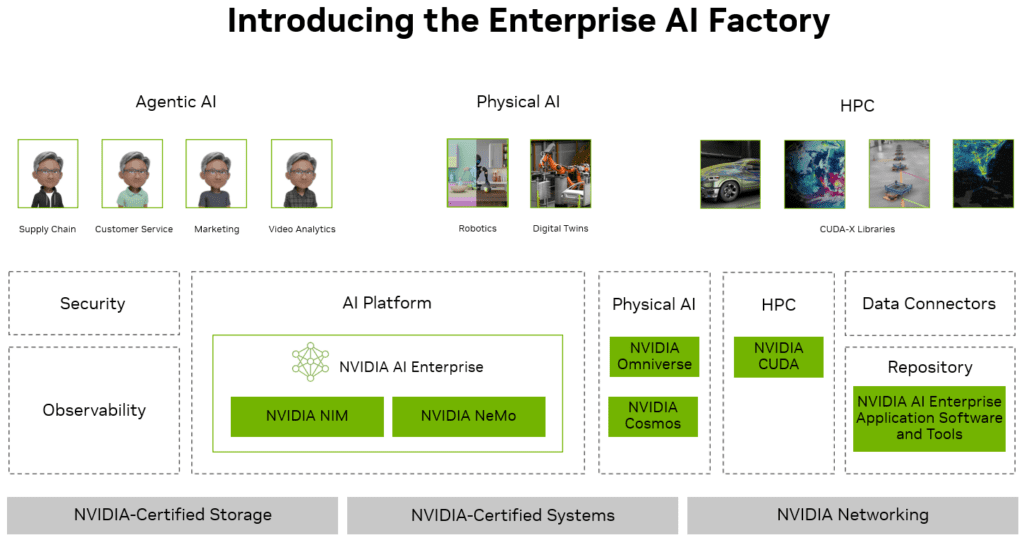
This is the infrastructure shift that separates one-off AI projects from permanent competitive advantage. Enterprises building reusable AI development platforms — combining technology, methods, domain data, and algorithms — are creating assets that compound. Every new use case is cheaper and faster than the last.
The precedents are long-established enough to be evaluated now:
- → BBVA AI Factory (2019) — expanded to generative and agentic AI over 7 years
- → JPMorgan Chase OmniAI (2020) — domain-specific scaling across financial products
- → Intuit GenOS — generative AI operating system across TurboTax, QuickBooks, Credit Karma
The strategic value isn’t the first use case. It’s the fourth and fifth — deployed faster, at lower cost, on shared infrastructure that already knows your domain.
Cross-report ROI benchmark 2026
| Use Case | Deloitte 2026 | Gartner / Others | Confidence | Projected Impact |
|---|---|---|---|---|
| Agentic Workflow | High expected impact in CS & supply chain | 40% enterprise apps with task agents by end-2026 | PROBABLE | 25–40% cost reduction |
| Software Engineering | IT leads adoption at 28% advanced | Code modernization in production at scale | ESTABLISHED | 30–50% dev velocity gain |
| Customer Service | Top GenAI impact area | 80% CS issues via AI agents by 2029 | PROBABLE | 60–70% routine inquiries automated |
| Finance & Compliance | Strong adoption, governance focus | Near-universal by 2027 | ESTABLISHED | Measurable risk reduction |
| Supply Chain | Expected high impact | Process orchestration focus | PROBABLE | 20–35% efficiency gains |
| Multimodal Intelligence | Emerging, rising fast | Physical AI usage at 58% | EMERGING | Data analysis acceleration |
| AI Factories | Strategic platform approach | Domain-specific scaling | ESTABLISHED | Compounding advantage at leaders |
Additional 2026 named deployments
Beyond the core seven, these are verified production deployments that show the use cases aren’t limited to one industry or function:
Adversarial review: what could be wrong here
Most AI coverage skips this section. That’s exactly why it belongs here. Here’s what’s genuinely uncertain, contested, or potentially misleading in the data above:
Based on the governance gap and agentic gridlock risks emerging from 2026 survey data, the aggregate claim revision risk for this analysis is 12% (revised up from 8%). Re-verification scheduled for Q3 2026.
The 90-day ROI activation playbook
Most reports tell you what’s happening. This is the piece nobody writes: exactly how to move from pilot to measurable P&L impact within one quarter. The framework is drawn from documented implementations — not theory.
Implementation: critical success factors (none of them are technology)
Economic validation checklist
Before scaling any use case:
- Task completion measurable — not just output generated
- Compounding value pathway identified: each completion reduces future effort
- Review interface designed for human oversight without fatigue
- Baseline metrics established before deployment starts
- Escalation path defined and tested for edge cases
- Self-funding model built into the business case
FAQ — verified answers only
2027 horizon signals: where the smart money is already placing bets
“The competitive advantage in 2027 won’t be which AI model you use. It’ll be how much domain-specific data you trained it on, and how many workflow steps you deleted while everyone else was adding them.” — Synthesis from McKinsey State of AI 2025 + Menlo Ventures 2025 Enterprise AI Report
Primary sources & confidence notes
- 01McKinsey State of Organizations 2026 — source for 88% adoption, 81% no bottom-line impact figures.
- 02Deloitte State of AI in the Enterprise 2026 — source for 66%/20%/74% productivity-revenue-aspiration gap, 60% worker access, governance maturity figures.
- 03Gartner Top Strategic Technology Trends 2026 — source for $2.52T spending forecast, Trough of Disillusionment positioning, 2029 CS projection.
- 04MIT Sloan Management Review — Five Trends in AI for 2026 (January 2026) — source for workflow execution framing.
- 05MIT GenAI Divide study — source for 95% pilot failure rate. Original study: MIT NANDA, 300 AI deployment analysis.
- 06Itransition AI Statistics, December 2025 — aggregated Deloitte/BCG/KPMG/Capgemini/Gartner data for function adoption rates, finance 74%/99% figures, 22% CS cost reduction, 27% procurement cost reduction.
- 07Anthropic 2026 Agentic Coding Trends Report — source for Fountain and Rakuten case studies. Vendor-sourced; results not third-party verified.
- 08TileDB Multimodal AI Analysis — source for multimodal enterprise applications framing.