The last social media manager I spoke with in March told me she’d finally automated 80% of her posting workflow. I asked which tool. She named three — each handling a different slice — plus a Zapier chain to glue them together. That’s not automation. That’s a Rube Goldberg machine with a monthly subscription fee.
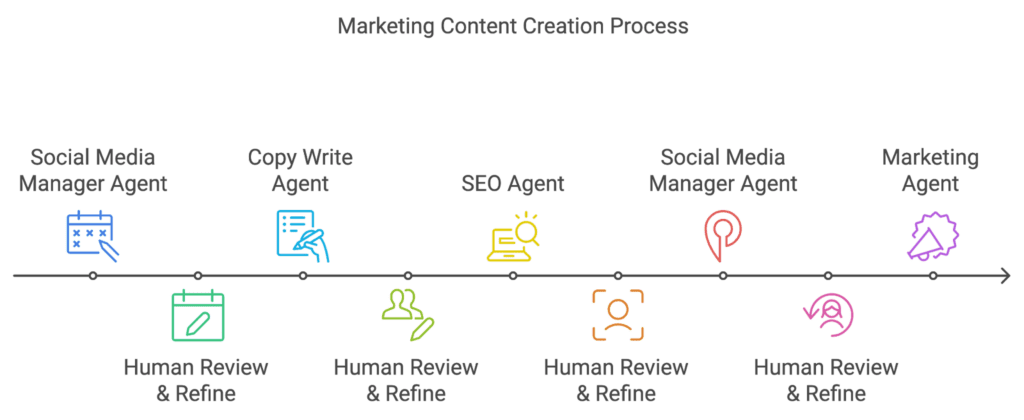
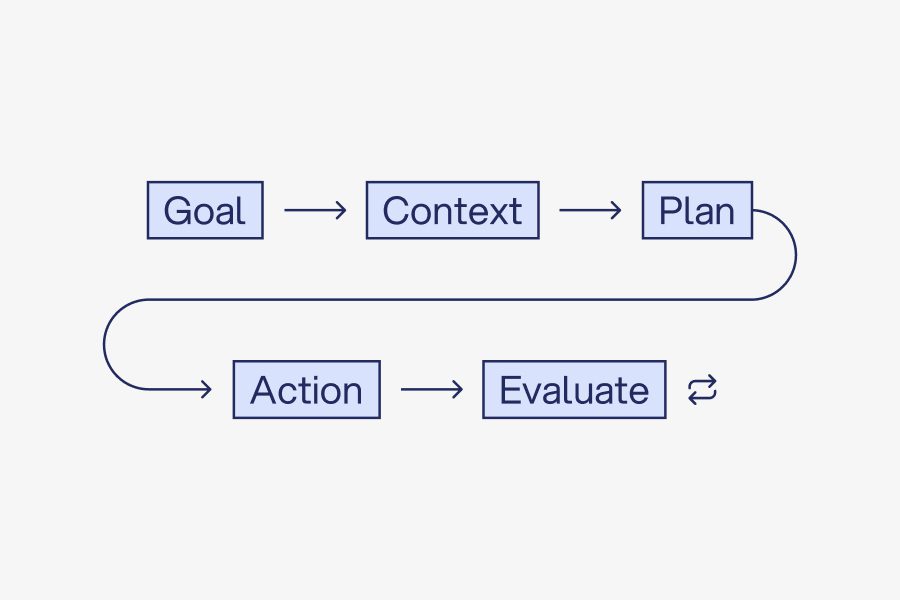
Here’s what’s actually changed in 2026: a handful of tools have genuinely crossed the line from AI-assisted to agentic. They don’t just write captions on request. They monitor performance from last week, identify what underperformed, draft variations, schedule them at peak windows, and route the results back into the next cycle — without a human in the middle. That closed loop is the meaningful threshold. Most tools haven’t crossed it.
This breakdown splits the field honestly. You’ll find the tools that earn their price, the ones being marketed beyond their capability, and the specific failure modes that cost brands real engagement — and occasionally, real money.
The Four-Capability Test: Is It Actually Agentic?
Every vendor in this space currently claims to have “AI agents.” The claim is nearly meaningless without a test. Here’s the one I use before evaluating any tool.
A genuinely agentic social media system covers four domains simultaneously. Break any one link and you have a capable tool — not an agent.
Domain 1 — Content creation with brand voice memory: The tool doesn’t just draft; it drafts in your voice, trained on your past content. Static prompt templates don’t count. Voice emulation that degrades by week eight doesn’t count.
Domain 2 — Scheduling with platform-native intelligence: LinkedIn and TikTok are not the same platform with different logos. A LinkedIn post at 8:47am on a Tuesday and a TikTok hook-and-drop at the same moment follow completely different logic. Tools that apply one optimal-time model across all channels are optimizing for the wrong thing.
Domain 3 — Engagement and community response: Autonomous reply suggestions — or actual autonomous replies within guardrails — that are brand-consistent and context-aware. Not a canned “Thanks for reaching out!” routed through AI branding.
Domain 4 — Closed-loop analytics: The performance data from this week actively changes what gets written and scheduled next week. This is the rarest capability and the one most vendors fake with a “insights dashboard” that requires a human to act on it.
As of mid-2026, the tools that clear all four bars without significant caveats can be counted on one hand. That’s not pessimism — it’s useful information before you sign an annual contract.
Tool-by-Tool Breakdown
Organized by category, not by affiliate value. Each entry notes the agentic score (0–4 domains fully met), the real pricing floor, and the single honest use-case for each tool.
Fully Agentic Platforms
NoimosAI
AI-Native · Full AgentThe most complete autonomous system in this review. NoimosAI runs a genuine multi-agent architecture: separate agents handle research, brand voice, scheduling, engagement, and performance analysis, coordinated by an orchestration layer. You set a content goal — “generate 3x weekly LinkedIn engagement by August” — and the system translates that into daily execution without human clicks at each step.
Works
- Genuine multi-agent orchestration
- KPI-driven content planning
- Guardrails for brand-safety topics
- Performance feeds back into creation
Doesn’t
- Deep analytics require manual review
- Learning curve for guardrail setup
- Enterprise pricing opaque
PostEverywhere
AI-Native · Near-AgenticCovers 8 platforms natively (Instagram, TikTok, LinkedIn, Facebook, X, YouTube, Threads, Pinterest). The agent workflow is real: set a content goal, approve a plan, and the system executes across all channels with AI best-time scheduling and a performance feedback loop. The “partial” on domain 3 comes from engagement — it handles comment management well but DM automation is limited compared to dedicated tools.
Enrich Labs
AI-Native · Analyst-GradeWhere Enrich Labs distinguishes itself is trend intelligence — it documented an AI agent identifying a trending topic six hours before it peaked, creating and publishing a brand-relevant post, and generating 155% of a client’s monthly engagement target from that single piece. That sounds like marketing copy, but the mechanism is real: it monitors signals from platform APIs and search patterns, not just social listening feeds.
Mature Platforms (AI-Assisted, Not Agentic)
Hootsuite
Mature Platform · AI-AssistedOwlyWriter AI generates platform-optimized captions, repurposes top-performing posts, and powers a content calendar with scheduling suggestions based on audience patterns. In 2026, Hootsuite added OwlyGPT image generation (still in beta) and brand voice personalization. This is genuine AI assistance — not agentic execution. A human must still initiate most actions. Social listening through Talkwalker integration is the real differentiator at enterprise scale.
Works
- Enterprise compliance controls
- OwlyWriter AI caption quality
- Social listening depth (with Talkwalker)
- Approval workflows for multi-team
Doesn’t
- Autonomous execution without human
- Performance-to-content feedback loop
- Pricing hard to justify for <10-person teams
Sprout Social
Mature Platform · Analytics-FirstSprout’s AI Assist focuses on customer interaction — reply suggestions with sentiment tracking, collision detection in the Smart Inbox so two agents don’t respond to the same message — not content creation. The real AI differentiation is in reporting: it generates presentation-ready summaries that identify patterns and write plain-language explanations automatically. Average response time drops 35% for teams using AI reply suggestions.
Entry-Tier and Specialist Tools
SocialBee
Mid-Market · AI CopilotSocialBee’s AI Copilot generates complete content strategies — platforms, categories, posting schedule, and draft posts — from a brand description in minutes. DALL-E 3 image generation is included, plus 1,000+ ready-made prompts. Content recycling and evergreen scheduling are baked in at the entry tier, not gated behind premium. The Bootstrap plan runs $29/month; annual billing drops it to roughly $24. The pricing is fair for what you get; it’s not a steal unless you specifically need content categorization and recycling.
Buffer
Entry Tier · Clean SchedulingBuffer earns its spot by doing one thing better than every other tool: pricing that scales sensibly. Free plan: 3 channels, 10 scheduled posts per channel. Essentials: $6/channel/month. Team: $12/channel/month with approval workflows. The AI Assistant — which writes first-draft captions and suggests repurposing angles — ships with the free plan, not locked behind paid tiers. A solopreneur on X, Instagram, and LinkedIn pays $18/month total. Community replies and basic analytics are included.
Taplio + LinkedIn-Native Stack
Specialist · LinkedIn OnlyTaplio, AuthoredUp, MagicPost, and PerfectPost are all single-platform plays optimized for LinkedIn’s specific algorithm dynamics. MagicPost uses a LinkedIn-verified API position. The trade-off is clear: you get deeper LinkedIn capability — post scheduling, profile optimization, lead signal detection, DM sequences — but nothing outside LinkedIn without adding separate tools. For B2B founders running LinkedIn-first GTM motions, these outperform any generalist tool on their core function.
SocialPilot
Agency-Grade · Multi-AccountBuilt for agencies managing multiple client accounts. The AI-Pilot generates captions and hashtags instantly inside the post scheduler. Client calendar and report sharing can be automated in one click. The ChatGPT integration inside the scheduler is the standout differentiator — you stay in one workflow instead of bouncing between tools. Platforms covered: Facebook, Instagram, X, LinkedIn, TikTok, Threads, Bluesky, YouTube, and Google Business Profile.
Side-by-Side: What Each Tool Actually Does
| Tool | Brand Voice AI | Auto-Schedule | Engagement AI | Perf. Feedback Loop | Platforms | Entry Price | Best Fit |
|---|---|---|---|---|---|---|---|
| NoimosAI | ✓ Full | ✓ AI-timed | ✓ Guardrails | ✓ Active | 5+ | ~$29/mo | Autonomous execution |
| PostEverywhere | ✓ Full | ✓ AI-timed | ⚠ Comments only | ✓ Active | 8 | ~$19/mo | Multi-channel agentic |
| Enrich Labs | ✓ Full | ✓ AI-timed | ⚠ Partial | ✓ Active | 6 | $99/mo | Trend-first DTC brands |
| Hootsuite | ⚠ OwlyWriter | ✓ AI-suggested | ⚠ Suggestions only | ✗ Manual | All major | $99/user/mo | Enterprise compliance |
| Sprout Social | ✗ Limited | ⚠ AI-suggested | ✓ Smart Inbox | ⚠ Reports only | All major | $199/seat/mo | Analytics & CRM |
| SocialBee | ⚠ Copilot | ✓ Evergreen | ✗ Basic | ✗ Manual | Major platforms | $29/mo | Content recycling |
| Buffer | ⚠ AI Assistant | ✓ Standard | ⚠ Basic replies | ✗ Manual | All major | Free / $6/ch | Solo & small teams |
| Taplio | ✓ LI-specific | ✓ LI-optimized | ✓ DM sequences | ⚠ LI only | LinkedIn only | ~$49/mo | B2B LinkedIn GTM |
| SocialPilot | ⚠ AI-Pilot | ✓ Multi-account | ✗ Basic | ✗ Manual | 9 | ~$30/mo | Agencies / multi-client |
The Three Ways AI Social Automation Actually Fails
The vendor deck for every tool in this space focuses on upside. The failure modes are where you actually learn whether a tool belongs in your stack. There are three documented failure patterns as of mid-2026, and they follow a consistent logic.
Hallucination Under Autonomous Load
AI-generated posts occasionally state product specs, pricing, or company facts that are confidently wrong. This is a property of the underlying language model, not a specific tool’s bug. It surfaces most often when the tool is running autonomously without a review gate and the brand’s knowledge base isn’t continuously updated.
Brand Safety Incidents at Scale
An AI agent posting at volume will occasionally produce something tone-deaf — not maliciously, but because the model doesn’t know that the trending topic it’s latching onto for reach has a negative connotation in your specific industry. One finance brand I know spent a week cleaning up after an AI tool posted on-trend content adjacent to a banking scandal they had no relation to.
Consumer Trust Erosion Over Time
Low consumer trust in AI-generated content is a documented and growing phenomenon in 2026. The irony: the tools that generate the most content at the lowest effort can paradoxically reduce engagement over weeks if the output feels synthetic. Volume without quality variance triggers algorithmic suppression and audience fatigue simultaneously.
The Consolidation Pressure: What Happens Next
Meta is targeting fully automated ad generation by end of 2026. That’s not a rumor — it’s in their product roadmap communications. When platform-native AI handles organic-to-paid content amplification automatically, the gap between third-party agentic tools and built-in platform automation will narrow sharply for certain workflows.
The third-party tools that will survive that pressure are the ones doing two things natively: orchestrating across platforms in ways each platform can’t do for itself, and maintaining brand voice consistency that a platform-level tool with no brand history can’t replicate in month one.
“By late 2026, the gap between AI-assisted and truly agentic tools should narrow significantly — but the tools that survive platform absorption will be the ones that orchestrate across channels, because competing with built-in features on any single platform is a losing position.”
— PostEverywhere.ai analysis, May 2026Smaller point solutions — tools that do one thing excellently but can’t grow — will either be acquired or lose relevance as major platforms absorb their core functions. Tweet Hunter and similar single-network specialists are in a genuinely precarious position unless X’s own developer access remains restrictive.
Who Should Use What
What the Vendor Decks Don’t Show You
I want to leave three things here that didn’t fit cleanly into any category above.
The brand voice decay problem. Every tool claims to learn your brand voice. The better ones genuinely do — for about 60 to 90 days. After that, without new training data (meaning: you publishing new content the tool can learn from), many start drifting. The tools that handle this best maintain a live brand voice model that updates continuously from your actual published posts. The ones that don’t will produce content that sounds like you in January and sounds like a press release by April.
The “10–15 hours saved per week” claim. This is the standard reported figure, and it’s probably accurate for content creation and scheduling tasks. What it doesn’t account for: the 3–4 hours per week of brand voice correction, guardrail tuning, and output review you’ll likely spend when running autonomous tools at scale. The net saving is real but smaller than the headline number implies.
Gumloop and n8n belong in this conversation. If you have a technical co-founder or even a reasonably code-comfortable marketer, workflow automation platforms like Gumloop (from $97/month) let you build exactly the social automation pipeline you need without paying for features that don’t fit your workflow. The ceiling for what you can build is higher than any packaged tool. The floor requires more setup time than any packaged tool. It’s not for everyone — but if you’ve looked at all these options and kept thinking “none of these do exactly what I need,” it’s worth evaluating before committing to a tool that’s 80% there.
The Uncomfortable Implication
If the genuinely agentic tools — NoimosAI, PostEverywhere, and to a lesser extent Enrich Labs — are executing well, the role of a social media manager shifts from content executor to brand strategist and guardrail architect. Setting the topic exclusion lists, defining what “brand voice” actually means in 60 words or fewer, identifying which metrics actually connect to pipeline and which just look good in a report.
That shift is mostly positive. It’s also not happening uniformly. I’ve spoken with social media managers who have fully embraced agent-assisted workflows and are measurably more effective. I’ve also seen teams deploy tools that are far more capable than the humans overseeing them understand, with no guardrails, no review gates, and no clear ownership of what goes wrong when the AI posts something the brand didn’t intend. The tool isn’t the risk. Deploying it without operational clarity is.
By the time Meta ships fully automated ad generation at the end of 2026, the teams that will be best positioned are the ones who spent 2026 learning what AI can and can’t own in their workflow — not the ones who handed over the keys and hoped for good output. The tools that are genuinely worth paying for today will help you build that institutional knowledge. The ones that aren’t will teach you what you wished you’d tested before committing.
That’s worth more than any comparison table.
About AIEarnerHub: We track AI productivity tools, automation stacks, and online earning strategies for professionals building with AI. If you found this breakdown useful, our full coverage of AI content workflows lives at AIEarnerHub.com — including our guides on AI writing tools, automation income stacks, and agentic workflow builds.
Further Reading & Sources
Agentic AI & The Tool/Agent Divide
- AI Tools vs AI Agents for Social Media: The 2026 Guide Bolta — the clearest framework for distinguishing real agents from rebranded tools
- 5 Best AI Agents for Social Media Cross-Posting in 2026 NoimosAI — covers the shift from schedulers to autonomous agents
Meta’s 2026 Automation Roadmap
- Meta’s AI Advertising Revolution: Full Automation by 2026 VXTX — timeline, Meta Lattice, and what “goal-only” campaigns mean
- Social Media AI Advertising: Meta & Google Updates (April 2026) Digital Applied — Advantage+ performance data and AI dubbing features
Brand Safety & AI Risk
- FAQ on Brand Safety: AI Content & Creator Marketing in 2026 eMarketer — 53% of experts cite social as top brand safety challenge; IAB transparency framework
- 6 Brand Safety Best Practices for 2026 Hootsuite — data privacy, copyright, and AI content risks in regulated industries
No-Hype Guides & Custom Builds
- AI Agents for Social Media: A No-Hype Guide for 2026 Admove.ai — DIY paths with LLM APIs, MCP, and workflow builders
- Your Guide to Social Media Automation in 2026 Stepper — practical workflow blueprints and the “co-pilot, not pilot” approach
Platform Reviews & Comparisons
- 15 Best AI Tools for Social Media Marketing in 2026 monday.com — enterprise-grade round-up with pricing verification
- Best AI Agents for Instagram and TikTok Marketing (2026) HyperFX — visual-first and DM automation specialists reviewed
Agent Integration & MCP
- PostEverywhere: MCP for AI Agents Connect Claude, ChatGPT, or Cursor to 11 platforms via one URL — no glue code
Sources verified June 2026. Links open in new tabs. No affiliate relationships.