You think using an AI Instagram tool will grow your account. You’re half right. The tools that actually work aren’t the ones doing what you imagine — and the ones doing what you imagine are the ones getting accounts suppressed.
This is a long read with a short answer at the end. But the short answer is useless without the context, so stay with it.
Instagram crossed three billion monthly active users in late 2025, per Outfame’s 2026 growth data. Platform-level user growth has slowed to roughly 3.6% annually. That matters because it means the competition for attention isn’t coming from new users — it’s coming from existing creators who are publishing more, posting more consistently, and doing it with AI assistance. Standing still is now moving backward.
The question isn’t whether to use AI tools. It’s which kind, in which order, for which purpose.
The part most articles skip: what the 2026 algorithm actually measures
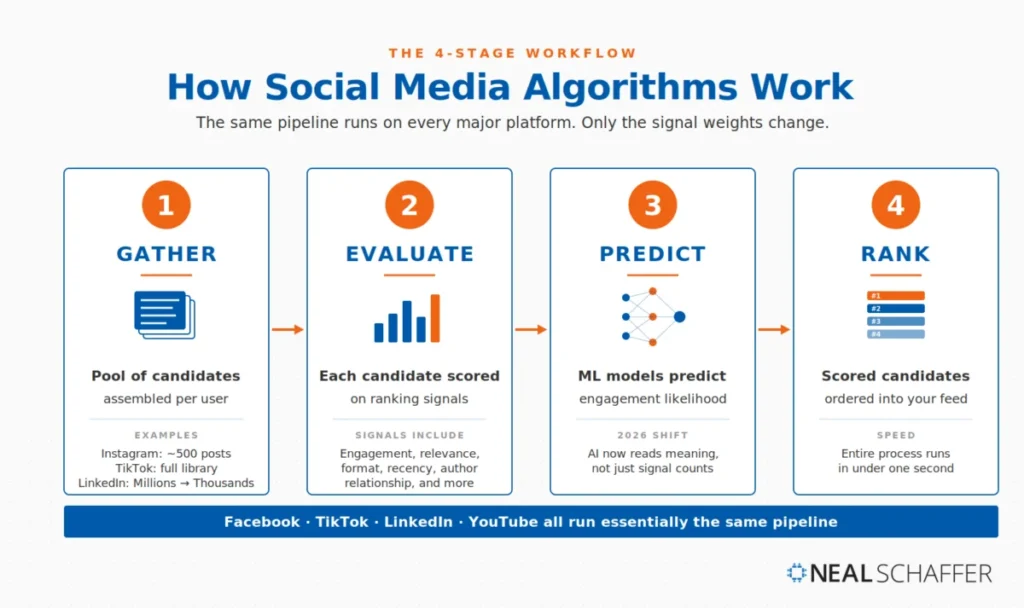
In January 2025, Instagram head Adam Mosseri confirmed on the platform’s official creators page (verified by CreatorFlow in February 2026) that the three top-weighted signals across every Instagram surface are watch time, sends per reach (DM shares), and likes per reach. Not total likes. Rate of likes relative to how many people saw it.
The practical implication is brutal: a post seen by 10,000 people that gets 500 likes outperforms a post seen by 200,000 people that gets 3,000 likes. Smaller reach + higher response rate signals content quality. The algorithm assumes the better-performing post was shown to the “right” people and begins expanding it. The poorer-performing one, despite more total engagement, gets deprioritized.
2026 Algorithm Ranking Signals
#1
DM Shares (Sends)
According to GOSO’s June 2026 analysis, 1 DM share carries approximately the weight of 15 likes in the distribution score. The strongest signal that content is genuinely valuable.
95%
#2
Watch Time / Completion
For Reels, completion is the gating signal. Instagram tests Reels with non-followers first — if watch time is high from that cold audience, it pushes the content to your followers and beyond. Under 3-second retention = suppressed.
88%
#3
Saves
A save tells the algorithm the viewer wants to return to this content — a signal of depth, not just entertainment. Carousel posts are outperforming static images largely because they earn disproportionate saves.
78%
#4
Profile Clicks
When a viewer clicks your profile from a post, Instagram reads it as the post doing its job and the account being worth exploring. Profile clicks correlate directly with follow conversion rate — the 2026 algorithm rewards posts that drive profile visits, not just in-place engagement.
Likes still count. But as a raw number, they mean less than they did in 2023. Buffer’s March 2026 breakdown confirms that feed ranking now prioritizes engagement velocity and DM distribution over absolute counts. If your AI tool is optimized to maximize total likes, it’s optimizing for a metric the algorithm has partially deprecated.
This context matters because it directly determines which AI tools are worth paying for. A tool that generates better captions but doesn’t improve sends per reach is producing a different kind of value than one that helps you understand why specific posts drive DM shares. Both are useful. They’re not the same thing.
What “AI Instagram tool” actually means in 2026 — and why the label is doing a lot of work
Roughly 60% of tools marketed as “AI schedulers” in 2026 are thin wrappers around OpenAI’s API with scheduling logic bolted on. They generate captions. They suggest hashtags. They schedule. That’s it. That’s a legitimate value — if you’re inconsistent because writing captions takes too long, these tools solve a real problem.
But they don’t understand your audience. They don’t analyze which of your posts drove DM shares. They don’t build a feedback loop between what performed and what gets generated next. Call them AI-assisted tools rather than AI growth tools, and you’ll have a more accurate expectation of what they deliver.
The smaller category — genuinely intelligent tools — does more. They analyze your post-level performance data (Instagram now exposes follower growth per post in Meta’s Insights), identify patterns in which content types drive the signals that matter, and adjust content recommendations accordingly. SQ Magazine’s April 2026 report notes that Later, Metricool, and Iconosquare have all integrated AI-driven follower prediction models and trend forecasting that operate in this space.
Content format performance — Instagram 2026
Relative reach and engagement vs. static single-image posts (baseline = 1×)
The performance gap between content formats is not closing. Digital Applied’s 2026 data shows Reels generate 67% higher engagement than static feed posts and 3.5× the reach of carousel content. Brands running Reels-first strategies are seeing 41% higher follower growth rates compared to those relying on static imagery. An AI tool that helps you produce more Reels, faster, with better hooks — that’s a follower growth tool. A tool that helps you schedule better static posts is a time-saving tool. Different outcome, different purchase decision.
The tools that are actually worth your money
I’m not going to tell you which one to buy — your account size, content type, and budget make that specific. What I can do is tell you which tools are solving which actual problems, and which marketing claims don’t survive contact with reality.
📅
Later
Best for visual-first Instagram workflows
The strongest visual planner on the market. Later combines a drag-and-drop content calendar, best-time-to-post recommendations, AI caption and idea generation, link-in-bio performance, UGC collection, and a social inbox. As of mid-2026, it’s the only scheduler where all of these live in a single interface without switching tools. The AI credits system (Starter: 5/month, Growth: 50/month) means heavy users will hit limits, but for small creators who need a visual-first workflow, it’s the clearest choice. See AIEarnerHub’s AI tools comparison for how it stacks against Metricool.
OwlyWriter AI handles caption generation across Instagram, TikTok, LinkedIn, and X. The 2026 addition of OwlyGPT adds beta image generation and brand voice learning. For multi-platform teams managing approval workflows and compliance, Hootsuite’s unified DM inbox and Talkwalker social listening integration make it genuinely irreplaceable. But the pricing starts at $99/month. If you’re a solo creator posting to one account, you’re paying for features you won’t use.
Multi-PlatformTeam WorkflowsSocial Listening
From $99/mo
30-day trial
🔄
Buffer
Best free option; honest about its limits
Buffer’s AI Assistant is included on every plan including the free tier, with no usage limits. It handles caption brainstorming, content repurposing, and cross-platform adaptation. What it doesn’t do is deep content analytics or AI image generation — it’s a delivery vehicle for content you’ve already created or ideated. The distinction matters: Buffer works best when layered with a separate AI content creation tool. Alone, it’s a better-than-manual scheduler with a helpful writing assistant.
DM automation — directly targets the top ranking signal
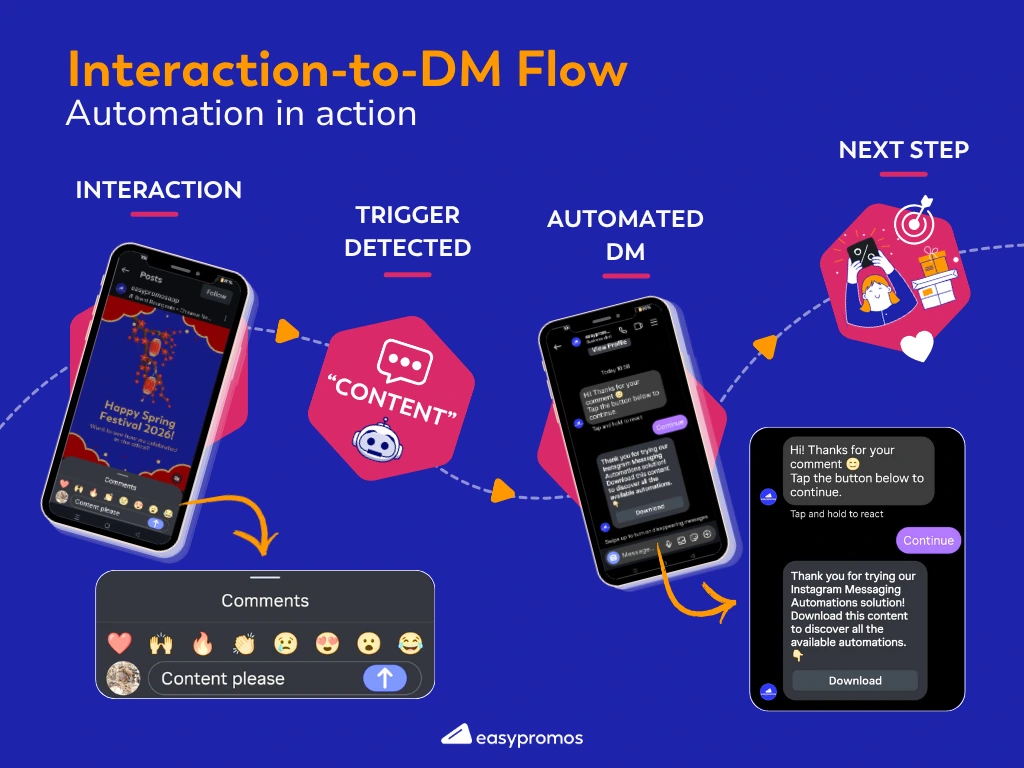
This category is underused and underappreciated. Because DM shares are now the heaviest algorithmic signal, tools that automate DM responses, comment-to-DM flows, and Story reply triggers aren’t just saving time — they’re directly feeding the signal that gets your content distributed. BooSend, positioned as an AI social media automation platform for natural-feeling DM interactions, handles Instagram comment automation, DM automation, and Story reply automation in a unified flow. For creators converting attention into sales, this category often has a better direct ROI than any scheduler.
DM AutomationComment ReplyAlgorithm-Targeted
From $15/mo
ManyChat
🎨
Canva AI + Adobe Express
Visual creation — the part most AI tools ignore
No amount of caption optimization fixes a visually weak post. Canva’s AI generation tools (Magic Design, text-to-image, background removal) and Adobe Express’s comparable suite both produce Instagram-native visuals significantly faster than traditional design workflows. One caveat: fully AI-generated images now require “Made with AI” labeling per Meta’s 2026 rules. The algorithm doesn’t penalize labeled AI content — but audiences are increasingly good at recognizing it and scrolling past it without engaging. Use these tools for templates, branded overlays, and design elements rather than as a replacement for original photography or video.
Visual CreationTemplate GenerationCarousel Design
Free–$15/mo
Canva Pro
The comparison most tools won’t show you
Tool
Caption AI
Visual AI
DM Automation
Analytics AI
Best For
Later
✓
Partial
—
✓
Visual-first creators
Hootsuite
✓
Beta
✓
✓
Enterprise teams
Buffer
✓
—
—
Basic
Budget-conscious creators
ManyChat
—
—
✓✓
Flow analytics
DM-driven sales
Sprout Social
✓
—
✓
✓✓
Data-driven agencies
Canva AI
Caption help
✓✓
—
—
Visual content creation
SocialBee
✓
—
—
Basic
Category-based automation
The gap in this table is analytics AI — the tools that tell you why something worked, not just that it worked. Sprout Social is strongest here, with sentiment analysis, audience intelligence, and Smart Inbox workflows that surface insights a human analyst would miss at scale. For most creators at under 50K followers, it’s more analysis than you need. For agencies or brands with multiple accounts and posting daily, it’s often where the real value is.
How AI tools actually increase followers — and the mechanism most people misunderstand
An AI tool doesn’t grow your followers. Your content grows your followers. The AI tool removes the friction that stops you from producing enough good content consistently enough to get discovered.
That sounds dismissive. It’s not meant to be. Friction is genuinely the enemy of Instagram growth. Apaya’s growth page puts it well: most businesses fail at Instagram not because they lack a perfect growth trick, but because posting takes too much time, so the account goes quiet. An account that posts excellent content twice a week for 6 months will outperform an account that posts brilliant content twice and then disappears.
94% of Instagram distribution now comes from AI recommendations. The algorithm won’t push content that people immediately skip.
— Dataslayer analysis of Mosseri’s confirmed ranking signals, April 2026
The practical mechanism works like this: an AI caption tool cuts your caption writing time from 20 minutes to 4 minutes. You go from posting twice a week to five times a week. At five posts per week, you’re giving the algorithm 2.5× more chances to find a piece of content that resonates with cold audiences, triggers DM shares, and earns profile visits. The AI didn’t grow your followers. Consistency grew your followers. The AI made consistency possible.
1
AI reduces content creation friction
Caption generation, hashtag research, scheduling, visual creation — each task that used to take 15–30 minutes drops to 2–5 minutes. Net result: you publish more, more consistently.
2
More posts = more algorithmic tests
Instagram shows every Reel to a small non-follower audience first. More posts means more “tests” running simultaneously, increasing the probability of a breakout. Creators publishing Reels regularly gain followers 25% faster than those who don’t, per Outfame’s 2026 data.
3
Analytics AI identifies what’s actually working
Meta now surfaces follower growth per post. Tools like Sprout Social, Iconosquare, and HypeAuditor (which added AI-powered content analytics in 2026) analyze which content types drive the signals that matter: DM shares, saves, profile clicks. This closes the feedback loop.
4
DM automation converts reach into relationships
Tools like ManyChat let you trigger personalized DM sequences when someone comments a keyword, replies to a Story, or clicks a link. Each DM send is the algorithm’s strongest signal. The automation turns passive engagement into active algorithmic endorsement.
5
Compound growth: better data → better content → more shares
With 12 weeks of analytics, you know which hooks drive completion, which topics earn saves, and which calls to action trigger DM shares. You start producing fewer posts, but better ones. Follower growth accelerates because you’re no longer guessing at the format.
What AI tools cannot do — and what happens when you pretend otherwise
The most dangerous thing about AI Instagram growth tools is not that they don’t work. It’s that some of them work in ways the algorithm now detects and penalizes.
The 2026 algorithm update confirmed that Instagram’s AI now detects and penalizes engagement pods, hashtag stuffing (30 hashtags is flagged as spam-like), follow/unfollow tactics, and reposted TikTok videos with watermarks. If you’re using an AI tool that automates any of these patterns, you’re not getting suppressed because the tool is bad. You’re getting suppressed because Instagram’s own AI is specifically looking for these patterns.
Tactics that get accounts suppressed in 2026
Engagement pods: Instagram’s AI now detects coordinated engagement patterns and penalizes them. Follow/unfollow automation: Action limits are stricter; accounts using this tactic see reach penalties. Hashtag stuffing: Using 20–30 hashtags is now flagged as spam-like behavior. TikTok reposts with watermarks: Automatically deprioritized. Buying followers: Inflates your follower count while destroying your engagement rate, which tanks your sends-per-reach metric and suppresses your content.
What AI genuinely cannot do: manufacture genuine interest from the right audience. You can optimize every caption, publish daily, and run DM sequences — and if the content itself doesn’t connect with people who actually want to follow your specific account, the follower numbers won’t move. I’ve seen accounts with technically excellent AI-assisted content strategies plateau completely because the content was optimized for the algorithm rather than for a specific person with a specific problem. The algorithm is good at finding people who engage with things. It’s not good at finding people for content that doesn’t earn engagement in the first place.
The AI content authenticity problem — and why 2026 made it worse
Adam Mosseri’s end-of-year 2025 message, referenced in Orange Monke’s March 2026 analysis, flagged that perfectly polished AI content is becoming cheap and abundant. The quote that circulated internally was essentially: when everyone can produce high-quality content, high quality stops being differentiating.
The 2026 data confirms this. Fully AI-generated images require “Made with AI” labeling. Audiences are faster at identifying the uncanny smoothness of pure AI video and faster at scrolling past it without engaging. The engagement penalty isn’t algorithmic — it’s human. Real people don’t send AI-generated content to their friends in DMs as often as they send content where a real person is saying something they haven’t heard before.
This doesn’t mean AI tools are useless for content creation. It means the value of AI tools in this area is as a multiplier on your ideas, not a replacement for them. An AI tool that takes your rough concept and produces a cleaner carousel layout, a better caption hook, or a more legible graphic — that’s adding value without replacing the original human signal. An AI tool that generates the concept, the caption, the image, and the hashtags from a template — that’s producing content that audiences are getting better at identifying and algorithms are starting to label.
What a real AI-assisted Instagram growth stack looks like
For a creator or small business account in 2026, the stack I’d recommend isn’t one tool — it’s three categories working together, with a total budget under $50/month:
Recommended stack — under $50/month
1. Scheduler + AI captions: Later (Starter at $18/mo) or Buffer (free tier). Handles planning, caption generation, and best-time-to-post. This is the consistency layer — without it, everything else is irrelevant.
2. Visual creation: Canva Pro ($15/mo) or the free tier for basic templates. Don’t publish static posts without branded visual consistency. The AI generation features help with speed; the templates help with brand recognition over time.
3. DM automation (if you have a product or offer): ManyChat’s free tier handles up to 1,000 contacts with basic keyword-trigger DM sequences. This directly addresses the algorithm’s top-weighted signal without paying for engagement. Optional until you have over 5,000 followers, but worth setting up earlier.
What you don’t need yet: Enterprise analytics (Sprout Social, Iconosquare) — your account isn’t big enough to surface patterns in the data that you can’t see manually. Add this layer when you’re publishing daily and have 3+ months of post-level performance data.
The tool that’s conspicuously absent from most lists is one that analyzes your specific competitor accounts. Tools like those reviewed at AIEarnerHub that include competitive benchmarking against accounts in your niche are worth looking at — not to copy, but to understand what’s already resonating with your target audience before you create. This kind of competitive intelligence is where AI tools genuinely save hours of manual research.
The follower growth rate question — and why the number most people track is the wrong one
A 3% monthly follower growth rate on a 5,000-follower account often signals stronger momentum than 0.2% growth on a 500,000-follower account, according to Marketing Agent’s 2026 analysis. The algorithm’s AI systems favor accounts showing upward velocity, not absolute size.
For small accounts (1,000–5,000 followers), Outfame’s 2026 data puts a reasonable monthly growth rate at around 38%. That sounds high. It’s also correct — smaller accounts have more room to grow proportionally, and a single piece of content that performs well can move the needle significantly when your denominator is small. The same growth in absolute numbers on a 500K account would register as essentially flat.
What this means practically: if you’re tracking raw follower count, you’re watching the wrong number. Track monthly growth rate and — more importantly — track which posts drove the most profile visits and follows. Meta’s Insights now shows this at the post level. If you have a tool that surfaces this data automatically and shows you the pattern, you have something a manual spreadsheet review can’t easily match.
Monthly follower growth rate benchmarks — 2026
What a healthy growth rate looks like at each account tier
Niche clarity. The 2026 algorithm penalizes multi-niche accounts because it can’t categorize them for recommendations. Instagram’s “Your Algorithm” feature now lets users actively remove topic categories from their feed. Multi-niche accounts that the algorithm can’t clearly categorize don’t get removed from recommendations — they just don’t get added in the first place.
No AI caption tool fixes this. No scheduler fixes this. If you’re posting about fitness, travel, and personal finance in the same feed, the algorithm can’t recommend you to anyone confidently. The solution is not an AI tool. The solution is deciding what your account is about and committing to it for long enough that the algorithm understands it too.
This is the uncomfortable constraint that AI tools can’t solve: they accelerate whatever you’re already doing. If what you’re already doing is unclear, AI tools accelerate the unclear thing faster. The prerequisite to a useful AI tool stack is a clear account identity — specific niche, specific audience, specific type of value you provide consistently.
Every metric becomes easier to improve once that’s true. Caption hooks that speak to one person convert better than captions that speak to everyone. DM automation that triggers from a specific call to action relevant to your niche outperforms generic “comment YES for the link” flows. Analytics tools surface clearer patterns when the content has thematic consistency. The AI tools are more powerful when you’ve done the non-AI work first.
For ongoing coverage of AI tools that work across content creation, scheduling, and growth — including tool-level reviews with practical testing rather than just feature comparisons — AIEarnerHub is where I’d send you next.
The uncomfortable implication of everything above: most accounts that aren’t growing aren’t being outcompeted by better AI tools. They’re being outcompeted by accounts with clearer niche focus, more consistent publishing, and a better understanding of which content earns DM shares rather than passive likes. AI tools close the gap on the consistency and quality side. They don’t close the gap on the strategic clarity side. That part is still yours to figure out.
What the algorithm rewards in 2026 isn’t content that’s well-produced. It’s content that people send to each other. Build toward that, and the tools are useful. Build toward looking good in a feed, and the tools are expensive decoration.