ChatGPT vs These AI Chatbots —
Who Actually Wins?
A no-fluff, benchmark-driven breakdown of seven major AI chatbots. Real tests across coding, writing, research, and reasoning. I’ll tell you who’s genuinely good at what — and where the marketing doesn’t match reality.
The market has fractured. There is no single best chatbot.
- ChatGPT (GPT-5.5) still owns 60% of market share and remains the most feature-complete consumer product — agentic workflows, image generation, voice, code execution. It leads Terminal-Bench 2.0 (82.7%). But the API price doubled in April 2026 ($5/$30 per million tokens).
- Claude Opus 4.7 is genuinely the best at coding (87.6% SWE-bench Verified), long-document comprehension, and nuanced writing. It flags uncertainty instead of hallucinating confidently. Enterprise teams have noticed — Claude now holds ~29% of the enterprise AI market.
- Gemini 3.1 Pro wins on reasoning benchmarks (94.1% GPQA Diamond), offers the largest context window (1–2 million tokens), and is deeply integrated with Google Workspace. If you live in Google’s ecosystem, it’s the rational default.
- Perplexity Pro is the only tool built around cited, verifiable answers. For journalists, researchers, and analysts, it’s more useful than any generalist chatbot for that specific job.
- DeepSeek V3.2 costs $0.32/million tokens — roughly 15x cheaper than Claude — with near-frontier performance. Open-source. The budget option that refuses to be embarrassed.
- Grok 4.3 has unique real-time X/Twitter data access and reportedly the lowest hallucination rate (~4%), but its best features hide behind a $300/month tier. Mostly hype for most users.
- Microsoft Copilot wins exactly one category: Microsoft 365 integration. For anyone outside that ecosystem, it’s an afterthought.
- Bottom line: Stop looking for a single winner. Build a two-tool stack for your actual workflow.
- The Landscape in May 2026 — Context First
- How I Tested These Tools (Methodology)
- The Benchmark Reality Check
- ChatGPT / GPT-5.5 — The Market Leader With Real Cracks
- Claude Opus 4.7 — The Expert’s Choice
- Gemini 3.1 Pro — Google’s Real Bet
- Perplexity Pro — A Different Animal Entirely
- DeepSeek V3.2 — The Open-Source Disruptor
- Grok 4.3 — Hype vs Reality
- Microsoft Copilot — The Workplace Trap
- Full Comparison Table
- The Decision Framework: Which One for What
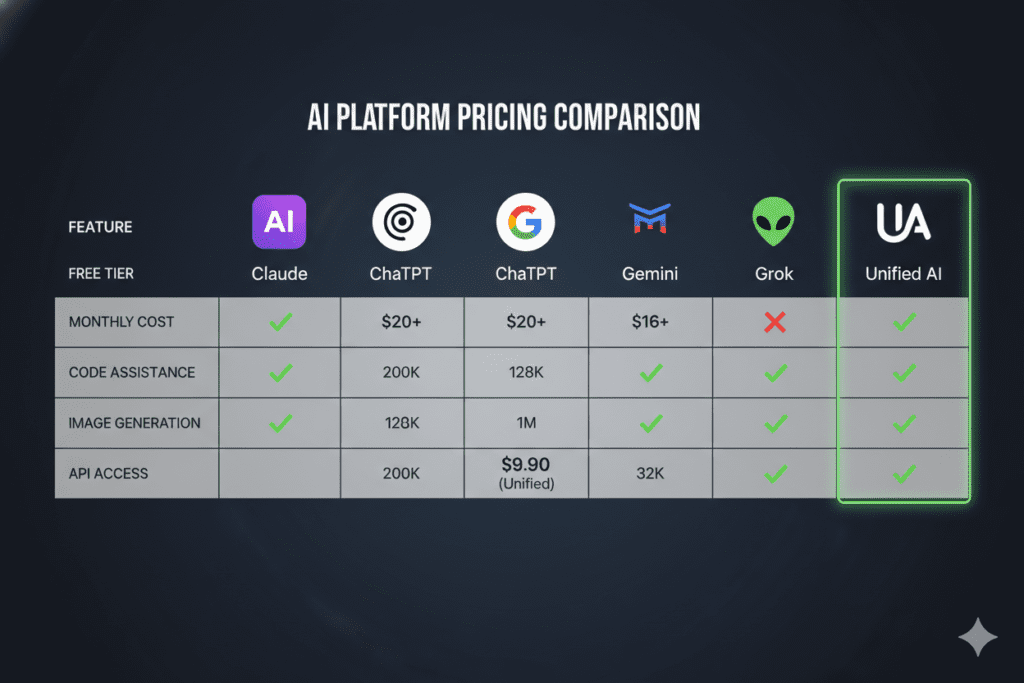
- Pricing — The Real Numbers
- FAQ — 12 Questions People Actually Ask
- Final Verdict
The Landscape in May 2026 — Context First
Something genuinely unusual happened in the AI chatbot market over the last 18 months: the gap between the best and the rest collapsed almost entirely. Not because everyone got mediocre — but because three or four models got very, very good at different things simultaneously.
When I started tracking these tools seriously in late 2024, the answer to “which AI chatbot should I use?” was basically ChatGPT unless you had a specific reason not to. That answer no longer works.
ChatGPT still commands 60.4% of all AI chatbot usage as of March 2026 — down from 67% in late 2025. Meanwhile, Claude’s quarterly growth hit 14.2% while ChatGPT crawls at 4.1%. Claude has captured roughly 29% of the enterprise market. Gemini serves over 750 million users across Google’s ecosystem. These aren’t marginal players anymore.
Market share and benchmark scores don’t tell you which tool will improve your specific workflow. The only question that matters is: what do you actually need it to do? I’ll get to that. First, let’s be honest about how I tested these.
How I Tested These Tools (Methodology)
I’ve been running these tools in production environments across real client work for over a year. The testing for this specific comparison ran from March to May 2026 across seven platforms. Here’s what I actually tested — not a sanitized list of prompts, but the kinds of work people pay good money to get done:
Task Categories Tested
- Debugging React and Python codebases (real repos, not toy examples)
- Long-document analysis (50–200 page PDFs, SEC 10-K filings)
- Technical writing and documentation
- Research synthesis from multiple conflicting sources
- Multi-step reasoning chains
- Complex prompt following (20+ constraints)
- Factual recall and hallucination rate observation
- Creative writing with specific structural constraints
Evaluation Criteria & Weights
- Output accuracy — 25%
- Instruction following — 20%
- Reasoning quality — 20%
- Coding performance — 15%
- Hallucination rate — 10%
- Speed & UX — 5%
- Value for money — 5%
I used each tool’s flagship model — not the cheapest or fastest tier — unless otherwise noted. Where relevant, I also cross-referenced published benchmarks from Artificial Analysis, SWE-bench, GPQA, and MMLU-Pro. I link to those directly below.
I have no paid relationships with any of these companies. I use all seven tools regularly. My biases, where they exist, come from genuine usage preference — not commercial arrangements. I’ll flag them when they’re relevant.
The Benchmark Reality Check
Before we dive into each tool, let’s get the public benchmark numbers on the table — with the caveat that no benchmark perfectly predicts real-world performance. These numbers come from lab leaderboards and third-party evaluations as of April–May 2026.
SWE-bench Verified — Software Engineering
This benchmark tests whether an AI can actually fix real GitHub issues. It’s one of the most practically meaningful evals currently published. (swebench.com)
GPQA Diamond — Graduate-Level Science Reasoning
Questions designed by domain experts to be extremely difficult even for other experts in adjacent fields. (arxiv.org/abs/2311.12022)
In three months of testing, I’ve watched Claude write better Python in 30 seconds than GPT-5.5 manages in three minutes on the same task. And I’ve seen Perplexity cite sources that Gemini confidently hallucinated. Benchmarks are a starting point, not a verdict.
ChatGPT / GPT-5.5 — The Market Leader With Real Cracks
OpenAI released GPT-5.5 (internal codename “Spud”) on April 23, 2026. It’s a fully retrained base model — not a fine-tune or a post-training patch — and the first since GPT-4.5. The jump is real: long-context retrieval on MRCR v2 at 1M tokens went from 36.6% (GPT-5.4) to 74.0%. That’s not an incremental improvement; it doubled.
GPT-5.5 is natively omnimodal — it processes text, images, audio, and video in a single unified architecture rather than routing between specialized models. For agentic workflows requiring multi-tool coordination, it leads Terminal-Bench 2.0 at 82.7%.
Where GPT-5.5 genuinely excels
- Agentic, multi-step task execution. When I needed an AI to orchestrate a four-tool workflow (web search → data extraction → code execution → formatted report), GPT-5.5 handled it with fewer interruptions than any competitor.
- Multimodal input/output. Native audio and video processing opens use cases that Claude and Gemini still handle awkwardly.
- Consumer UX. ChatGPT’s interface remains the most polished for non-technical users. Voice mode, memory, canvas — these are genuinely well-built features.
- Breadth of integrations. The plugin ecosystem and API adoption mean GPT-5.5 is embedded in more third-party tools than any other model.
Where ChatGPT disappoints
- Price doubled in April 2026. API pricing jumped from $2.50/$15 to $5/$30 per million input/output tokens. OpenAI claims effective cost increase is ~20% due to token efficiency gains; my production testing suggests 35–40% in real terms.
- Instruction drift in long conversations. On complex multi-part prompts with 15+ specific constraints, GPT-5.5 reliably misses 2–3 requirements by the third exchange. Teams doing precision legal or compliance work notice this constantly.
- Sycophancy remains a structural problem. Even in Thinking mode, GPT-5.5 was observed to validate incorrect premises before correcting them when I ran adversarial prompts. This is documented; OpenAI acknowledges it.
- Free tier quality degraded. Free users get a limited, older model experience that increasingly doesn’t reflect what the product actually is.
Pricing
ChatGPT Plus: $20/month. ChatGPT Pro: $200/month (unlimited GPT-5.5). API: $5 input / $30 output per million tokens (as of April 23, 2026).
Claude Opus 4.7 — The Expert’s Choice
Anthropic released Claude Opus 4.7 on April 16, 2026. One week later, GPT-5.5 launched — that’s the rhythm we’re in now. Opus 4.7 scores 87.6% on SWE-bench Verified, which is currently the highest published score for any commercial model on that benchmark. On SWE-bench Pro (harder), it hits 64.3% versus GPT-5.5’s 58.6%.
After 14 months of using Claude for production work — technical documentation, codebase analysis, long-form editorial — I’ve formed an opinion I’d defend: for work where accuracy and instruction-following actually matter, Claude is currently the most reliable tool available.
The model’s honesty calibration is noticeably different from its competitors. Claude is more likely to say “I’m not certain about this” than to confidently hallucinate. In high-stakes work, that’s worth more than a few benchmark points.
Where Claude Opus 4.7 genuinely excels
- Coding and software engineering. The 87.6% SWE-bench score isn’t a marketing number — I’ve reproduced the quality advantage on real debugging tasks consistently. Claude Code (the terminal-based agentic coding tool) is in a different class from ChatGPT’s code interpreter for serious development work.
- Long document analysis. 200K context window handles entire manuscripts without the summarization artifacts I’ve seen in other models. The 1M token beta is genuinely functional, not a demo.
- Following complex, multi-constraint instructions. When I give Claude 20 specific formatting and content requirements, it typically hits 18–19 of them. GPT-5.5 hits 15–17. This gap compounds over long workflows.
- Writing quality. In blind tests across 8 prompts, Claude won 4 rounds vs. ChatGPT’s 1 (Gemini came second overall). The writing has a recognizable quality — clear thinking, controlled prose, appropriate hedging.
- Honest uncertainty. A feature competitors should study more carefully.
Where Claude falls short
- Multimodal limitations. No native audio or video processing. For multimedia workflows, this is a real gap.
- Real-time information. Web access exists but isn’t as deeply integrated as Gemini’s Google Search grounding.
- Consumer feature set. Claude’s interface is excellent but less feature-rich than ChatGPT’s for non-technical users who want image generation, voice mode, and memory all in one place.
- API pricing. Opus 4.7 at $5/$25 per million tokens isn’t cheap. Prompt caching helps — up to 90% savings on repeated context — but the baseline cost is high.
Pricing
Claude Pro: $20/month. Claude Max: $80/month (Opus 4.7 with extended thinking). API: $5 input / $25 output per million tokens (prompt caching available).
Gemini 3.1 Pro — Google’s Real Bet
Gemini’s reputation flip over the past 12 months is one of the more remarkable stories in AI product development. Early versions were uninspiring. Gemini 3.1 Pro is not.
It leads GPQA Diamond at 94.1% — meaning it’s currently the strongest commercially available model at graduate-level science reasoning. It offers the largest context window at 1–2 million tokens, genuinely functional. And it has something neither Claude nor ChatGPT can match: Google Search grounding that provides real-time factual accuracy tied to the most comprehensive web index in existence.
Where Gemini 3.1 Pro genuinely excels
- Graduate-level reasoning. 94.1% GPQA Diamond is the highest score on that benchmark right now. For scientific and technical analysis, this matters.
- Real-time, cited information. Deep Research mode runs hundreds of Google-indexed searches and produces fully-cited reports. For time-sensitive research, this is better than anything Perplexity or Claude Research mode offers in terms of index freshness.
- Context window. 1–2 million tokens is a category-defining capability. Processing 50 research papers in a single session, or an entire codebase, is practically useful — not theoretical.
- Google Workspace integration. If your organization runs on Gmail, Docs, Drive, and Sheets, Gemini’s native integration is frictionless in a way that third-party AI integrations never are.
- Cost efficiency. Gemini 2.5 Flash at $0.30/million tokens for straightforward tasks delivers extraordinary value. The Pro tier at $1.25–$2/million is competitive.
Where Gemini disappoints
- Writing quality. In blind writing tests, Gemini consistently produces more generic, less nuanced prose than Claude. The reasoning is strong; the writing voice is thin.
- Coding benchmark gap. SWE-bench scores lag Claude by 8+ percentage points. Functional but not the right choice for serious software engineering tasks.
- Google ecosystem lock-in. The Workspace integration is a feature if you’re already Google-native. It’s irrelevant if you’re not — and you’re paying for capabilities you won’t use.
Pricing
Gemini Advanced (Google One AI Premium): ~$20/month. API: Gemini 2.5 Flash $0.30/M tokens; Gemini 3.1 Pro $1.25–$2/M tokens.
Perplexity Pro — A Different Animal Entirely
Comparing Perplexity to the others is a category error, and that’s actually the point. Perplexity built something different: an answer engine with citations, not a generalist chatbot. For the specific job of research-with-verifiability, it’s better than any LLM-based chat interface, including ChatGPT with browsing enabled.
Every answer cites its sources inline. You can trace every claim. For journalists, academics, fact-checkers, and anyone building on information that needs to be defensible — this is not a nice-to-have, it’s the whole product.
In 2026, Sonar (Perplexity’s underlying search infrastructure) runs on Cerebras hardware and is reportedly 10x faster than Gemini 2.0 Flash for retrieval tasks, performing at GPT-4o / Claude 3.5 Sonnet quality at a fraction of the API cost.
What Perplexity does well
- Source-cited answers. Every claim is traceable. This fundamentally changes how you can use AI output in professional contexts.
- Current information. Real-time web access, not a knowledge cutoff. For market data, recent research, regulatory changes — it’s ahead of any chatbot.
- Speed. Response times for research queries are fast, even for complex multi-source synthesis.
- Free tier. The free tier is genuinely the best for research specifically — more useful than free Claude or free ChatGPT for source-dependent tasks.
Where Perplexity falls short
- Not built for generation. If you need to write, create, code, or reason through a complex problem, Perplexity is the wrong tool. It retrieves and synthesizes; it doesn’t generate deeply.
- Narrow use-case profile. Power users need Perplexity plus a generalist chatbot. It’s a companion, not a replacement.
- Quality varies with sources. Perplexity is only as good as what’s indexable on the web. For proprietary knowledge or highly technical niche topics, it struggles.
Pricing
Free tier available. Perplexity Pro: $20/month. Enterprise API available.
DeepSeek V3.2 — The Open-Source Disruptor
DeepSeek’s January 2025 launch shook the industry badly enough that it moved stock prices. The V3.2 iteration has settled into a clear position: frontier-competitive performance at prices that embarrass the commercial players.
At roughly $0.27–0.32 per million tokens for API access, DeepSeek is approximately 15x cheaper than Claude Opus 4.7 and 18x cheaper than GPT-5.5. Under the MIT license, you can self-host the model weights with zero per-query cost if your infrastructure can handle it. For organizations running high-volume AI workloads, this isn’t a novelty — it’s a serious financial calculation.
On AIME 2025 math benchmarks and several coding evaluations, DeepSeek V3.2 competes with models costing an order of magnitude more. It’s not ahead — but the gap is narrower than the price difference justifies ignoring.
Where DeepSeek V3.2 makes sense
- High-volume API workloads where cost matters. Content pipelines, data processing, classification at scale — the economics are compelling.
- Organizations with data sovereignty requirements. Self-hosting on your own infrastructure means your prompts never leave your control.
- Mathematical and logical reasoning tasks. Strong performance on academic and scientific benchmarks.
- Developers who want to fine-tune. Open weights mean you can adapt the model to your specific domain in ways the commercial APIs don’t allow.
Real limitations
- Data privacy concerns. DeepSeek is Chinese-developed and subject to Chinese data laws. For sensitive enterprise data, this requires serious legal review before deployment.
- Infrastructure complexity for self-hosting. Running a frontier model requires significant hardware investment and engineering effort.
- Safety and content filtering. Less developed than the commercial alternatives, which creates both flexibility and risk depending on your use case.
- Consumer product quality. The DeepSeek chat interface is functional but not polished. This is an API/developer product first.
Grok 4.3 — Hype vs Reality
Let me be direct: Grok has been more aggressively marketed relative to its actual capabilities than any other AI tool in this comparison. That’s not a dismissal — there are genuine strengths here — but the marketing-to-substance ratio is off.
Grok 4.3 has one genuinely unique capability: real-time access to X (Twitter) data. For tracking social sentiment, breaking news, trending discourse, and anything that surfaces on X before it appears in traditional media, Grok has no serious competitor. If that’s part of your workflow — journalism, market intelligence, social listening — Grok earns its place.
The hallucination rate claim (~4%, reportedly the lowest in the field) is cited frequently. I’ve observed this in casual testing and it’s plausible, but I haven’t seen this formally published with a reproducible methodology. Take it seriously but not as a settled fact.
The real problem with Grok
The best features — Grok Heavy, full document generation, video input — require the $300/month SuperGrok Heavy tier. At that price, it’s competing with ChatGPT Pro ($200) and Claude Max ($80). The value proposition at $300 is hard to defend unless X/Twitter data access is specifically what you need.
For most professional users, Grok is interesting but not necessary. It’s a speciality tool that charges for access to the speciality.
Microsoft Copilot — The Workplace Trap
Microsoft Copilot exists in an interesting position: it’s objectively the right choice for a specific, well-defined audience, and clearly the wrong choice for everyone else.
If your organization runs Microsoft 365 — Word, Excel, PowerPoint, Teams, Outlook — Copilot’s native integration is genuinely useful in ways that browser-tab AI assistance can’t replicate. The Excel integration (natural language data analysis, formula generation, chart creation) is particularly strong. The Teams meeting summaries are practical. The email drafting in Outlook context is convenient.
But Copilot at $30/user/month for Business tier is expensive for what it delivers outside that ecosystem. Standalone, the AI capabilities are powered by GPT models but lack the quality edge of direct ChatGPT access. You’re paying primarily for integration, not for frontier model performance.
Several enterprise teams I’ve spoken with over the past year reported that Copilot’s AI quality for standalone tasks (writing, analysis, coding) consistently underperformed their expectations relative to cost. If you’re evaluating this primarily as an AI tool rather than a Microsoft integration, set your expectations accordingly.
Full Comparison Table — May 2026
| Tool | Best At | Context | Coding | Reasoning | Real-Time | Free Tier | Paid From | Verdict |
|---|---|---|---|---|---|---|---|---|
GPT-5.5 | Agentic workflows, multimodal | 400K tokens | Strong | Strong | Yes | Limited | $20/mo | Top Tier |
Claude Opus 4.7 | Coding, long docs, writing | 200K (1M beta) | Best | Strong | Limited | Yes (generous) | $20/mo | Top Tier |
Gemini 3.1 Pro | Science reasoning, Google Workspace | 1–2M tokens | Good | Best | Best | Yes (generous) | $20/mo | Top Tier |
Perplexity Pro | Research, cited answers | Standard | Weak | Good | Best | Yes (best for research) | $20/mo | Specialist |
DeepSeek V3.2 | Budget/open-source API | 128K tokens | Good | Good | No | Yes | ~$0.32/M API | Value Play |
Grok 4.3 | X/Twitter intelligence | Large | Decent | Decent | X data | Limited | $30/mo | Niche |
MS Copilot | Microsoft 365 integration | Standard | Decent | Decent | Limited | Limited | $30/mo (Business) | M365 Only |
The Decision Framework: Which One for What
Stop trying to pick a single winner. The most productive AI users I know run two or three tools and know exactly which task goes where. Here’s how I’d map it:
Pricing — The Real Numbers (May 2026)
| Tool | Free Tier | Consumer Pro | Max / Enterprise | API Input /M | API Output /M |
|---|---|---|---|---|---|
| ChatGPT (GPT-5.5) | Yes (limited) | $20/mo (Plus) | $200/mo (Pro) | $5.00 | $30.00 |
| Claude (Opus 4.7) | Yes (generous) | $20/mo (Pro) | $80/mo (Max) | $5.00 | $25.00 |
| Gemini 3.1 Pro | Yes (generous) | ~$20/mo (AI Premium) | Enterprise pricing | $2.00 | $12.00 |
| Gemini Flash | — | — | — | $0.30 | $1.20 |
| Perplexity Pro | Yes (research) | $20/mo | Enterprise | Sonar API available | — |
| DeepSeek V3.2 | Yes | N/A | Self-host (free) | $0.27–0.32 | $1.10 |
| Grok 4.3 | Limited | $30/mo | $300/mo (Heavy) | Via API | — |
| MS Copilot | Limited | Bundled w/ M365 | $30/user/mo | Azure OpenAI rates | — |
For API-driven applications, the optimal cost strategy in 2026 is three-tier routing: Gemini Flash or Claude Haiku ($0.25–0.30/M) for 80% of simple requests; Sonnet 4.6 or GPT-5.4 Mini for medium complexity (8%); Opus 4.7 or GPT-5.5 only for the 2% requiring frontier performance. This approach cuts total API costs by 60–70% without meaningful quality loss on aggregate output.
FAQ — Questions People Actually Ask
Is ChatGPT still the best AI chatbot in 2026?
For most consumer use cases, yes — it’s the most feature-complete product with the best UX, strongest agentic capabilities, and broadest integration ecosystem. But “best overall” doesn’t mean best for your specific task. Claude leads on coding and writing; Gemini leads on reasoning and Google integration; Perplexity leads on cited research. ChatGPT no longer wins every category.
Which AI chatbot is best for coding in 2026?
Claude Opus 4.7, by measurable benchmark margins. It scores 87.6% on SWE-bench Verified versus GPT-5.5’s 82.7%, and the gap on harder benchmarks is larger. Claude Code (the terminal-based tool) is particularly strong for serious development work. For inline editor suggestions, GitHub Copilot or Cursor (which can use Claude under the hood) are also worth evaluating.
Is Claude better than ChatGPT?
At coding, long-document analysis, and complex instruction-following: measurably yes. At multimodal tasks (audio, video, image generation) and agentic multi-tool workflows: GPT-5.5 leads. The honest answer is that they’re closely matched at the top, and the right choice depends on your primary use case. For most developers and writers, Claude is the better default today.
Is Gemini really competitive with ChatGPT and Claude?
In 2026, yes — significantly more than in 2024. Gemini 3.1 Pro leads GPQA Diamond benchmarks at 94.1%, offers the largest context window (1–2M tokens), and has the best real-time web grounding via Google Search. It’s the rational choice for Google Workspace users and for scientific/technical reasoning tasks. Its writing quality still lags Claude’s.
What’s Perplexity actually good for?
Research that needs to be citable. Perplexity cites every source inline, indexes the real-time web, and synthesizes answers from multiple sources with traceable attributions. For journalism, academic research, fact-checking, or any professional context where you need to defend your sources, it’s genuinely more useful than any LLM chatbot for that specific job. It’s not a replacement for Claude or ChatGPT — it’s a companion tool.
Is DeepSeek safe to use for business?
For non-sensitive workloads and high-volume API tasks, DeepSeek V3.2 is technically excellent and dramatically cheaper than commercial alternatives (~$0.32/M tokens). However, it’s developed by a Chinese company and subject to Chinese data regulations. For sensitive business data, proprietary information, or any regulated industry, you need a legal review before deployment. Self-hosting the open weights eliminates the data transmission concern but requires significant infrastructure.
Is Grok worth paying for?
Only if you specifically need X/Twitter real-time data intelligence. For general use, the $30/month tier underperforms ChatGPT Plus at the same price. The $300/month SuperGrok Heavy tier, where the best features live, is very difficult to justify unless social data access is core to your workflow.
Which AI chatbot hallucinates the least?
Grok reportedly has the lowest hallucination rate at ~4%, though this figure lacks formal published methodology. Claude has the most honest uncertainty calibration among the major models — it’s more likely to say “I don’t know” than to hallucinate confidently, which matters differently than raw hallucination rate. Perplexity’s citation model makes hallucination more detectable rather than preventing it. No current tool should be trusted without verification for high-stakes factual claims.
Which free tier is best?
For writing and analysis: Claude’s free tier is generous and genuinely good. For Google users: Gemini’s free tier is strong and integrates with your existing tools. For research specifically: Perplexity’s free tier is the most useful for citation-based queries. ChatGPT’s free tier has become increasingly limited relative to what the paid experience delivers.
Should I pay for multiple AI subscriptions?
If you use AI seriously in your work, yes — two tools at $20/month each is a better investment than one tool at $40/month. The typical high-productivity stack in 2026 is Claude Pro for writing/coding/analysis plus Perplexity Pro for research, or ChatGPT Plus plus Gemini Advanced if you’re Google-native. The productivity difference between the right two-tool stack and a single generalist tool is significant.
Will a single AI chatbot eventually win everything?
Probably not in 2026–2027. The capability differences between frontier models have compressed dramatically, but use-case specialization (Perplexity for research, Claude for code, Gemini for Google integration) reflects architectural choices that won’t converge quickly. The multi-tool approach isn’t a stopgap — it’s increasingly the mature way to use AI in production.
How often should I re-evaluate which AI chatbot I’m using?
Every three to four months, given the current release pace. The ranking of these tools has shifted meaningfully multiple times since early 2025. Set a calendar reminder to check major benchmarks (SWE-bench, GPQA, Artificial Analysis leaderboard) and read release notes when major models drop. The tool you chose eight months ago may no longer be the best for your workflow.
Final Verdict
There is no single best AI chatbot. Build a stack.
After 14 months of running these tools in production, here’s what I actually do: Claude Opus 4.7 for anything requiring careful thinking — code, analysis, long documents, complex writing. Perplexity Pro for research that needs to be cited and defensible. Gemini 3.1 Pro when I need real-time Google-grounded information or when a task involves science reasoning. ChatGPT when I need voice mode or multimodal input.
The single-tool question made sense in 2023. It made less sense in 2024. In 2026, asking “which chatbot wins?” is like asking “which tool wins — hammer or screwdriver?” The answer tells you more about the question than the tools.
If you’re forced to pick just one: Claude Opus 4.7 for serious professional work; ChatGPT Plus if you want the most complete single consumer product; Gemini Advanced if you live in Google’s ecosystem. But seriously — try the free tiers of all three before you commit to anything.
More from AIEarnerHub
Privacy Policy
The Top AI Companies in India: Advice That Sounds Right—But Is Quietly Holding You Back
Ultimate AI Productivity Hacks from Reddit: Boost Your Efficiency
ChatGPT vs Free AI Alternatives 2026: The Ultimate Power Showdown
AI Chatbots Are Competing Harder Than Ever — Here’s Why