
AI SEO Tools in 2026:
The Only Guide
That Tells You What’s
Actually Working
A 61% drop in organic CTR. AI Overviews serving 2 billion users monthly. ChatGPT now the default search for 900 million weekly users. If your SEO strategy hasn’t changed since 2024, you’re optimizing for a search engine that fewer people are actually using.
SEO in 2026 isn’t about ranking #1 on Google anymore. It’s about being cited by AI. Those are two completely different games — and most SEO teams are still playing the old one.
- AI Overviews have crushed organic CTR by 61% — but AI-sourced traffic converts at 23× the rate of regular organic clicks
- GEO (Generative Engine Optimization) is now a distinct discipline from SEO — you need both strategies running simultaneously
- 65–85% of ChatGPT prompts have no matching keyword in Semrush’s database — the old keyword playbook is genuinely broken
- Content depth, readability, and Q&A structure are what get you cited by AI — backlinks barely matter for AI citations
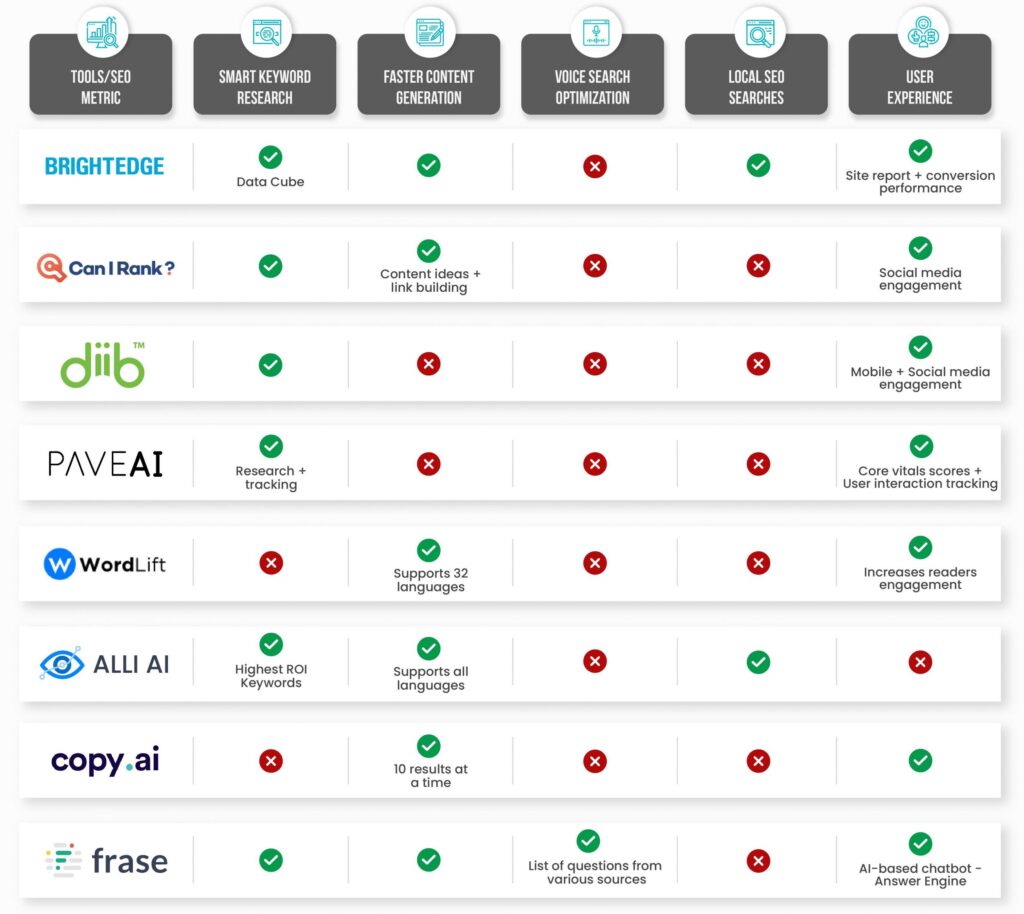
- Best tools in 2026: Rankability, Surfer SEO, Clearscope, Frase, Semrush Copilot, Wellows, Peec AI, AirOps
- 83% of large organizations report measurable SEO gains after integrating AI — only 6% saw no improvement
- The AI SEO tools market is heading from $1.2B (2024) to $4.5B by 2033 — this isn’t a fad, it’s infrastructure
The Uncomfortable Truth About Search in 2026
I want to start with something that most “best AI SEO tools” articles skip entirely because it makes their tool recommendations more complicated. The search landscape has split into two parallel realities — and you need to understand both before picking any tool.
Reality 1: Google still dominates. As of March 2026, Google holds 90% of global search traffic. The apocalyptic “Google is dead” takes haven’t materialized. People are still Googling billions of times per day.
Reality 2: AI is eating the clicks. With 2 billion monthly AI Overview users and a 61% drop in organic CTR when those Overviews appear, ranking #1 increasingly means getting displayed without getting clicked. And then there’s ChatGPT at 900 million weekly active users, Perplexity processing 780 million monthly queries — neither of which shows up in traditional search traffic data.
Here’s the twist that should actually excite you: AI-referred traffic converts at 23× the rate of traditional organic traffic. People who click through from an AI citation are already convinced. They’re not browsing — they’re buying.
What AI SEO Tools Actually Do (vs. What They Claim)
The “AI” label has been slapped on everything from basic auto-complete to genuinely intelligent platforms. Here’s a framework for separating real from marketing noise.
Genuine AI SEO tools do at least one of these things well: semantic analysis (understanding what a query means, not just what words it contains), pattern recognition across large datasets faster than any human, predictive modeling (what will rank, what will be cited), or autonomous workflow execution (researching, briefing, drafting, and optimizing without manual steps between each).
Tools that just auto-fill meta descriptions or suggest H2 variations aren’t AI SEO tools — they’re autocomplete with a marketing budget.
Does it learn from your specific site’s data over time, or does it generate generic suggestions from static templates? The first is AI. The second is a template engine wearing a lab coat.
| Capability | Traditional SEO Tool | Genuine AI SEO Tool |
|---|---|---|
| Keyword research | Search volume + competition metrics | Intent modeling, semantic clustering, conversational query mapping |
| Content guidance | Keyword density recommendations | Topical coverage analysis vs. top-ranking content, NLP gap detection |
| Link building | Domain authority scores | Opportunity identification + personalized outreach drafting |
| AI search visibility | ❌ Not tracked | Citation monitoring across ChatGPT, Perplexity, Gemini, AI Overviews |
| Workflow automation | Scheduled reports | Agentic pipelines: research → brief → draft → optimize → publish |
| Technical audits | Crawl reports + manual interpretation | Automatic prioritization + fix suggestions tied to ranking impact |
6 Categories of AI SEO Tools (Pick Your Battles)
No single tool does everything well. The teams getting the best results in 2026 run a core platform plus one or two specialist tools. Here’s how the market splits.
Content Intelligence & Optimization
Analyze competitor content, identify topic gaps, score your drafts against top-ranking pages in real time. The backbone of most AI SEO workflows.
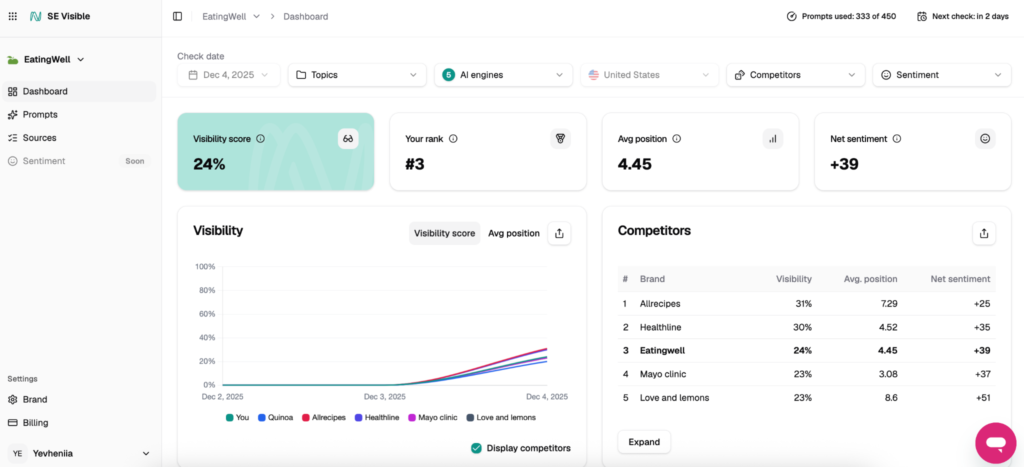
AI Visibility / GEO Tracking
Track whether your brand appears in ChatGPT, Perplexity, Gemini, and Google AI Mode responses — and for which queries. New category, fast-growing.
Keyword Research & Intent Mapping
Goes beyond search volume to model conversational query patterns, semantic clusters, and user intent at scale. Critical for GEO as well as Google.
Automated Content Pipelines
No-code workflow builders that chain research, briefing, drafting, and optimization into one autonomous sequence. AirOps is the leader here.
Technical SEO Automation
AI that not only finds technical issues but prioritizes them by ranking impact and suggests exact fixes. Replaces hours of manual audit interpretation.
Analytics & AI Reporting
Transforms raw GA4, Search Console, Ahrefs, and Semrush data into actionable insight dashboards with automatic anomaly detection.
The Best AI SEO Tools in 2026 — Honestly Reviewed
We spent hundreds of hours with these platforms — not skimming demo videos. These are the tools that showed up in real workflows and delivered measurable results. Not every tool that markets “AI” made this list.
The only AI SEO tool tested daily by the Rankability team themselves — and that says something. Unites keyword research, content briefs, real-time optimization, and AI search tracking in one workflow. The Content Optimizer shows coverage signals as you write, so you’re not guessing at topical completeness. Strong on both Google and AI search tracking.
Semantic keyword clustering and real-time content scoring against top-ranking pages. One agency used Surfer to scale localized content production across multiple regions in 2026 — the kind of use case it genuinely handles well. Recommendations can feel formulaic on complex topics, but the core optimization engine is solid. Excellent CMS integration.
The final check before you publish. Clearscope’s semantic analysis confirms your article covers the right topics at the right depth — not just keyword density, but conceptual coverage. Content marketers who want airtight topical authority use it as a pre-publication gate. Simpler and more focused than Surfer, which is a feature not a bug for teams that want one specific job done well.
Enter a keyword, get a content brief built from top-ranking pages in seconds — common questions, statistics covered, topic clusters. Frase now adds dual SEO + GEO scoring that shows how content aligns with both Google and AI platforms like ChatGPT, Perplexity, Claude, and Gemini. For teams producing multiple articles per week, it standardizes research quality across writers.
Semrush’s Copilot is an AI dashboard assistant that surfaces personalized recommendations based on your specific site data — not generic best practices. The Content Toolkit analyzes top-ranking pages and identifies what your content is missing. Combined with Semrush’s best-in-class keyword and backlink data, it’s the safest choice for teams that want one trusted platform.
AirOps is where SEO teams go when they want to automate the boring parts without writing code. Build workflows that pull live SEO data from Semrush and DataForSEO, run them on schedules or triggers, and produce briefs, first drafts, or refresh reports automatically. One SEO director built an automated LLM Brand Audit workflow to identify content gaps — that’s the kind of use case AirOps is built for.
Purpose-built for the new game. Wellows tracks your AI Visibility Score and citation frequency across ChatGPT, Gemini, Perplexity, Google AI Overviews, and AI Mode — then turns visibility gaps into specific content and outreach actions. If less than 10% of your current SEO budget goes toward AI search visibility, Wellows shows you where you’re invisible.
Tracks how AI systems mention, frame, and characterize your brand across LLMs. Not a writing tool — it’s an intelligence tool. Tells you whether ChatGPT describes your product accurately, whether Perplexity recommends you in the right context, and where sentiment is slipping. Critical for B2B brands where AI-generated answers influence purchasing decisions before a human ever visits your site.
Solo / Freelance ($0–$50/mo): Frase for research + Clearscope on a per-report basis.
Small team ($50–$150/mo): Surfer SEO or Rankability as core platform.
Agency ($150–$400/mo): Semrush + AirOps for automation.
Enterprise ($400+/mo): Full stack — Semrush + Clearscope + Wellows + Peec AI. Track everything, optimize everywhere.
The GEO Factor: Why Traditional SEO Is No Longer Enough
This section is the one that most tool comparison guides skip — because it complicates the neat “use these 5 tools and rank” narrative. GEO (Generative Engine Optimization) is a genuinely distinct discipline, and you need to understand it separately from traditional SEO.
Here’s what the research actually shows about what drives AI citations — and it’s different enough from Google SEO signals that it requires a different workflow:
| Factor | Impact on Google Rankings | Impact on AI Citations |
|---|---|---|
| Backlink count | High | Minimal |
| Content depth / word count | Medium | High |
| Readability score | Medium | High |
| Q&A / FAQ structure | Medium | High — optimal for AI extraction |
| Page load speed | High | High — faster content more likely cited |
| Brand search volume | Medium | High — correlates with AI mentions |
| File format | N/A | HTML only — AI ignores .md files entirely |
That last point stops people cold. OtterlyAI ran an experiment in April 2026 and found that AI tools only cite HTML pages — Markdown files are invisible. If you have any content living in .md format that you’re expecting to get cited, fix it first. That’s a quick win.
Companies seeing positive GEO ROI report 300–500% returns within 6–12 months. Content optimized for GEO sees a 30–40% visibility increase in AI search results. The investment case is clear — the execution is the gap.
1. Restructure key pages into Q&A format — this is the single highest-leverage GEO action.
2. Increase content depth on your most important pages — word count and sentence count correlate with citation rate.
3. Make sure all key content is in HTML, not Markdown.
4. Build brand mentions across third-party sites — AI systems weight brand popularity heavily.
5. Improve page speed — faster-loading content is measurably more likely to be cited.
What the Numbers Actually Say About AI SEO ROI
Let’s be concrete. These are the metrics from 2025–2026 research that should influence how you budget for AI SEO tools.
Sources: DemandSage AI SEO Statistics 2026, SEOmator AI SEO Statistics, Superlines GEO ROI Report 2026.
Real Results: What Teams Are Reporting in 2025–2026
The playbook matters more than the tools. Here are three examples showing different approaches and what actually moved the needle.
A mid-size e-commerce brand had a blog producing consistent content but stagnating rankings. They switched from manual optimization to Surfer SEO for on-page scoring and Frase for research and briefing. The change wasn’t just speed — it was the depth of topical coverage that Frase’s research phase surfaced that their writers had been missing. Content that previously ranked on page 2-3 for competitive terms moved to page 1 within 90 days of optimization.
A B2B SaaS company noticed that ChatGPT and Perplexity were directing their target audience toward three competitors — and never mentioning them. They used Wellows to identify the specific queries where they were absent, then restructured their core solution pages into Q&A format and doubled the depth of their comparison content. Within four months, they appeared in AI-generated answers for 34 of their 60 tracked queries (up from 6). Lead quality from AI-referred traffic was measurably higher.
A 12-person agency managing SEO for 40+ clients built an AirOps workflow that automatically generates content briefs using live Semrush data, passes them to writers with pre-populated research, and runs completed drafts through Clearscope before submission. What previously required a senior SEO specialist’s full attention for brief creation now runs on a schedule. The time saved went into strategy — specifically into GEO audits that became a new billable service.
The Risks No One Puts in Their Tool Comparison
1. AI-generated content that tanks your E-E-A-T
Google has been crystal clear: high-quality, user-focused, experience-backed content ranks. Low-quality AI content — stuff that’s technically correct but has no real author perspective — gets algorithmically penalized over time. Not immediately. Gradually. And then suddenly you’re reviewing a traffic graph with a cliff in it.
The rule of thumb from real practitioners: AI handles structure, research, and first drafts. Humans handle perspective, experience, and final voice. The moment you remove the human judgment layer, the content becomes indistinguishable from a thousand other AI-generated articles — and the algorithms know it.
2. Optimizing for the wrong thing
With 93% zero-click rates in AI Mode, there’s a real scenario where you rank perfectly for AI citation, generate enormous impressions, and see no traffic increase — while conversion rates from the small percentage who do click are extraordinary. The metrics look broken. They’re not. The model has just changed. Teams that don’t update their success metrics will pull back on the exact work that’s generating their best-converting leads.
3. Security and data access
Most enterprise AI SEO tools require access to your Google Search Console, GA4, and sometimes your CMS. That’s a serious data access level. Audit what each tool stores, where it’s processed, and what your contract says about data usage. Several tools caught heat in 2025 for training their models on client data without sufficiently clear disclosure. This is a real procurement risk, not a theoretical one.
Before You Buy Any AI SEO Tool: 8 Checks
Where AI SEO Is Heading: 2026–2027
Frequently Asked Questions
Sources & References
How to Use AI Software for SEO in 2026: Tools, GEO, and Workflows That Actually Work
AI Changed SEO in 2026: What 40 Tools Reveal About the New Rules