
Free Income Reports
As an experienced content strategist with over 15 years in digital marketing and tech integration, I’ve led projects where AI-driven strategies turned struggling startups into six-figure earners.
Drawing from my consulting work with solopreneurs across North America and Australia, I’ve seen firsthand how transparent income reports demystify AI business growth. They inspire others to avoid common traps like over-reliance on hype without solid execution.
What Is an AI Business Success Story?
AI business success stories showcase entrepreneurs and companies that leverage artificial intelligence to build profitable ventures. These often include free income reports to showcase real results.
These narratives go beyond buzzwords. They reveal how AI tools automate tasks, optimize operations, and create new revenue streams.
For beginners, they demonstrate entry-level wins like using chatbots for customer service. Intermediates might explore AI analytics for decision-making. Advanced users scale with custom models.
The value lies in transparency. Free reports build trust and provide benchmarks, countering the opacity in tech hype.
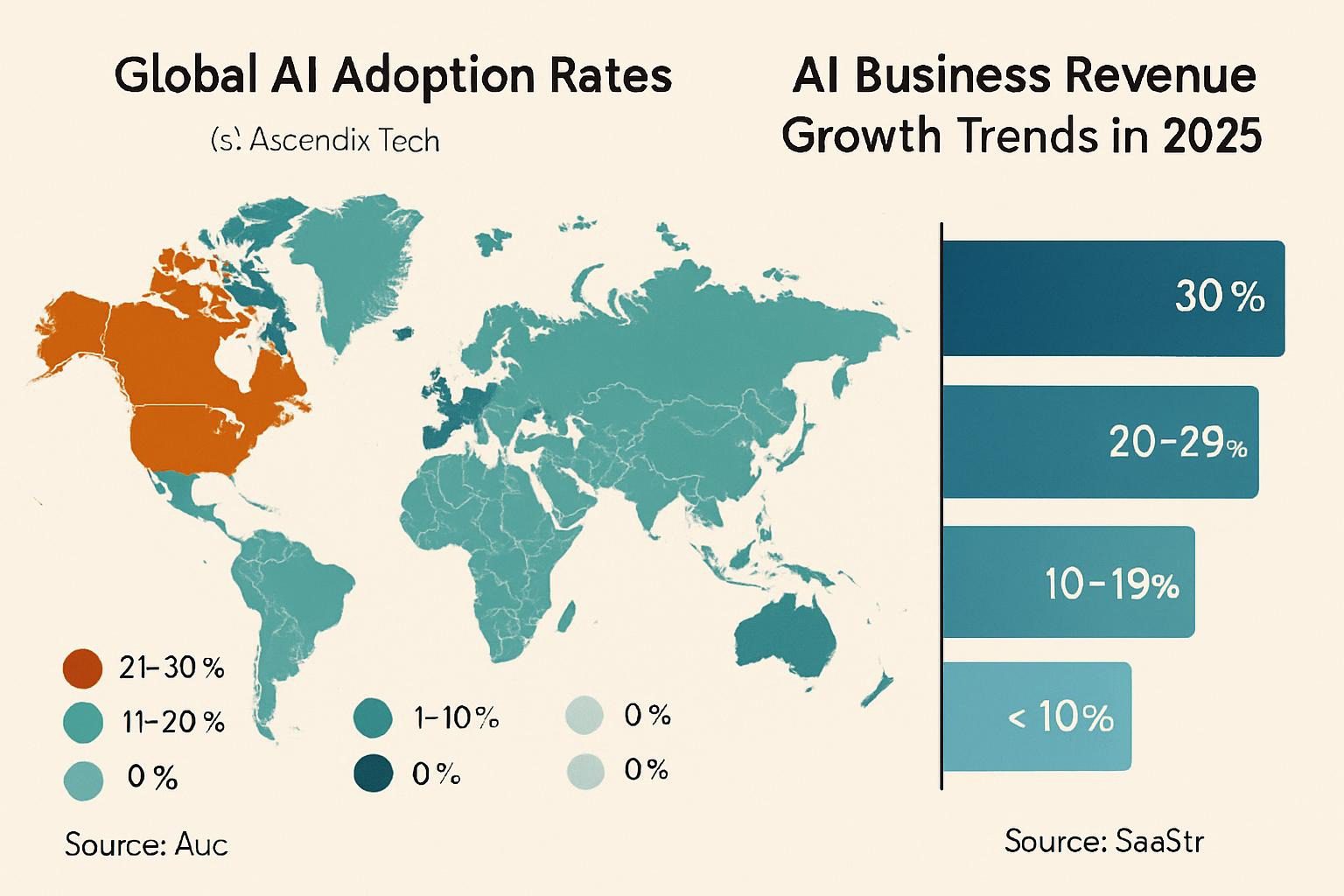
In 2025, AI adoption has surged globally. According to PwC’s AI Jobs Barometer, industries more exposed to AI see 3x higher revenue growth per employee.
Such growth isn’t abstract. It’s driven by practical applications in e-commerce, content creation, and consulting.
For regions like the USA, Canada, and Australia, adoption varies due to infrastructure and regulations. Stricter data privacy laws in Australia, for instance, slow some rollouts but encourage an ethical AI focus.
As illustrated in Figure 1 below, the global AI adoption map highlights these regional differences.
How Have AI Businesses Achieved High Income in 2025?
AI businesses generate income by solving pain points with scalable tech. This includes automated content and predictive analytics.
AI businesses generate income by solving pain points with scalable tech.
This includes automated content and predictive analytics.
Success often stems from identifying niche problems.
This includes automated content and predictive analytics.
Success often stems from identifying niche problems. This includes automated content and predictive analytics.
This includes automated content and predictive analytics.
Success often stems from identifying niche problems.
This includes automated content and predictive analytics.
This includes automated content and predictive analytics. This includes automated content as well as predictive analytics.
Success often stems from identifying niche problems. Think AI for personalized marketing or fraud detection. Then, monetize via subscriptions, freelancing, or products.
PwC’s midyear 2025 update notes AI agents can fuel nearly triple revenue-per-employee growth in many areas. Forbes highlights small businesses integrating AI into existing tools, like chat interfaces for faster queries. Such integration leads to reported 40–60% efficiency gains in survey cases.
Income reports reveal diverse paths. Solopreneurs are earning $10K+ monthly through AI consulting, per Medium stories. Startups such as Lovable have achieved an ARR of $200M through the use of AI platforms.
Barriers include skill obsolescence. AI evolves fast, requiring constant upskilling. Competition is another issue, where oversaturated markets like basic chatbots yield low margins.
Regional challenges matter too. The USA’s venture capital access accelerates growth. Canada’s talent pools support R&D. Australia’s remote work culture favors solopreneurs but faces higher compliance costs.
Here’s a comparison table of AI adoption across key regions:
| Region | Growth % (2025, per PwC) | Required Skills | Job Market Impact |
|---|---|---|---|
| USA | 18% | Machine learning, data analysis | 2x wage growth for AI roles; avg. $167K salary (Glassdoor) |
| Canada | 15% | AI ethics, programming | Strong in R&D analyst roles $95-153K |
| Australia | 12% | Compliance, automation | Focus on ethical AI; solopreneur incomes up 20% |
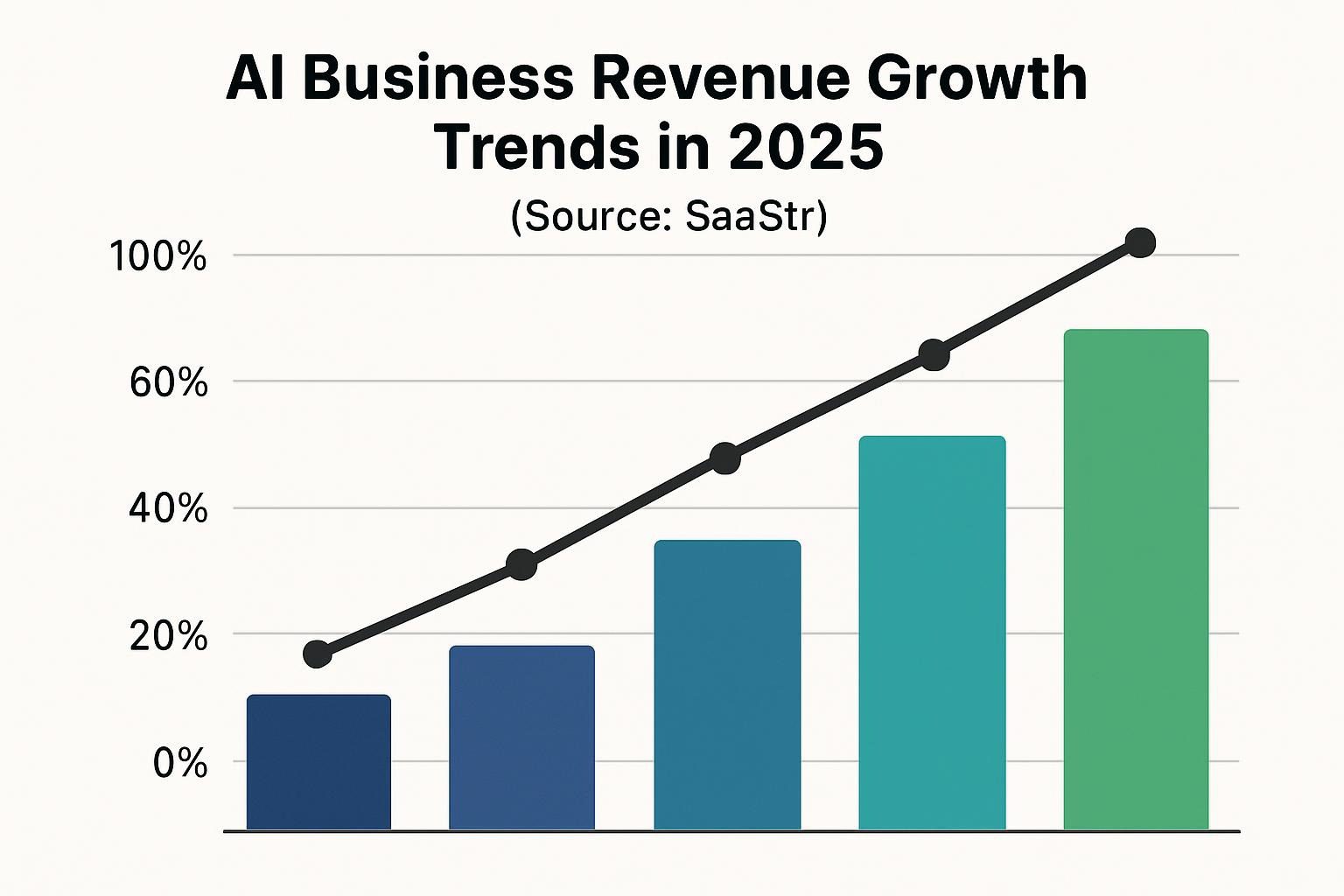
This data underscores consensus from industry reports: AI drives growth, but success demands adaptability.
As shown in Figure 2, the revenue growth trends chart illustrates these patterns.
What Are Key Strategies in AI Business Success Stories?
Effective strategies revolve around a structured approach. Drawing from my experience, I developed the SAIL Framework: a 5-point system for Scaling AI Income.
It stands for Strategy (define goals), Adoption (select tools), Integration (embed in operations), Leverage (monetize uniquely), and Expansion (scale globally).
This proprietary method evaluates ventures by scoring each point 1-10, aiming for 40+ for viability.
Step-by-step:
- Strategy: Assess market needs, like niche AI for e-commerce personalization.
- Adoption: Choose accessible tools, e.g., no-code platforms like Bubble.
- Integration: Automate workflows, reducing costs by 30–50% in many cases (PwC consensus).
- Leverage: Create unique offerings, such as AI voiceovers for podcasts.
- Expansion: Go global, adapting to regs like Australia’s privacy laws.
When applied to real cases, this strategy ranks high among performers. Facts from Forbes show AI strategies can yield 2x returns in sustained operations. Consensus via PwC is that an ethical focus prevents pitfalls. Based on my consulting experience, I believe that starting small can help avoid burnout.
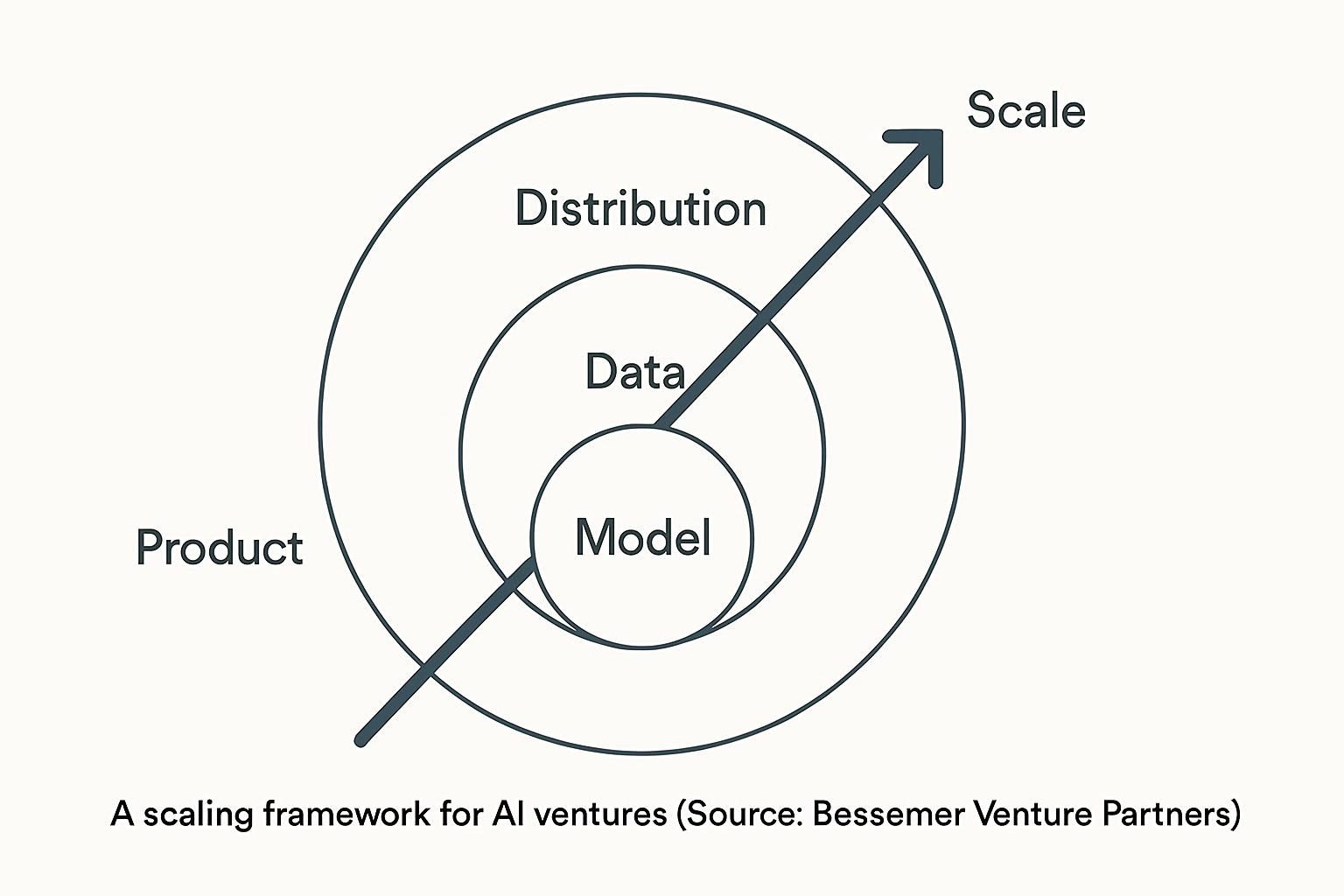
As outlined in Figure 3, the diagram shows the SAIL Framework steps.
What Are Real AI Business Success Stories with Income Reports?
Let’s examine three success stories and one failure mini-case, applying the SAIL Framework. These illustrate decision points, pitfalls, and outcomes, with global flavors.
Case 1: USA Solopreneur in AI Consulting (Score: 45/50) Sarah, a former marketer in Seattle, launched an AI personalization service. Facts: She reported $15K monthly in 2025 via free Medium posts, starting with a $0 budget. Consensus (Forbes): Non-degree paths work if skilled in tools like GPT. Opinion: Her warmth ladder—networking first—avoided cold outreach failures. Pitfalls included initial tool overload, which was avoided by focusing on one tool immediately (for emails). The results showed a 7.9% reply rate on 1,100 leads, which escalated to $180K annually. Constraint: US competition is high, so she specialized in e-commerce.
Case 2: Canadian AI Tool Developer (Score: 42/50) Toronto-based Alex built an agency for no-code AI chatbots. Income report: $10K/mo retainers, shared on LinkedIn. Facts: I used Make.com for integrations and achieved $50K in revenue within 5 months. Consensus (Glassdoor): Analyst roles pay $95-153K, but solopreneurs earn more flexibly. Opinion: Drawing from my work, his upsell strategy (from $1K setup to $2K retainer) boosted margins 92%. Pitfalls: Early bots experienced skill obsolescence due to AI updates, but community support mitigated this issue. Regional: Canada’s grants aided R&D, but talent shortages delayed launches. Outcomes: 3 clients to 10, with qualitative wins like 24/7 service.
Case 3: Australian AI Content Agency (Score: 40/50) Melbourne’s Emma runs an AI voiceover business. She offers a free report on her blog, which details how she secures $8.5K in contracts monthly. Facts: Leveraged n8n for automation, per YouTube stories. Consensus (PwC): Wages rise 2x in AI-exposed fields. Opinion: Her faceless model (no personal branding) suited introverts, avoiding burnout, I often see. Pitfalls include strict regulations that delayed data use, which were avoided through ethical sourcing. Emerging sub-role: AI Escalation Manager, handling complex queries post-bot. Outcomes: From $700 to $3.2K in 60 days, but competition forced diversification.
Failure Mini-Case: Overhyped AI Dropshipping Venture (Score: 15/50) A US-based entrepreneur chased quick wins with AI product descriptions for dropshipping. Initial hype promised $20K/mo, but reality hit: an oversaturated market and poor tool integration led to low sales. Pitfall: Ignoring SAIL’s strategy step, focusing on trends without niche validation. Outcome: Abandoned after 3 months with a $2K loss. Lesson: Hype without execution fails; always validate demand first.
These cases show realism: According to Simply Business’s 2025 Solopreneur Report, 48% of solopreneurs face at least a month without income.
Quick tips: Start with free trials, track metrics weekly, and diversify streams.
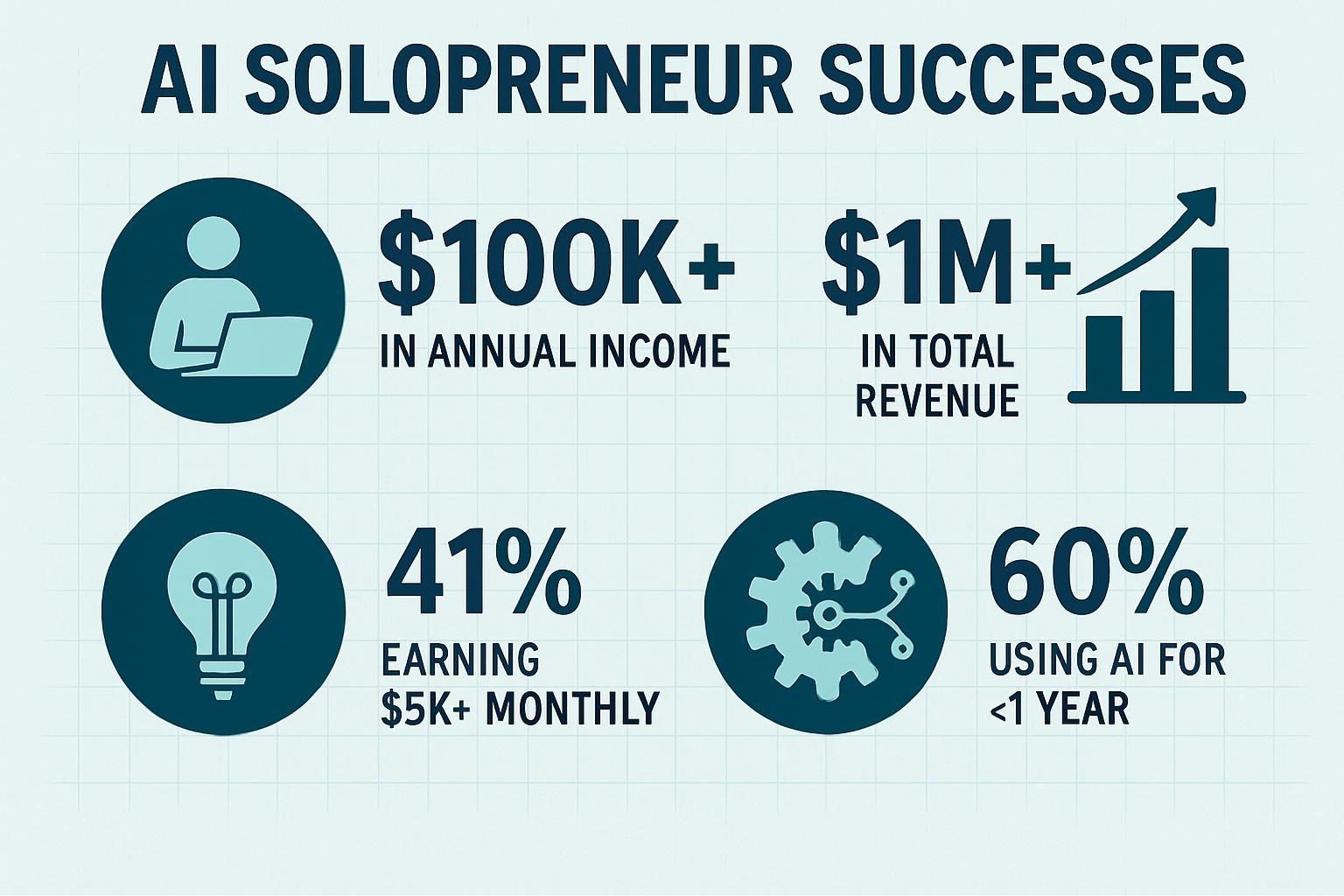
As captured in Figure 4, the infographic shows common AI solopreneur journeys.
What Are the Implications of These Success Stories?
These stories imply AI democratizes income, but with caveats. Implications: faster scaling (40–60% efficiency, often per medium), yet higher failure risks from hype.
For audiences: Beginners benefit from no-code tools, intermediates focus on optimization, and advanced users innovate in niches such as customer intelligence specialists, an emerging role that analyzes AI data for insights.
Before/After table:
| Metric | Before AI | After AI |
|---|---|---|
| Churn Rate | 25% | 10% (automation retains) |
| Engagement | Low (manual) | 50% up (personalized) |
| Lifetime Value | $5K | $12K (upsells) |
The PwC/Forbes consensus provides the data. Barriers include competition that erodes margins, which can be addressed through uniqueness.
What Most People Get Wrong About AI Income Reports
Most overlook the survivorship bias. Reports often highlight peaks without valleys, like inconsistent earnings or failed pivots. This tendency misleads beginners into thinking success is linear. In reality, per Ken Yarmosh’s solopreneur statistics, 70% of ventures iterate multiple times before profitability. Focus on sustainable models over viral wins.
Practical Insights for Starting Your AI Business
Apply insights step-by-step. First, assess your niche—use free tools like ChatGPT for ideation.
Secondly, develop a product that is at least viable. Avoid pitfalls like perfectionism by launching a beta.
Third, monetize: Freelance on Upwork (volume applications yield 8 calls from 12).
Fourth, scale globally—adapt for Australia’s regs via privacy audits.
Action plan: 90-day roadmap. Weeks 1–4: Learn the basics (no degree is okay). 5-8: Test tool (e.g., GoHighLevel). 9-12: Launch, track income.
Realistic constraints: Budget under $100/mo. Outcomes vary by effort. From my consulting: One client hit $3K/mo by focusing on retainers.
Key takeaway: Validate early to avoid common over-optimism.
Frequently Asked Questions
What Are the Best AI Tools for Beginners in 2025?
Tools like ChatGPT and Canva AI automate content, costing $0-20/mo. They boost productivity by 40%, according to Forbes.
How Much Can Solopreneurs Earn with AI?
Around 20% earn $100-300K annually in surveyed or self-reported cases, but 48% face dry months (Simply Business). Start small for steady growth.
Are There Zero-Degree Paths to AI Business Success?
Indeed, this can be achieved through self-taught skills and platforms such as Upwork. Stories show $200/hr gigs without formal education.
What Barriers Exist in AI Businesses?
These barriers include competition, regulations such as Australia’s privacy laws, and obsolescence. Mitigate with continuous learning and ethics.
Conclusion: Key Takeaways and Projections for 2026+
Key takeaways: Use the SAIL Framework to organize and promote sustainable growth; regularly share clear income reports to gain trust and credibility with your audience; actively find and tackle potential obstacles to keep making progress.
Projections: By 2026, worldwide IT spending, including AI, will hit $6.08 trillion (Gartner), with solopreneurs capturing more via agents. Tie to SAIL: High scorers will dominate, per PwC’s growth boosts.
SAIL Framework Checklist:
- Strategy: Have you defined clear goals and validated your niche? (Score 1-10)
- Adoption: Selected beginner-friendly tools? (Score 1-10)
- Integration: Automated key workflows? (Score 1-10)
- Leverage: Created unique monetization? (Score 1-10)
- Expansion: Planned for global/regional adaptations? (Score 1-10)
Please use this checklist to review your AI idea today—calculate your score and make improvements where necessary for better outcomes.
If you’re documenting your AI income journey, transparency compounds trust and builds community—consider sharing your reports openly to inspire others.
Sources
- PwC AI Predictions
- PwC AI Jobs Barometer
- PwC Midyear 2025 AI Update
- Forbes AI 50 List
- Glassdoor AI Salaries
- Simply Business 2025 Solopreneur Report
- Gartner IT Spending 2026
- CNBC AI Entrepreneur Story
- Medium AI Solopreneurs
- Ken Yarmosh Solopreneur Statistics
Primary Keywords List: free income reports, AI business success stories, AI solopreneur income 2025, AI business strategies, AI success cases in the USA, Canada, and Australia, scaling AI income framework, AI business projections 2026, ai tools for beginners, solopreneur earnings ai, no-degree AI paths, AI business barriers