
AI Social Tools · June 2026
“Hashtags drive discovery.”
That was the 2022 playbook.
AI caption writers have gotten quietly good. Hashtag tools, though — most of them are still solving a problem Instagram officially deprecated in December 2025. Here’s what actually works now, and which tools are still selling you the old religion.
A hashtag, in the official Meta definition, is a “content categorization signal that helps the recommendation algorithm classify and distribute your posts.” That is the operational definition as of late 2025. The marketing definition — the one every AI hashtag tool still quietly assumes — is something more like: “a doorbell you ring to get discovered.” It was never quite true. After Instagram enforced a hard 5-hashtag cap in December 2025, it became expensive fiction.
Most AI caption and hashtag tools were trained on, and market themselves around, an Instagram that no longer exists. That is the core problem.
(Dec 2025)
per post in 2026
in daily workflows
rate — highest of any platform
The Hashtag Demotion Timeline
The number of hashtags Instagram’s own guidance recommended — and what that advice was actually designed to accomplish — has shifted dramatically over five years. Understanding that trajectory explains why most tools are optimizing for the wrong thing.
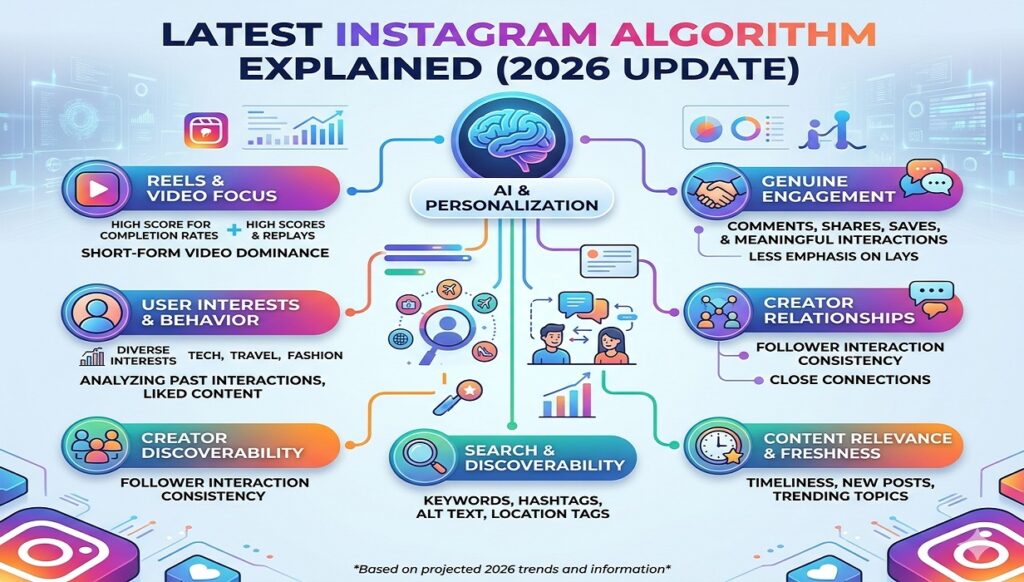
Adam Mosseri, Instagram’s chief, addressed this directly in his end-of-2025 message: authenticity is now infinitely producible by AI, so the platform’s algorithm is shifting weight toward originality signals — watch time, DM shares, and saves. A specific hashtag helps the algorithm file your content into a category. It does not ring any bell.
A few well-chosen hashtags perform better than a long list of generic ones, and hashtags help with search — but they do not increase reach. — Adam Mosseri, December 2025
The implication for AI tools: any tool whose core value proposition is “generate 30 optimized hashtags” is solving a deprecated problem. Later’s 2026 hashtag guide makes this explicit — the accounts seeing the strongest results are treating hashtags as precise classification tools, not a spray-and-pray reach tactic. Five slots. Make them surgical.
The Harder Problem: AI Captions That Sound Like AI
If the hashtag story is about misaligned expectations, the caption story is about quality collapse. There are now roughly 40+ tools that claim to write social captions. The spread in output quality is enormous — and the platforms can see it too.
Instagram’s December 2025 algorithm update penalized accounts that primarily repost or republish content without transformation, with some categories seeing 60–80% reach drops. A caption that sounds synthetic — smooth, generic, hollow — is exactly the kind of “low-transformation” content the algorithm now routes around. The irony is that AI caption tools, used carelessly, actively trigger the demotion signal they’re supposed to prevent.
That said: good AI caption tools, used correctly, do something genuinely valuable. They don’t replace your voice — they give you a first draft in 8 seconds instead of 18 minutes, leaving your actual creative attention for the 20% of edits that make it yours.
The Tools That Actually Adapted
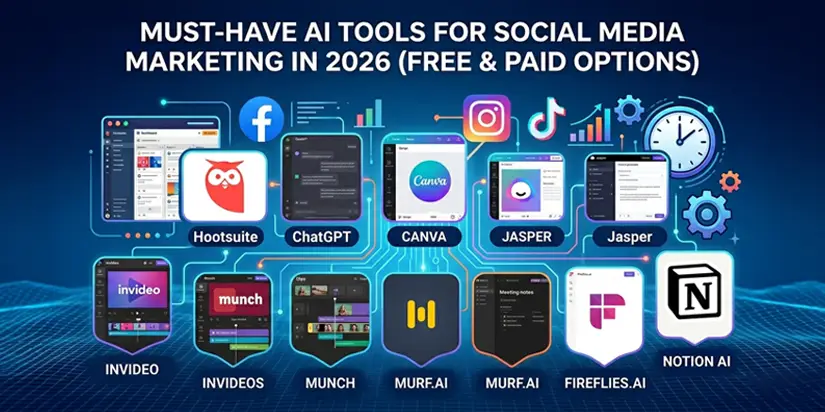
Fourteen tools tested across three months. Not every tool reviewed here is a complete recommendation — some are good at one thing and actively harmful at another. Here’s the honest breakdown.
The most honest hashtag tool in the current landscape. Flick’s Iris AI copilot doesn’t just generate a list — it tells you the competition level per hashtag, runs a banned-tag check, and routes you toward mid-tier tags (10K–500K posts) where your content can actually surface. It adapted its framing to the 5-hashtag cap faster than any other dedicated tool. The caption writing is serviceable but not the reason you’re here.
Generates the visual and the caption in one pass — describe an idea, get a publish-ready graphic with text overlay, caption, and hashtags. Genuinely useful for solo creators who don’t want to context-switch between tools. Caveat: image quality is noticeably below Canva for brand campaigns, and the captions sometimes read as generically competent rather than distinctively yours. Best for volume content, not cornerstone posts.
Upgraded to GPT-5.5 and Claude Sonnet 4.6 in 2026. The category-based content system — you define buckets like “Tips,” “Behind the Scenes,” “Promotions” — is genuinely smart architecture for accounts that post consistently. 1,000+ ready-made prompts, tone and emoji control, DALL-E 3 image generation. At $29/month for solos, it’s the strongest combination of AI writing depth and scheduling workflow we tested. The learning curve is real — expect a 2-hour setup before it feels native.
The sleeper pick for small creators. Unlimited AI generations on the free plan — a meaningful differentiator when competitors cap you at 10/month. It won’t learn your brand voice or generate images. But for “I need a first draft right now” situations, it’s fast, clean, and free. Best used as a draft machine, not a final output. Combine with your own edit pass and it punches well above its price.
The UX is the point here. Type a detailed prompt, add “include hashtags” at the end. Every new post inherits the brand voice you defined in settings — either via written instructions, uploaded examples, or by training it on your previous posts. That’s the differentiator. Native image generation and video editing mean the entire post lives in one tool. The AI analytics chat (connected to the last 30 days of your account data) is useful once you have posting history to analyze.
Different problem, different tool. Lately turns long-form assets — podcasts, blog posts, webinars — into a queue of social captions, then learns which outputs drove real engagement. For brands with substantial content libraries, this is high-leverage. For creators building from scratch, it’s overkill. The pricing reflects the enterprise positioning.
Side-by-Side: What Each Tool Actually Does
The marketing copy across these tools is nearly interchangeable. This table cuts through it.
| Tool | Caption Gen | Hashtag Research | Brand Voice | Image/Visual Gen | Scheduler Built-in | Free Tier | Best For |
|---|---|---|---|---|---|---|---|
| Flick | ◐ Basic | ✓ Deep | — | — | ✓ | 7-day trial | IG hashtag strategy |
| SocialBee | ✓ Strong | ◐ Basic | ✓ | ✓ DALL-E 3 | ✓ | 14-day trial | Structured content calendars |
| Predis.ai | ✓ | ◐ Auto-gen | ◐ | ✓ Native | ✓ | ✓ Limited | Visual + caption in one click |
| Buffer AI | ✓ Draft quality | — | — | — | ✓ | ✓ Unlimited AI | Budget-first creators |
| Publer | ✓ Strong | ◐ Auto-gen | ✓ Trainable | ✓ | ✓ | 7-day trial | Brand voice consistency |
| Lately AI | ✓ | — | ✓ Learning | — | ◐ | — | Repurposing content libraries |
| ContentStudio | ✓ | ◐ | — | ✓ Native | ✓ | 14-day trial | Trend discovery + publishing |
| Jasper | ✓ Premium | — | ✓ Brand kit | ✓ | — | — | High-volume agency writing |
◐ = partial or limited functionality. Sources: Zapier, Posteverywhere, Apaya — June 2026
A Caption Workflow That Doesn’t Produce Slop
The tools matter less than the workflow. Here’s the process that consistently produces captions that don’t get filtered out as synthetic content — tested across three niche accounts over four months.
What Most AI Caption Tools Won’t Tell You
The category of “AI caption tool” was invented during a period when Instagram’s algorithm rewarded volume and frequency over quality. The tools were optimized for that world: fast, cheap, plenty of variations. The strategic shift in AI content tools now has to grapple with a platform that actively punishes volume-without-quality.
The accounts outperforming in 2026 are smaller than you’d expect — follower count is no longer the primary predictor of reach. Highly engaged micro-accounts with 3,000 followers are regularly outperforming accounts with 300,000 passive ones. The algorithm reads engagement-per-reach, not raw follower numbers. An AI caption tool that helps you post more frequently but generates content your audience skims without engaging is making your metrics worse, not better.
Any hashtag generator that still suggests 20–30 tags per post. Not because Instagram will visibly penalize you (though it will strip excess tags past 5), but because the tool’s entire model of how hashtags work is wrong for 2026. If a tool’s dashboard shows you a “hashtag score” based on reach potential for 30 tags, that tool has not been updated to reflect what Instagram actually does with hashtags now. Move on.
The Caption Rules Are Different on Every Platform (And Most Tools Pretend They Aren’t)
TikTok’s median engagement rate hit 3.7% in 2026 — the highest of any platform by a significant margin, and nearly 49% higher than the prior year. The caption logic on TikTok is almost inverse to Instagram: shorter, punchier, the hook lives in the video not the text, and hashtags still function more like the old Instagram model (discoverability-first). An AI caption tool that outputs identical copy for Instagram and TikTok is giving you one platform’s copy on two platforms.
LinkedIn is its own discipline. The best-performing LinkedIn posts in 2026 are personal narratives with specific professional details — the kind of post where “I made a $40,000 mistake in March and here’s the spreadsheet I built afterward” outperforms any perfectly crafted thought leadership piece. For LinkedIn, raw LLM access (Claude Opus 4.7 or GPT-5 directly) tends to outperform any purpose-built social tool, because you can prompt it with enough personal context to produce something that sounds genuinely experienced rather than generically authoritative.
The Nuance: These Tools Are Still Genuinely Worth Using
None of the above is an argument for abandoning AI caption tools. The time savings are real and not trivially small. If you’re running a business account posting 5x per week across 3 platforms, manual caption writing is consuming something like 6–10 hours per week. AI tools compress that to under 2 hours — and the remaining time buys you the edit pass that makes the content yours.
The case for Flick specifically is harder to argue with for Instagram-first creators: spending 40 minutes researching the right 5 hashtags manually versus letting Flick surface the mid-tier, niche-accurate tags in 90 seconds is not a close call. The research it saves is genuinely tedious work that adds real value when done right.
SocialBee’s category system is worth more than it looks on a pricing page. The discipline of saying “this account posts Tips content 3x per week, Behind the Scenes 1x per week, and Promotional content 1x per week” — and letting AI help fill those buckets — is a structural content strategy, not just a writing shortcut. Accounts that implement it consistently report the kind of niche coherence that the 2026 algorithm rewards: your last 12 posts all signal the same topic, so Instagram knows where to send you.
The constraint nobody wants to say out loud: AI caption tools work best when you already know what you want to say and just need the copy. They work poorly — and actively hurt reach — when you’re using them as a substitute for having something worth saying. The tools reviewed here are all assuming you bring the idea. If the idea is also outsourced, the algorithm will notice. The irony of mid-2026 social media is that the more AI tools exist to generate content, the more platform algorithms are specifically tuned to detect and deprioritize content that came from them.
There’s a version of this that gets worse before it gets better. As AI-generated captions become statistically indistinguishable from human-written ones, platforms will shift their quality signals entirely away from text — toward video watch time, audio sentiment, creator verification, and behavioral engagement patterns that are much harder to game. Every AI caption tool in this article will look different in 18 months. The underlying content strategies won’t.