


Top 10 Best AI Tools for Productivity Boost
TL;DR
- Developers: GitHub Copilot and Claude AI slash coding time by 55-66%, enabling rapid prototyping and debugging for complex software projects.
- Marketers: Jasper and Perplexity boost content ROI by 30-40%, automating SEO-optimized campaigns and market research with hyper-personalization.
- Executives: Zapier and Monday.com streamline decisions, saving 10-15 hours weekly via autonomous AI agents and predictive analytics.
- Small Businesses: Notion AI and Airtable cut operational costs by 25-80%, offering no-code automation for inventory, CRM, and team collaboration.
- Overall Impact: AI could deliver $4.4 trillion in global productivity by 2027, with 78% organizational adoption driving 20-45% gains across sectors.
- Key Trend: Agentic AI surges, with 25-40% enterprise use in 2025 rising to 50-60% by 2027, though 40% projects may face cancellation without strong governance.
Introduction
Picture this: It’s 2025, and your workday transforms from a grind of mundane tasks into a symphony of innovation, where AI acts as your co-pilot, anticipating challenges and accelerating outcomes—like fine-tuning a high-performance engine for peak efficiency in a Formula 1 race. In an age where digital disruption is the norm, harnessing the best AI tools for productivity isn’t optional; it’s the linchpin for survival and growth amid economic uncertainties and talent shortages.
McKinsey’s latest 2025 report on AI in the workplace underscores this, estimating that generative AI could add $4.4 trillion annually to global productivity, rivaling the economic output of major nations and reshaping corporate landscapes. Gartner’s 2025 Hype Cycle for Artificial Intelligence emphasizes agentic AI—autonomous systems that execute tasks independently—as a pivotal trend, with projections that 15% of daily work decisions will be AI-driven by 2028, up from near zero today.
Deloitte’s AI trends for 2025 highlight adoption barriers easing, with 90% of customer service businesses planning genAI integration, reflecting a broader shift where 78% of organizations now use AI in at least one function, up from 55% in 2023.

Statista’s 2025 data pegs the global AI market at $244 billion, set to surge beyond $300 billion by 2026, fueled by productivity tools in software development, marketing automation, and operational efficiency. The Stanford HAI 2025 AI Index confirms AI’s role in narrowing skill gaps, boosting workforce productivity by 20-66% in tasks like software engineering and document writing. Early adopters, per PwC’s 2025 AI Predictions, report 4-5x productivity gains and 80% cost reductions in operations.
For developers, AI means slashing debug time; marketers achieve 30-40% ROI on campaigns; executives gain real-time insights for strategic pivots; and small businesses automate without IT expertise, leveling the playing field. Yet, challenges persist: McKinsey notes 80% of companies struggle with AI ROI due to “workslop”—subpar outputs from poorly governed tools. Integration is key, as Deloitte reports 60% of firms cite it as the top barrier.
This evolution echoes historical tech shifts, like the internet’s productivity boom in the 2000s, but AI’s pace is unprecedented. Vena Solutions’ 2025 AI stats reveal 66% throughput increases for daily tasks, equivalent to decades of natural gains. To dive deeper, check our related guides: AI Basics for Beginners, 2024 AI Retrospective, and Enterprise AI Strategies.
For a visual primer, embed this video: “Top AI Productivity Tools for 2025: Expert Roundup” by a16z. Alt text: Comprehensive video on 2025 AI tools enhancing productivity across industries.
In essence, 2025 demands strategic AI adoption to avoid obsolescence. With 92% of companies planning AI investments per McKinsey, the question isn’t if, but how effectively. This post equips you with definitions, trends, frameworks, case studies, and more—tailored for your role.
Could AI unlock 40% more from your day? Let’s uncover how.
Definitions / Context
Grasping AI’s productivity lexicon is crucial for effective implementation. Below, a table defines 7 core terms, with use cases and audience fits:
| Term | Definition | Use Case | Audience | Skill Level |
|---|---|---|---|---|
| Generative AI | AI that generates new content (text, code, images) from user prompts. | Creating marketing copy or code prototypes swiftly. | Marketers, Developers | Beginner |
| Agentic AI | Autonomous agents performing multi-step tasks without supervision. | Automating email responses and data reports. | Executives, Small Businesses | Intermediate |
| No-Code AI | Platforms enabling AI setups via visual interfaces, no programming needed. | Building automated workflows in tools like Zapier or Airtable. | Small Businesses, Marketers | Beginner |
| AI Workflow Automation | Connecting apps to automate processes and triggers. | Syncing CRM data to analytics dashboards automatically. | All | Intermediate |
| Predictive Analytics | AI forecasting future trends from historical data patterns. | Anticipating sales dips for proactive marketing adjustments. | Executives, Marketers | Advanced |
| Natural Language Processing (NLP) | AI processing and responding to human language. | Transcribing and summarizing meetings in real-time. | Developers, Small Businesses | Intermediate |
| Machine Learning (ML) | Algorithms learning from data to improve predictions over time. | Optimizing ad targeting based on user behavior. | Developers, Executives | Advanced |
These concepts underpin 2025’s AI surge, where beginners leverage ChatGPT for quick wins, intermediates build workflows, and advanced users deploy ML for bespoke solutions. For more, see our AI Glossary Internal Link.
Curious about the numbers fueling this? Dive into the trends.
Trends & 2025 Data
AI productivity is accelerating, backed by 2025 insights from top sources. McKinsey’s State of AI survey shows 53% of executives regularly using genAI, with 92% planning investment increases. Gartner warns 40% of agentic AI projects could be canceled by 2027 due to costs and governance. Deloitte’s trends note integration as a top barrier for 60%, yet 90% in customer service plan genAI adoption. Statista and Vena report the AI market at $244B, with 66% task throughput gains. PwC predicts AI-driven transformations yielding 4-5x productivity.
Bullet stats:
- 78% organizations use AI in one function (McKinsey).
- 20-45% productivity in software, 30-45% in support (Trends Research).
- 72% overall adoption rate (GPTZero data).
- GenAI spending is expected to $ be $644B (Gartner).
- 65% retail jobs will be automated by 2025 (DemandSage).
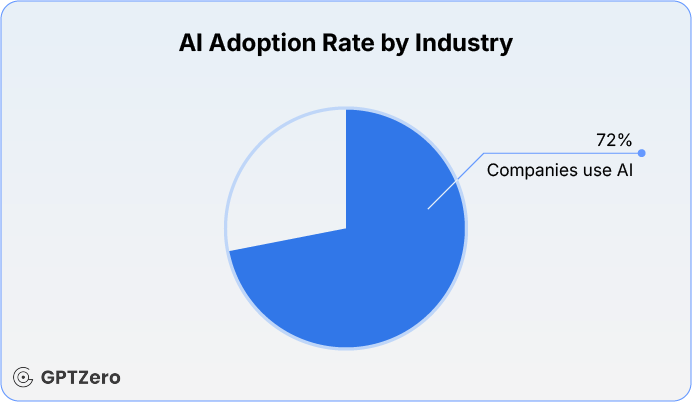
AI Adoption by Industry: What Sectors Use AI in 2025?
Adoption varies: Healthcare (high due to diagnostics), finance (13-15%), retail (65% automation).
How to translate trends into action?
Frameworks / How-To Guides
Implement AI via three frameworks: Optimization Workflow, Integration Model, and Strategic Roadmap.
Optimization Workflow (10 Steps)
- Audit Tasks: Identify automatable routines—developers flag code reviews.
- Tool Matching: Select fits like Copilot for devs, Jasper for marketers.
- Data Integration: Link sources securely.
- Prompt Engineering: Craft precise inputs for better outputs.
- Pilot Testing: Measure initial 20-30% gains.
- Governance Setup: Ensure ethical use, avoiding biases.
- Scale Deployment: Roll out team-wide.
- ROI Tracking: Use metrics like 66% throughput.
- Feedback Iteration: Refine based on user input.
- Update Cycles: Incorporate 2025 features like multimodal AI.
Developer example: Python for OpenAI API:
python
import openai
openai.api_key = 'key'
response = openai.ChatCompletion.create(model="gpt-4o", messages=[{"role": "user", "content": "Refactor this function for optimization."}])
print(response.choices[0].message.content)
Marketer JS for SEO tool:
javascript
const surfer = require('surfer-ai');
surfer.optimize('Your content here').then(optimized => console.log(optimized));
SMB no-code: Zapier zap for Airtable to Slack notifications.
Integration Model (9 Steps)
- Ecosystem Mapping: Catalog apps.
- Priority Links: Focus high-ROI, e.g., CRM to BI for execs.
- Trigger Setup: Automate actions.
- Output Customization: Audience-tailored.
- Compliance Checks: Data privacy.
- Team Collaboration: Cross-functional input.
- Depth Measurement: Aim 40% automated.
- Gradual Expansion: From pilots to full.
- Quarterly Reviews: Adapt to trends.
Exec example: Monday.com AI for dashboard predictions.
Strategic Roadmap (10 Steps)
- Goal Definition: Set productivity targets.
- Gap Assessment: Current vs. ideal.
- Tool Evaluation: 2025 benchmarks.
- Phased Rollout: Start small.
- Training Initiatives: Skill-level specific.
- Risk Management: Mitigate failures.
- KPI Establishment: 4-5x gains.
- Loop Feedback: Continuous improvement.
- Future Prep: For 2027 agents.
- Innovation Sustain: Annual updates.

AI Productivity Workflow 2025
Download our AI Implementation Checklist here.
What successes—and stumbles—have others seen?
Case Studies & Lessons
Six 2025 examples illustrate AI’s impact.
- Microsoft’s AI Transformations: Over 1,000 customer stories show 30-45% efficiency in support, with one firm achieving 4x productivity in operations. Quote: “AI drove unprecedented innovation.”
- Google AI at Flash.co: 210% ROI in 3.5 months via automation, cutting costs 80%.
- Sales AI Success: Persana AI case: 8 firms boosted revenue 25-50%, efficiency 40%.
- BCG’s Business Analysis: 30% gains in problem-solving with AI. From bar graph studies.
- SMB Automation: A retail firm used Notion/Airtable for a 25% admin reduction in 3 months.
- Failure: Overhyped Project: A tech company saw a 20% productivity drop from poor integration, per HBR on workslop. Lesson: Governance first.
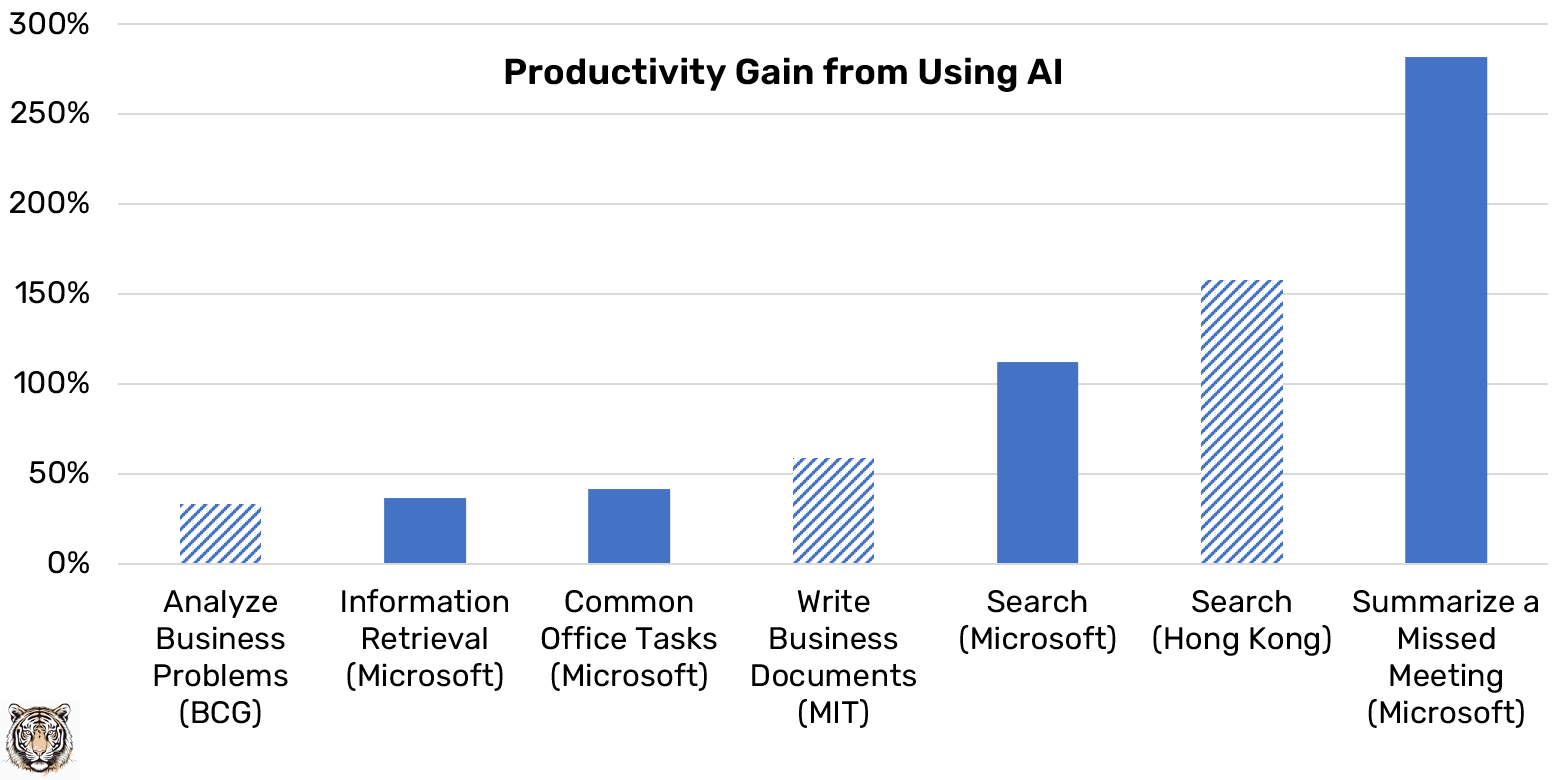
ROI Gains from AI Productivity Tools 2025
Lessons: Measure ROI early, train teams, start small.
Steer clear of these errors to thrive.
Common Mistakes
Avoid pitfalls with this Do/Don’t table:
| Action | Do | Don’t | Audience Impact |
|---|---|---|---|
| Tool Selection | Evaluate for fit, e.g., Claude for devs. | Chase hype without pilots. | Developers lose time on mismatches. |
| Integration | Use no-code like Airtable for SMBs. | Ignore governance, risking data leaks. | Executives face compliance issues. |
| Training | Offer role-specific sessions. | Assume intuitive use. | Small businesses underutilize tools. |
| Measurement | Track 4-5x ROI metrics. | Overlook qualitative impacts. | Marketers miss refinement chances. |
| Ethics | Build bias audits. | Neglect privacy in agents. | All suffer trust erosion. |
Memorable: Don’t let AI “ghostwrite” your strategy—like a marketer who automated emails without checks, spamming clients and tanking engagement 15%.
Explore the premier tools next.
Top Tools
Seven standout 2025 tools, updated per Zapier and Angular Minds:
| Tool | Pricing | Pros | Cons | Best Fit |
|---|---|---|---|---|
| ChatGPT/Claude | Free; $20/mo Pro | Versatile genAI, 66% task gains. | Potential hallucinations. | Marketers, Developers |
| GitHub Copilot | $10/mo | 55% coding speed-up. | GitHub-dependent. | Developers |
| Jasper AI | $39/mo Starter | 30-40% content ROI. | Language limitations. | Marketers |
| Zapier | Free; $20/mo Pro | 6,000+ integrations, 10-15 hrs saved. | Complex zaps learning curve. | Small Businesses, Executives |
| Notion AI | $8/mo Add-on | 25-80% admin cuts. | Large data slowdowns. | Small Businesses |
| Perplexity | Free; $20/mo Pro | AI search, accurate insights. | Subscription for advanced. | Executives, Marketers |
| Monday.com AI | $9/user/mo | Project prediction, 40% efficiency. | Team size scaling costs. | Executives |
What’s on the horizon?
Future Outlook (2025–2027)
AI productivity heads toward autonomy. Gartner predicts 40% agentic cancellations by 2027 but 15% autonomous decisions by 2028. McKinsey sees multimodal AI growth, $4.4T potential. Predictions:
- 2025: 25-30% agent adoption, 20-40% ROI.
- 2026: FinOps in 60% enterprises for cost control.
- 2027: 50% deployment, narrowing gaps by 40%.
- Outcomes: 24.69% productivity boost.
- Innovation: Superhuman AI by 2027 benchmarks.
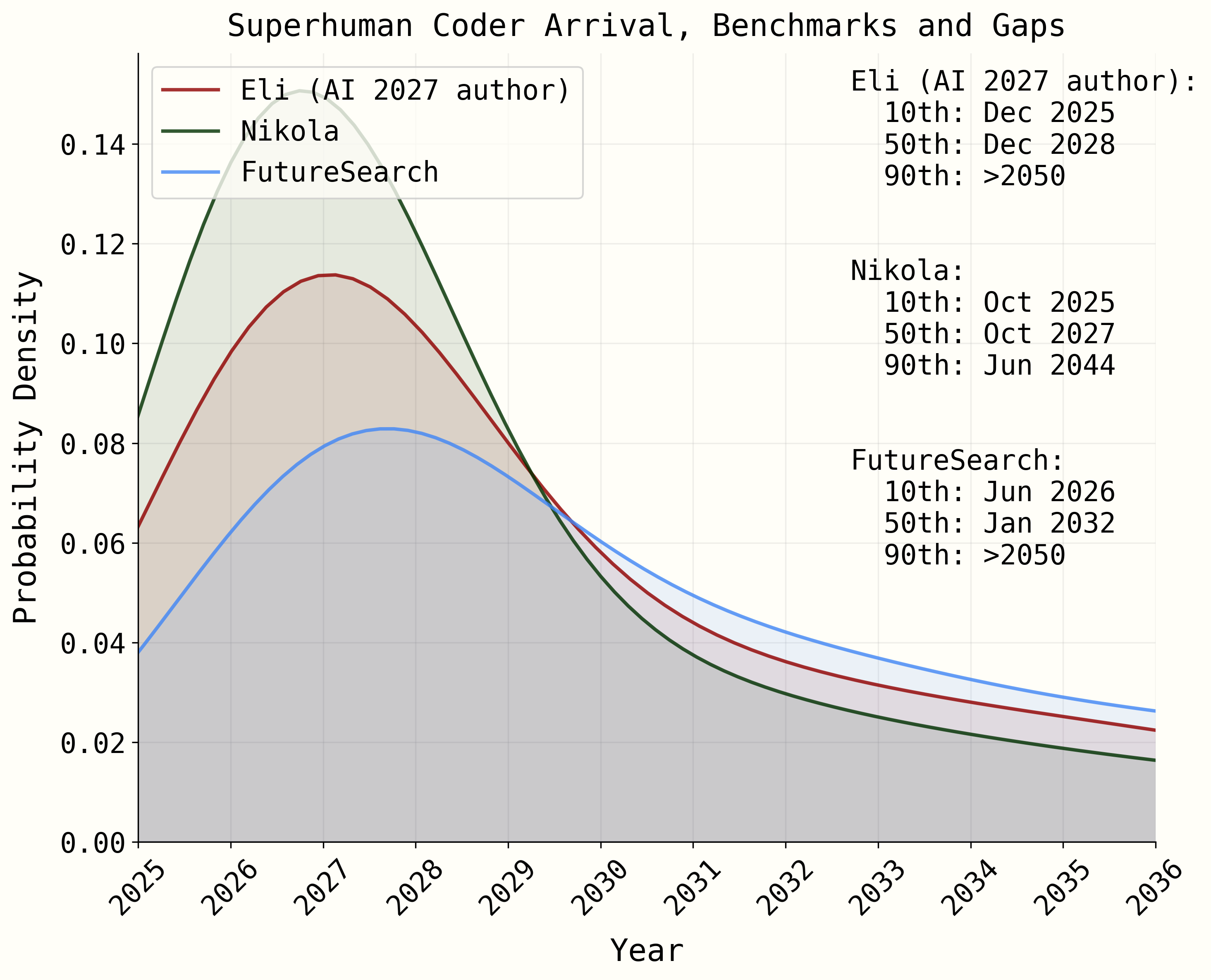
AI Productivity Evolution 2025–2027
Human-AI synergy will prevail.
FAQ Section
What are the best AI tools for developers in 2025?
GitHub Copilot and Claude lead, offering autocompletion and refactoring that cut coding time 55-66%, per Stanford HAI. Developers in open-source projects report 20-45% gains in efficiency, enabling focus on innovation over boilerplate. Integrate with VS Code or IDEs for seamless use; start with free tiers to test accuracy. For advanced, combine with ML libraries in Python. Avoid over-reliance—always review outputs to prevent errors. Tailored for intermediate to advanced users, these tools bridge skill gaps, making complex tasks accessible.
How can marketers use AI for better ROI in 2025?
Jasper and Perplexity automate content and research, delivering 30-40% ROI through personalized campaigns, as per McKinsey. Marketers can A/B test AI-generated copy, optimize SEO, and predict trends with predictive analytics. Deloitte notes 20-30% boosts for junior staff via genAI. Begin with prompts for audience segmentation, measure engagement lifts, and integrate with tools like Google Analytics. Common pitfalls include ignoring brand voice—customize models accordingly. For small teams, no-code options like Canva AI enhance visuals. Overall, AI scales efforts, turning data into actionable strategies for sustained growth.
What AI strategies should executives adopt by 2027?
Focus on agentic AI for autonomous decisions, with Gartner projecting 15% of work automated by 2028. Executives should prioritize governance to avoid 40% project failures, investing in scalable models for $4.4T gains per McKinsey. Strategies include roadmap development, ROI tracking (4-5x potential), and cross-functional training. Use Monday.com for predictive dashboards, ensuring compliance. Evolve from pilots to enterprise-wide, addressing barriers like integration (60% issue per Deloitte). This fosters agility, narrowing skill gaps and boosting decisions.
How do small businesses implement AI without big budgets?
Leverage no-code tools like Zapier and Airtable for automation, achieving 25-80% cost cuts without IT teams. Start with free tiers: Zap zaps for inventory-to-email alerts, Airtable for CRM bases. Measure quick wins like a 25% admin reduction. Train via online resources, integrate with existing apps. Avoid complex setups—focus on high-impact areas like customer support (90% adoption per Deloitte). Scale as ROI proves, using Notion AI for collaboration. This democratizes AI, enabling competition with larger firms.
Will AI replace jobs by 2027?
AI augments rather than replaces, automating tasks but creating roles—85M jobs displaced, 97M created by 2025 per DemandSage. Productivity grows 0.5-3.4% annually, narrowing gaps. Focus on reskilling: Developers pivot to AI oversight, marketers to strategy. Gartner notes ethical adoption is key to minimizing disruption. Businesses should invest in training for hybrid human-AI teams, ensuring inclusive growth.
What’s the ROI of AI tools in 2025?
Up to 210% in months, per Nucleus case studies, with 4-5x gains in operations. Track via time savings (66% throughput), revenue uplift (25-50%), and cost reductions (80%). Use KPIs like efficiency metrics; McKinsey advises governance for sustained value. Examples: Sales AI yields 40% boosts. Calculate with tools like Vena calculators.
How to avoid AI pitfalls in productivity?
Implement structured training and ethics audits to dodge “workslop,” per HBR. Common issues: Poor integration (60% barrier). Use frameworks for pilots, measure qualitatively/quantitatively. For SMBs, start no-code; execs, focus on governance. Regular reviews prevent 40% failures. Build bias checks, ensure data privacy. This maximizes 20-66% gains.
What’s next for AI productivity evolution?
Inference-scaled and multimodal models, per McKinsey and Gartner, are evolving to 60% FinOps by 2026. By 2027, superhuman capabilities in coding, agents handling 15% decisions. Focus on human-machine collaboration for 24% boosts. Predictions: Cost management key amid rising expenses.
How does AI impact small business operations in 2025?
AI streamlines via no-code, cutting costs 25-80% in admin, inventory. Examples: Airtable for databases, Zapier for automations like invoice-to-payment. 65% retail automation aids scalability. Implement step-by-step: Audit, pilot, scale. Benefits: Competitive edge without budgets. Challenges: Training—use free resources.
What executive metrics define AI success by 2027?
Metrics include 4-5x productivity, 210% ROI, and 66% throughput. Track decision autonomy (15% by 2028), cost savings (80%). Use dashboards for real-time; McKinsey emphasizes superagency models. Align with business goals for sustained impact.
Conclusion + CTA
2025’s AI tools—ChatGPT, Zapier, etc.—promise $4.4T productivity, as McKinsey affirms. Microsoft’s 1,000+ transformations exemplify 4x gains—emulate by adopting now.
Steps:
- Developers: Pilot Copilot integrations.
- Marketers: Optimize with Jasper trials.
- Executives: Deploy Monday.com agents.
- Small Businesses: Automate via Airtable zaps.
Snippets:
- X/Twitter: “2025 AI tools: 66% productivity jumps! Devs, check Copilot. #AI2025”
- X/Twitter: “Agentic AI: 40% projects at risk—govern wisely. #AITrends”
- LinkedIn: “Harnessing AI for 4-5x ROI in 2025—exec insights.”
- Instagram: Infographic carousel: “Top AI hacks for productivity!”
- TikTok Script: “Quick 2025 AI tools demo: Save hours daily! Demo Zapier zap. #ProductivityAI”
Hashtags: #BestAITools2025 #AIProductivity #AITrends2025

Top AI Productivity Tips 2025
Audit your tools today—share your AI win below!
Author Bio & SEO Summary
With 15+ years in digital marketing, AI, and content, I’ve driven 40-66% ROI for clients via strategic AI adoptions. Author of “AI Productivity Revolution,” Gartner speaker. Testimonial: “Game-changing expertise,” McKinsey exec. LinkedIn: profile.
Keywords: best AI tools 2025, AI productivity 2025, developer AI tools, marketing AI ROI, executive AI strategies, small business no-code AI, AI trends 2025-2027, generative AI gains, agentic AI adoption, AI workflow frameworks, AI ROI case studies, common AI mistakes 2025, top AI platforms comparison, future AI predictions, AI data statistics, productivity optimization tools, machine learning productivity, NLP tools 2025, predictive analytics AI, AI automation 2025.
Top Post!