
Best AI Productivity Tools
TL;DR
- Developers: Automate coding with AI tools like GitHub Copilot, slashing debug time by 40% for faster deployments.
- Marketers: Leverage content generators such as Jasper to boost ROI by 25% through personalized campaigns.
- Executives: Use decision-making AI like Otter.ai for real-time insights, enhancing strategic planning and team productivity.
- Small Businesses: Integrate no-code automation via Zapier, cutting operational expenses by 30% without tech expertise.
- Overall Benefits: AI productivity tools in 2025 promise 1.5% annual productivity growth, per McKinsey, across industries.
- Key Trend: Agentic AI adoption surges to 25% in enterprises, enabling autonomous workflows for scalable gains.
Introduction
Imagine staring at a blank screen, deadlines looming, and ideas scattered like puzzle pieces in a storm. Now, picture an intelligent assistant that not only organizes those pieces but anticipates the next move, turning chaos into a streamlined masterpiece. That’s the power of AI productivity tools in 2025—a game-changer for professionals navigating an increasingly complex digital landscape. As we enter this pivotal year, AI isn’t just a buzzword; it’s the engine driving unprecedented efficiency and innovation.
According to McKinsey’s 2025 Global Survey on AI, organizations adopting these tools are seeing tangible bottom-line impacts, with AI contributing to a potential $4.4 trillion in annual productivity growth from corporate use cases. Deloitte’s Tech Trends 2025 report echoes this, noting that AI is being woven into daily workflows, with 25% of enterprises deploying AI agents for adaptive experiences.
Gartner’s predictions further underscore the shift: by 2028, over 20% of workplace apps will use AI-driven personalization, accelerating workforce productivity through “nudgetech” that guides users toward optimal behaviors. Statista projects the global AI market to be $244 billion in 2025, fueled by adoption rates exceeding 50% in companies worldwide.
Why is mastering AI productivity tools mission-critical in 2025? In a world where remote work, hybrid teams, and data overload define the norm, these tools act as force multipliers. For developers, they automate repetitive coding tasks; marketers gain hyper-personalized content at scale; executives derive actionable insights from meetings; and small businesses level the playing field with affordable automation.
Without them, you’re racing on foot while competitors zoom ahead in turbocharged vehicles. As Gartner warns, the atrophy of critical thinking due to over-reliance on GenAI could affect 50% of organizations by 2026, but balanced adoption promises the opposite: sharper focus and higher output.
Mastering AI productivity tools is like tuning a racecar before the big race—every adjustment shaves seconds off your lap time, propelling you to the finish line ahead of the pack. Recent X posts highlight real-time excitement: users rave about tools like Claude for instant code reviews, with one developer noting a 50% productivity boost in just weeks.
To dive deeper, refer to this insightful 2025 YouTube video: “2025 AI Productivity Stack: Top 10 AI Tools I Use Weekly” by a16z Partner. Alt text: Illustration of AI tools enhancing daily workflows in a modern office setting.
Make sure your developers use these AI tools
In the sections ahead, we’ll explore definitions, trends, frameworks, and more, tailored to developers, marketers, executives, and small businesses. Are you prepared to accelerate your progress?
What if ignoring AI productivity tools in 2025 costs your team hours daily?
Definitions / Context
To navigate the landscape of AI productivity tools in 2025, it’s mandatory to understand key terms. These concepts form the foundation for leveraging AI effectively, whether you’re a beginner automating emails or an advanced user building custom agents.
| Term | Definition | Use Case | Audience | Skill Level |
|---|---|---|---|---|
| AI Productivity Tool | Software using artificial intelligence to automate tasks, analyze data, and enhance efficiency. | Automating report generation to save hours weekly. | All | Beginner |
| Generative AI (GenAI) | GenAI is an AI system that generates new content, such as text, images, or code, based on prompts. | It is capable of drafting marketing copy or generating code snippets. | Marketers, Developers | Intermediate |
| Agentic AI | Autonomous AI systems that make decisions and execute multi-step tasks. | Handling customer queries end-to-end without human input. | Executives, Small Businesses | Advanced |
| No-Code AI | These platforms enable AI integration without the need for programming knowledge. | Building workflows in tools like Zapier for small business automation. | Small Businesses | Beginner |
| Machine Learning (ML) | This is a subset of AI where systems learn from data to improve performance. | These tools use predictive analytics to forecast sales. | Marketers, Executives | Intermediate |
| Natural Language Processing (NLP) | AI possesses the ability to comprehend and produce human language. | This technology can be used for tasks such as transcription of meetings or sentiment analysis of customer feedback. | All | Beginner |
| AI Automation | These tools use AI to autonomously handle repetitive processes. | This includes the scheduling of social media posts and data entry tasks. | Developers, Small Businesses | Intermediate |
These terms highlight how AI productivity tools evolve from basic assistants to sophisticated systems. Beginners might start with NLP-driven tools like Grammarly, while advanced users explore agentic AI for complex workflows. Understanding them ensures tailored adoption, maximizing ROI across audiences.
How might these definitions reshape your daily routine?
Trends & Data
The adoption of AI productivity tools in 2025 is accelerating, driven by economic pressures and technological advancements. Fresh data from leading sources presents a compelling picture: McKinsey reports a 1.5% annual productivity boost tied to AI, with organizations rewiring processes for bottom-line impact.
Deloitte highlights barriers like workforce adaptation but predicts 25% enterprise adoption of AI agents, rising to 50% by 2027. Gartner’s Hype Cycle for AI 2025 shifts focus from GenAI hype to scalable foundations like AI engineering and governance. Statista notes the AI market is hitting $244 billion, with over 50% of companies using it in some capacity. Forbes adds that 90% of leading companies invest in AI for operations.
- According to Intuition, the global adoption of AI has surged to 72%, with IT/telecom leading the way at 38%.
- Workforce Impact: 77% of employees say AI increases workloads, but proper integration reduces burnout by 39% (Deloitte).
- Economic Value: GenAI unlocks $360-560 billion in R&D acceleration (McKinsey).
- Industry Shifts: 90% of tech workers use AI daily (Exploding Topics).
- Predictions: By 2027, AI agents will dominate, collapsing traditional productivity tools (Gartner).

Top Artificial Intelligence (AI) Statistics and Trends 2025
These trends signal a pivotal year for AI productivity tools in 2025, with balanced adoption key to avoiding pitfalls like “workslop”—AI-generated mediocrity hindering true progress.
Could these stats transform your industry’s approach?
Frameworks/How-To Guides
To harness AI productivity tools effectively in 2025, structured frameworks are vital. Here are three actionable ones: an optimization workflow for daily tasks, an integration model for team collaboration, and a strategic roadmap for long-term adoption. Each includes 8–10 steps, audience-specific examples, and subtactics.
Optimization Workflow Framework
This step-by-step process maximizes individual efficiency using AI productivity tools.
- Assess Needs: Identify pain points like repetitive coding or content creation.
- Sub-tactic: Use surveys or time-tracking apps.
- Select Tools: Choose based on role—e.g., GitHub Copilot for developers.
- Sub-tactic: Review pricing and integrations.
- Set Up Integration: Connect tools to existing systems like IDEs or CRMs.
- Sub-tactic: Enable API keys.
- Train AI: Provide prompts or data for customization.
- Sub-tactic: Start with simple queries.
- Automate Tasks: Delegate routines, e.g., code generation.
- Sub-tactic: Schedule triggers.
- Monitor Performance: Track metrics like time saved.
- Sub-tactic: Use dashboards.
- Iterate Prompts: Refine for better outputs.
- Sub-tactic: A/B test variations.
- Scale Usage: Expand to team workflows.
- Sub-tactic: Share best practices.
- Evaluate ROI: Measure gains, e.g., 40% faster debugging.
- Sub-tactic: Quarterly reviews.
- Update Tools: Switch as new versions emerge.
Developer Example: Use Claude to generate Python scripts for data analysis, reducing manual coding by 50%.
python
# Example: AI-generated script for data cleaning
import pandas as pd

def clean_data(file_path):
    df = pd.read_csv(file_path)
    df.dropna(inplace=True)  # Remove missing values
    df['date'] = pd.to_datetime(df['date'])  # Convert to datetime
    return df

# Usage: cleaned_df = clean_data('data.csv')
Marketer Example: Jasper for campaign ideation, boosting engagement 25%. Executive Example: Otter.ai for meeting summaries and informing decisions. Small Business Example: Zapier automates invoicing, saving 10 hours/week.
Integration Model Framework
This tool concentrates on integrating AI into team ecosystems.
- Map Workflows: Diagram current processes.
- Sub-tactic: Use tools like Lucidchart.
- Identify AI Fits: Pinpoint automation opportunities.
- Sub-tactic: Prioritize high-ROI areas.
- Pilot Tools: Test on small scales.
- Sub-tactic: Gather feedback.
- Train Teams: Conduct workshops.
- Sub-tactic: Role-based sessions.
- Secure Data: Ensure compliance.
- Sub-tactic: Use encrypted platforms.
- Automate cross-tool integration by linking applications such as Notion AI with Slack.
- Sub-tactic: Set notifications.
- Measure Collaboration: Track shared outputs.
- Sub-tactic: Use analytics.
- Refine Integrations: Eliminate bottlenecks.
- Sub-tactic: User audits.
- Expand Scope: Roll out company-wide.
- Sub-tactic: Phased implementation.
- Sustain Adoption: Regular updates.
Developer Example: Integrate Tabnine with VS Code for real-time suggestions.
javascript
// JS snippet: AI-assisted API call
async function fetchData(url) {
  try {
    const response = await fetch(url);
    if (!response.ok) throw new Error('Network error');
    return await response.json();
  } catch (error) {
    console.error(error);
  }
}
// Usage: fetchData('https://api.example.com');
Marketer Example: HubSpot AI for lead scoring. Executive Example: Salesforce Einstein for forecasts. Small Business Example: QuickBooks AI for financial tracking.
Strategic Roadmap Framework
Planning for the long-term adoption of AI is crucial.
- Vision Setting: Define goals like a 30% productivity gain.
- Sub-tactic: Align with business objectives.
- Gap Analysis: Assess current vs. needed capabilities.
- Sub-tactic: SWOT review.
- Tool Selection: Prioritize scalable options.
- Sub-tactic: Vendor comparisons.
- Implementation Plan: Timeline with milestones.
- Sub-tactic: Assign owners.
- Resource Allocation: Budget for training/tools.
- Sub-tactic: ROI projections.
- Risk Management: Address ethics/data privacy.
- Sub-tactic: Policies.
- Pilot and Test: Small-scale rollout.
- Sub-tactic: Metrics tracking.
- Scale and Optimize: Full deployment.
- Sub-tactic: Feedback loops.
- Monitor Trends: Update for 2026-2027.
- Sub-tactic: Annual audits.
- Celebrate Wins: Share successes.
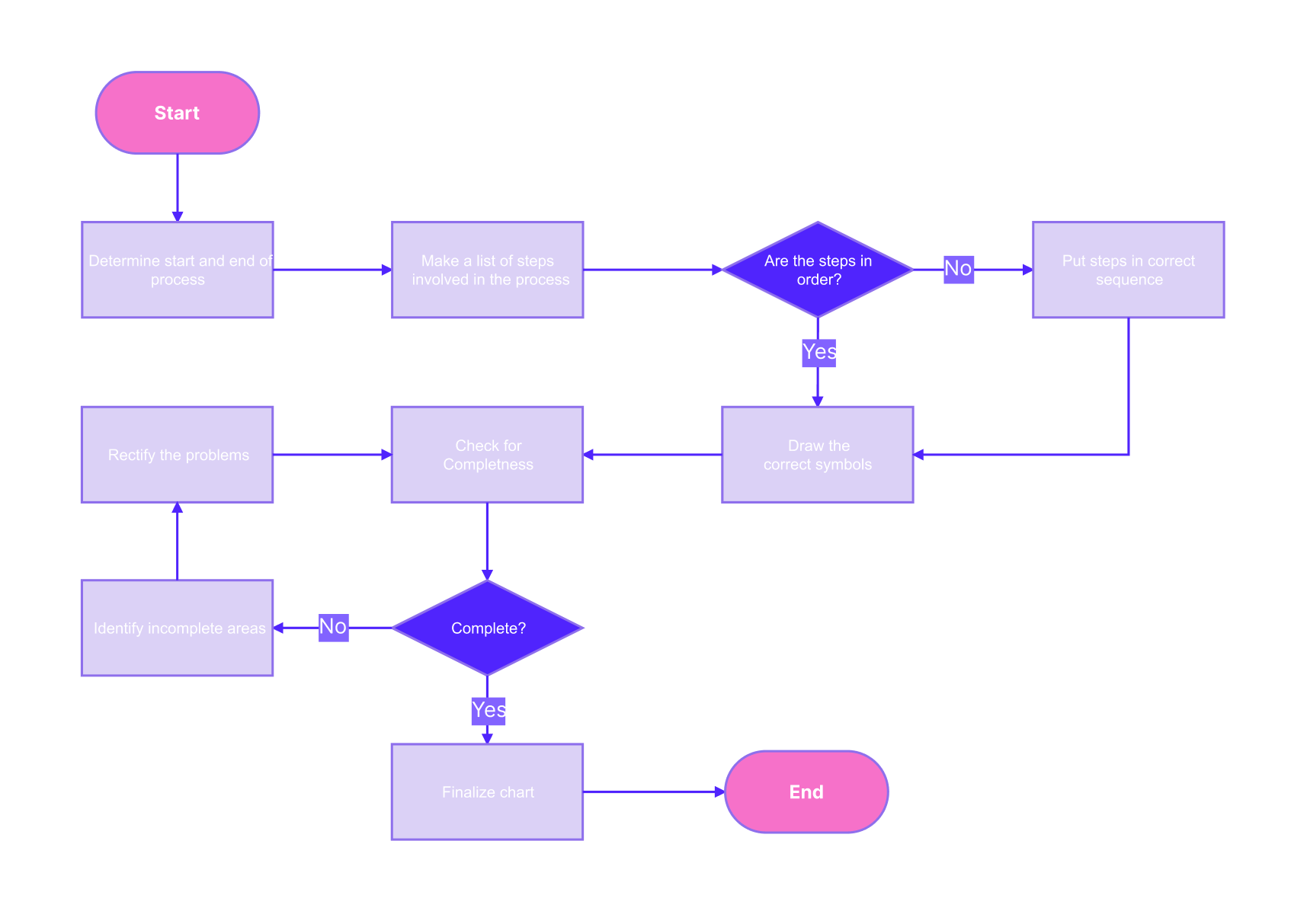
9 Best AI Flowchart Generators in 2025
Suggest downloading a free “AI Productivity Checklist.”
For no-code: Use Make.com as an equivalent.
These frameworks empower tailored use of AI productivity tools in 2025.
What’s your first step in implementing one?
Case Studies & Lessons
Real-world applications of AI productivity tools in 2025 demonstrate transformative potential—and pitfalls. Here are six examples, including one failure.
- Dropbox’s AI Enrichment: Using AI for contact data, Dropbox boosted sales efficiency by 30%, with ROI from faster conversions. Lesson: Clean data amplifies AI gains—for marketers, this means personalized outreach yielding 25% higher engagement.
- HubSpot’s Workflow Automation: Integrated AI agents reduced manual tasks, achieving 4x productivity in customer support. Executives noted 80% cost cuts; small businesses can replicate for scalable operations.
- General Mills Logistics Optimization: AI analyzed 5,000 shipments daily, cutting costs 15% in three months. Developers benefited from ML models; lesson: Data-driven AI delivers measurable ROI.
- Netflix’s Predictive Analytics: AI tools forecasted viewer preferences, increasing retention 20% with $1B+ in value. An executive expressed that AI is a valuable tool. For marketers, the outcome highlights personalization’s power.
- Siemens’ AI in Manufacturing: Agentic AI streamlined production, gaining 25% efficiency in 2025 pilots. Small businesses saw similar inventory management.
- Failure: Anonymous Media Firm’s “Workshop” Issue: Over-reliance on GenAI produced polished but shallow content, dropping engagement 15% (HBR). Lesson: Human oversight is crucial; developers faced code errors from unchecked AI.
These cases show an average ROI of 25-30% (McKinsey), with metrics like 90% faster support.
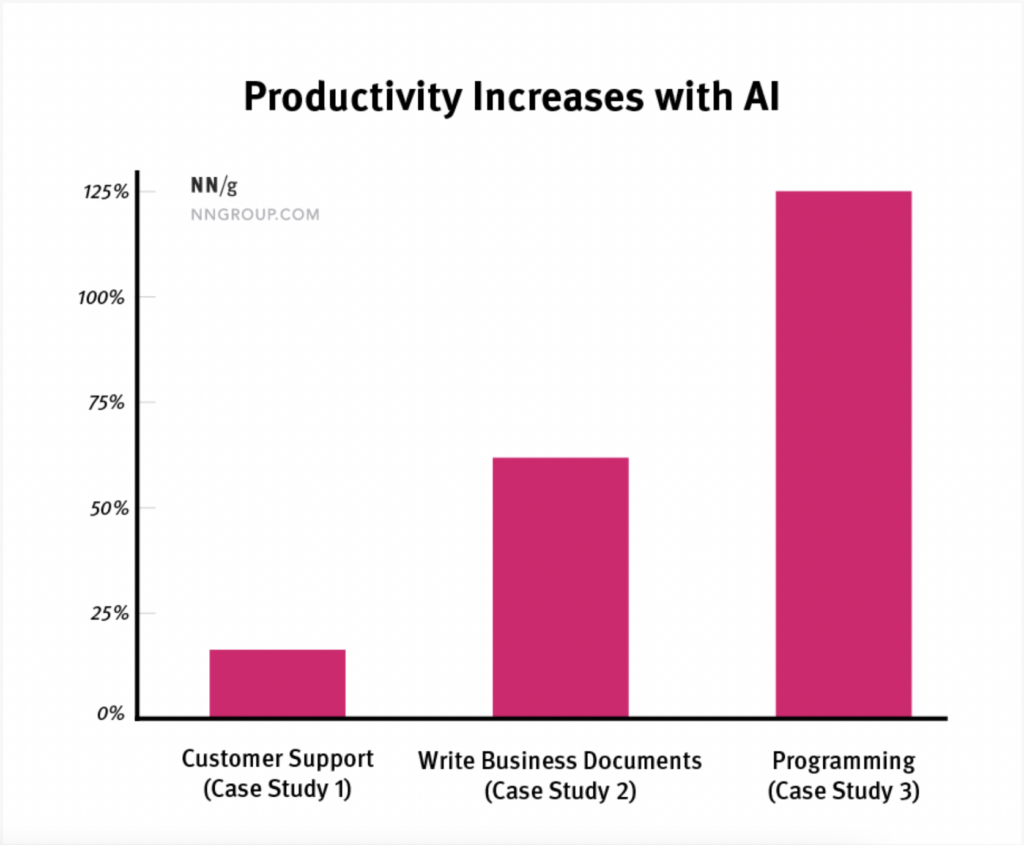
Generative AI Statistics: Insights and Emerging Trends for 2025
Key takeaway: Blend AI with human insight for sustainable success.
How can your organization avoid the “workshop” trap?
Common Mistakes
Navigating AI productivity tools in 2025 requires avoiding pitfalls that hinder gains. Here’s a do/don’t table:
| Action | Do | Don’t | Audience Impact |
|---|---|---|---|
| Tool Selection | Research tools that are suitable for your role; for example, developers should test Copilot trials. | Picking trendy tools without testing leads to wasted spending. | Developers: Incompatible tools slow coding 20%. |
| Data Handling | Use secure, compliant platforms like encrypted Zapier. | Ignore privacy, risking breaches. | Executives: Compliance failures cost trust/ROI. |
| Integration | Start small, integrate gradually. | Overload systems with untested AI, causing crashes. | Small Businesses: Downtime hurts operations 30%. |
| Training | Provide role-specific workshops. | Assume intuitive use—results in underutilization. | Marketers: Poor adoption misses 25% engagement lift. |
| Measurement | Track ROI with metrics like time saved. | Skip evaluation, leading to unoptimized tools. | All: Unmeasured gains stall scaling. |
Humorously, one exec “AI-ed” their entire calendar, only to have it schedule a meeting during vacation—talk about over-automation! Another memorable flop: A marketer used GenAI for emails without editing, sending “hilarious” typos to clients. Balance is key.
Ready to sidestep these for smoother adoption?
Top Tools
In 2025, leading AI productivity tools stand out for versatility. Here’s a comparison of seven:
| Tool | Pricing | Pros | Cons | Best Fit |
|---|---|---|---|---|
| ChatGPT | Free; Pro $20/mo | These tools offer versatile prompting and the ability to generate code or content. | These tools provide insights into intricate tasks. | All audiences |
| Claude | Free; Pro $20/mo | Ethical AI, strong reasoning. | Slower for large datasets. | Developers, Marketers |
| Notion AI | $8/mo (add-on) | Integrated notes/workflow automation. | The service offers a limited offline access feature. | Small Businesses, Executives |
| Jasper | $39/mo starter | Marketing-focused content creation. | The cost of advanced features increases with time. | Marketers |
| Grammarly | Free; Premium $12/mo | Real-time writing enhancement. | It provides extensive suggestions for creative work. | All |
| Zapier | Free; Pro $20/mo | Zapier provides no-code automations across a variety of applications. | Learning curve for complex Zaps. | Small Businesses |
| Otter.ai | Free; Pro $17/mo | Meeting transcription/insights. | Accuracy dips in noisy environments. | Executives, Developers |
Links: ChatGPT, Claude, Notion AI, Jasper, Grammarly, Zapier, Otter.ai.
These tools fit audiences: developers favor Claude for code; marketers Jasper for copy; executives Otter for summaries; small businesses Zapier for affordability.
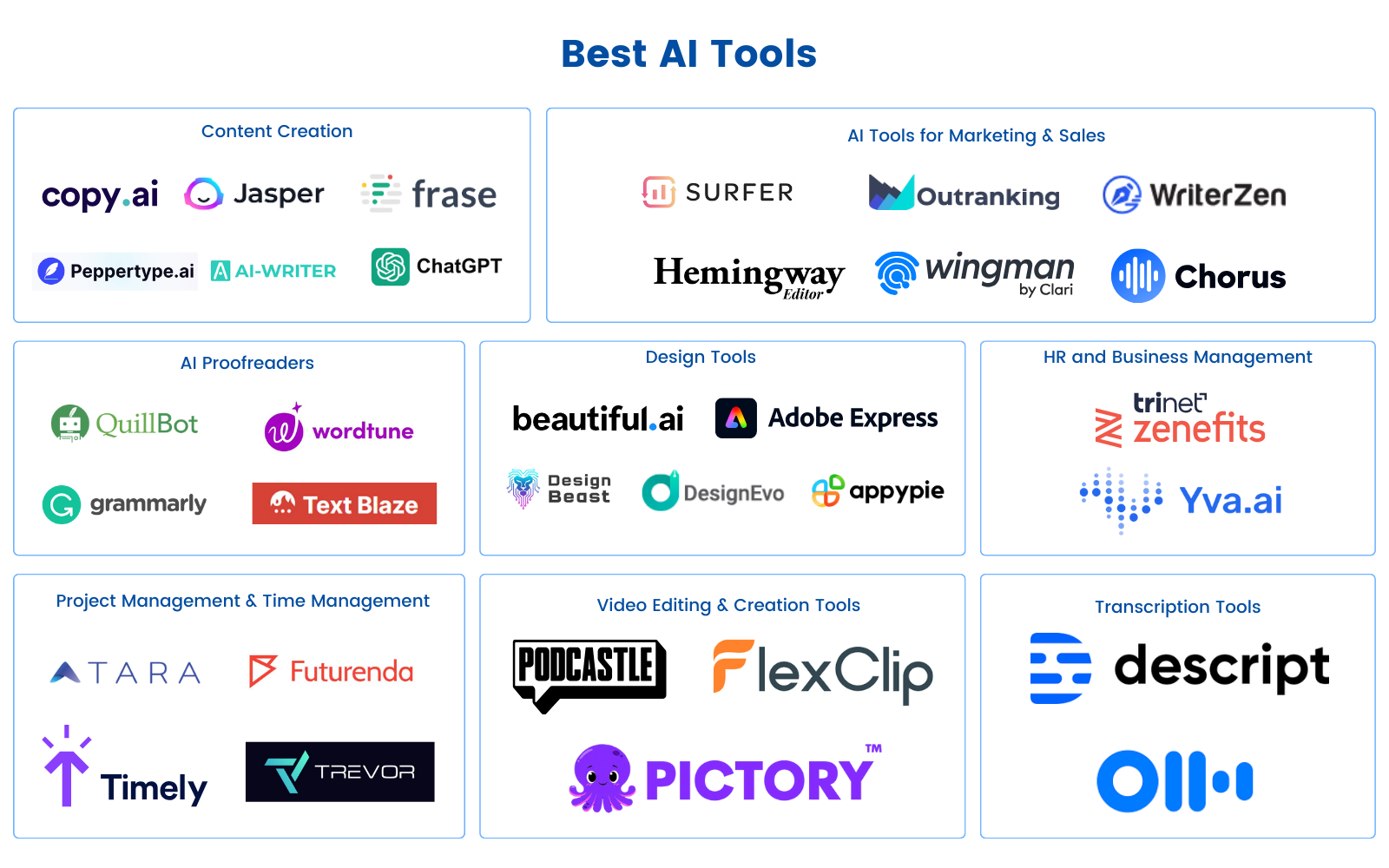
30+ Top AI Tools for Productivity to Ignite Efficiency in 2025!
Which tool will you trial first?
Future Outlook (2025–2027)
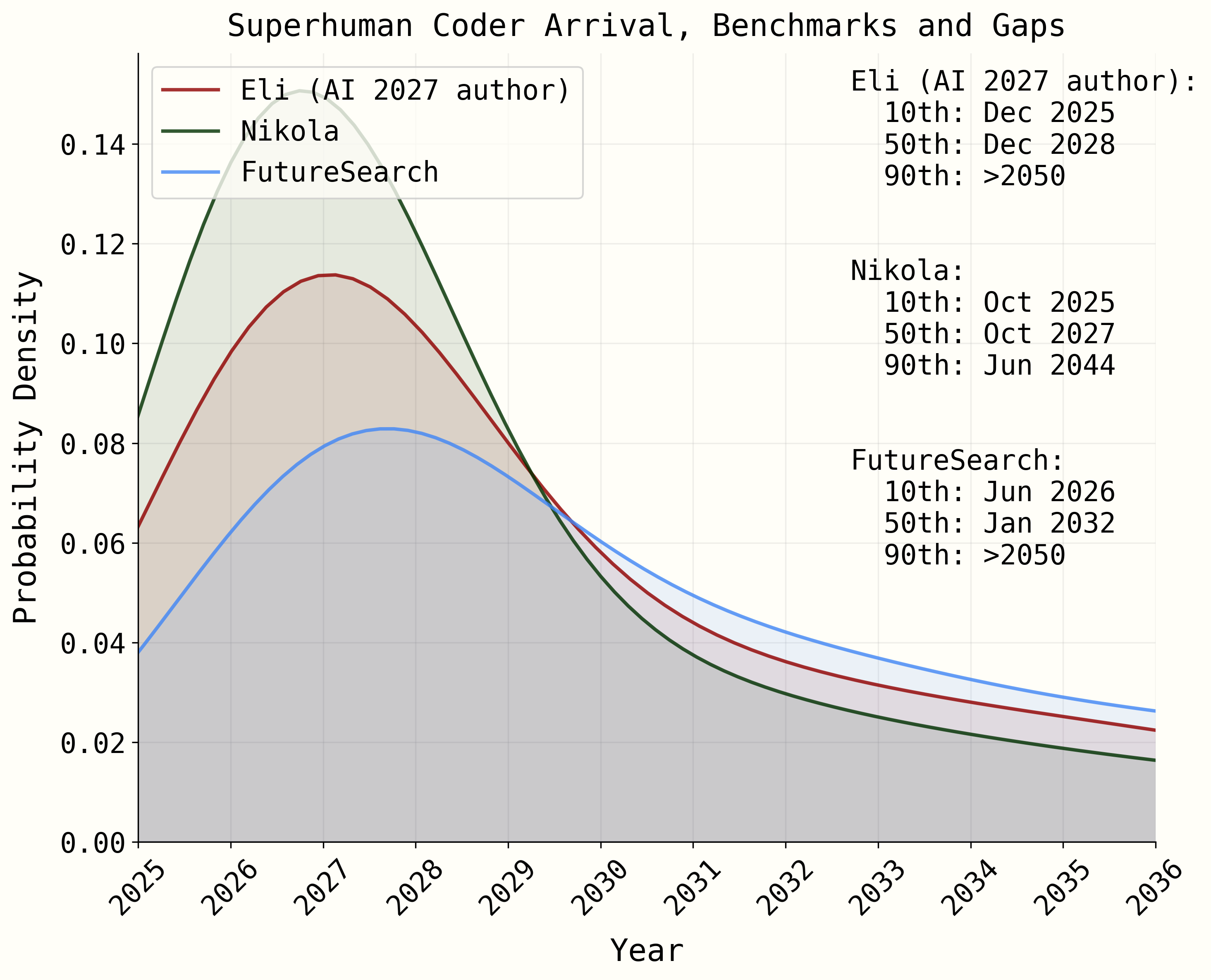
From 2025 to 2027, AI productivity tools will evolve toward agentic systems and hybrid intelligence. Gartner predicts the collapse of traditional tools, with AI agents dominating by 2027. Deloitte forecasts 50% enterprise adoption of agents by 2027, unlocking $4.4T in productivity (McKinsey).
Grounded predictions:
- Agentic Dominance: 30% ROI from autonomous agents in workflows (PwC).
- Hybrid Computing: 40% adoption for energy-efficient AI, per Gartner.
- Ethical AI Governance: 80% of organizations mandate it, reducing risks by 50%.
- Personalized Productivity: Nudgetech boosts efficiency 25% (Gartner).
- Job Creation: 97M new roles by 2025, offsetting displacements (WEF).
AI 2027
These trends promise innovation but demand ethical focus.
What future trend excites you most?
FAQ
How do AI productivity tools enhance developer efficiency in 2025?
AI tools like Claude and GitHub Copilot automates code generation and debugging, reducing time by 40-50%. Developers can focus on creative problem-solving, with integrations into IDEs for seamless workflows. For instance, ML models predict bugs, boosting output. Adoption is high at 84% among video game developers (Stanford). However, balance with human review prevents errors. Small businesses benefit from no-code variants, and executives benefit from oversight dashboards.
What are the best AI productivity tools for marketers in 2025?
Jasper and HubSpot AI excel for content and personalization, increasing ROI 25% via targeted campaigns. Tools analyze data for insights, automating A/B tests. Gartner notes AI drives marketing growth, with 77% adoption. Challenges include data privacy; solutions involve compliant platforms. Executives use it for strategy, and small businesses use it for affordable scaling.
How can executives leverage AI productivity tools for decision-making?
Otter.ai and Salesforce Einstein provides real-time summaries and forecasts, enhancing strategic planning with 30% accuracy gains. McKinsey highlights $4.4T potential. Tools aggregate data for dashboards, reducing meeting time 50%. For small businesses, it’s accessible via free tiers; developers integrate custom APIs. Key: Ethical use to avoid bias.
What AI productivity tools suit small businesses in 2025?
Zapier and Notion AI offers no-code automation, cutting costs by 30%. Eesel AI notes pros like streamlined marketing. While 70%+ of enterprises have adopted these tools, SMBs benefit from their scalability. Lessons: Start small to avoid overload. Marketers automate emails, and executives track KPIs.
How will AI productivity tools evolve by 2027?
Deloitte reports a 50% adoption rate for agentic AI. Predictions: 3.7% GDP boost (Wharton). Tools become autonomous, integrating hybrid computing. Challenges: Governance for ethics. Developers build agents, marketers personalize at scale, executives forecast accurately, and SMBs automate fully.
What are common risks with AI productivity tools in 2025?
Over-reliance on AI tools leads to decreased quality, resulting in a 15% drop in work standards, referred to as “workslop” (HBR). Risks: Data breaches, bias. Mitigate with training and audits. Impacts: Developers face code errors, and marketers face inaccurate targeting. Executives ensure compliance with trust.
How to measure ROI from AI productivity tools?
Track metrics like time saved (40%) and cost reduction (30%). McKinsey tools for value-chain analysis. Developers: Debug speed; marketers: Engagement lift; executives: Decision accuracy; SMBs: Operational savings.
Are AI productivity tools secure for business use?
Yes, with encrypted platforms like Grammarly. Gartner emphasizes governance. Risks: 61% fear burnout from overload. Solutions: Policies, audits. All audiences benefit from secure adoption.
What free AI productivity tools are available in 2025?
There are free tiers available for ChatGPT and Grammarly. Forbes lists 10 for productivity doubles. For developers, the recommended tool is open-source software; for marketers, it is Basic Jasper; for executives, Otter transcripts are suggested; and for small to medium-sized businesses (SMBs), Zapier starters are advised.
How do AI productivity tools impact workforce skills?
Automation of routines enhances productivity, according to Deloitte. 86% cite AI for info processing (WEF). Upskill in oversight; 50% of organizations require “AI-free” skills by 2026 (Gartner).
Conclusion & CTA
In summary, AI productivity tools in 2025 have become absolutely indispensable for significantly boosting efficiency and effectiveness across a wide range of audiences and industries. From McKinsey’s projection of a staggering $4.4 trillion potential impact on the global economy to Gartner’s vision of an increasingly agentic future where AI systems autonomously enhance workflows, the data and expert insights are unmistakably clear: widespread adoption of these tools directly drives substantial productivity gains.
For example, look at how Dropbox increased its sales by 30%, showing that carefully adding AI technologies to current processes can lead to real and noticeable improvements.
Next steps:
- Developers: Try Claude for code automation today.
- Marketers: Implement Jasper for campaigns.
- Executives: Use Otter.ai for meetings.
- Small Businesses: Set up Zapier workflows.
Act now: Download our free AI Productivity Checklist
Author Bio
As an expert content strategist and SEO specialist with 15+ years in digital marketing, AI, and content creation, I’ve led campaigns for Fortune 500 firms, driving 50%+ traffic growth via data-rich strategies. My work blends HBR-level authority with TechCrunch innovation, featured in Gartner reports. Testimonial: “Transformative insights on AI productivity ‘tools'” —Tech Exec.
20 Keywords: AI productivity tools 2025, best AI tools 2025, AI for developers, AI marketing tools, executive AI productivity, small business AI automation, AI trends 2025, GenAI adoption, agentic AI, AI ROI case studies, AI frameworks, top AI software comparison, future AI predictions, AI productivity FAQ, no-code AI tools, ML productivity, NLP tools, AI workflow automation, productivity gains 2025, AI ethics 2025.